
Why Indonesia Is the Next Big Market for Foreign Brands—and How IP Can Protect Your Growth - AFFA IPR

Why Indonesia Is the Next Big Market for Foreign Brands—and How IP Can Protect Your Growth

Indonesia is emerging as a significant market, driven by a global economic shift towards innovation and knowledge-based economies. The Directorate General of Intellectual Property (DGIP) in Indonesia is actively transforming its approach to Intellectual Property (IP), moving beyond mere legal protection to making IP an instrument for converting knowledge, works, and innovations into economic value. This proactive stance positions Indonesia as an increasingly attractive destination for foreign brands, where robust IP protection is not just a legal formality but a strategic asset for growth.   Indonesia: A Burgeoning Market Opportunity   Indonesia is positioning itself as a high-growth market, underpinned by innovation, creativity, and technology. Key indicators highlight why foreign brands should pay close attention:   Rising Innovation Capacity Indonesia advanced in the Global Innovation Index (GII) from rank 75 (score 27.9) in 2022 to 54 in 2024 (score 30.6), reflecting a stronger national innovation infrastructure. Source: DGIP Whitepaper IP Outlook 2025   Creative Economy Expansion Projected to contribute over Rp1.5 trillion to GDP in 2024 and employing 26.5 million people, the creative economy (culinary, fashion, film, music, apps, handicrafts) is a core driver of growth and heavily reliant on IP protection.   Domestic IP Growth IP applications rose from 74,893 in 2015 to 339,304 in 2024, averaging 18.5% annual growth—signaling rising awareness of brand and innovation protection. Source: DGIP Whitepaper IP Outlook 2025   Composition of IP Applications by Type The comparison between 2015 and 2024 shows a significant shift in the composition of IP applications in Indonesia. In 2015, Trademarks dominated with 76.8%, while Copyright (7.4%), Patents (11%), and Industrial Designs (4.8%) accounted for relatively smaller shares. By 2024, however, Copyright had surged dramatically to 52.6%, becoming the largest category, while Trademarks dropped to 40.4%. Patent applications also declined to 4.7%, and Industrial Designs fell to just 2.3%. This indicates a significant shift from Trademark-heavy filings toward Copyright-focused protection, reflecting changes in the creative and digital industries over the past decade.  Percentage of IP Applications by Origin, in total since 2015: Domestic 86.7% VS Global 13,2%   Total Copyright & Trademark Applications since 2015 Source: DGIP Whitepaper IP Outlook 2025   Total Patent & Industrial Design Application since 2015 Source: DGIP Whitepaper IP Outlook 2025   SMEs as Key Contributors SMEs accounted for 86.76% of IP applications between 2015 and 2024. Leading sectors include food & beverages and cosmetics, both increasingly active on digital platforms, highlighting the urgency of brand differentiation.   Top 5 Trademark Application from SMEs by Class Source: DGIP Whitepaper IP Outlook 2025  Top 5 Industrial Design Application from SMEs by Class Source: DGIP Whitepaper IP Outlook 2025 Industrial Innovation The chemical, pharmaceutical, and traditional medicine sectors are driving Patent filings, underscoring strong R&D activity and sector-specific opportunities.   Geographic Concentration DKI Jakarta, West Java, East Java, Central Java, and Banten dominate IP registrations. Jakarta leads as the national hub, with dense manufacturing, SMEs, and startups fueling market activity. Source: DGIP Whitepaper IP Outlook 2025   Protecting Your Growth: The Crucial Role of IP   For foreign brands entering Indonesia, a strong IP strategy is no longer optional—it is fundamental. The country is reshaping its IP ecosystem to create a safer, more predictable environment for innovation and investment.   Transforming the IP Paradigm The Directorate General of Intellectual Property (DGIP) now positions IP as a strategic intangible asset that drives investment. Beyond mere registration certificates, the focus has expanded to valuation, monetisation, and commercialisation—embedding IP directly into Indonesia’s knowledge-based economy.   Digital Transformation of Services Indonesia has modernised its IP infrastructure through digital platforms such as e-Hak Cipta (2015), SIMPONI payment integration (2017), and the all-encompassing IPROLINE system (2019). These advancements provide faster, more transparent, and user-friendly services for both domestic and foreign applicants.   IP as Collateral for Financing A landmark reform allows IP certificates to be used as collateral for credit, especially empowering SMEs. Supported by credible valuation standards and financial sector alignment, this initiative unlocks real economic value from intangible assets—attracting investors and venture capital.   International IP Facilitation Since joining the Madrid Protocol in 2018, Indonesia has streamlined global Trademark registration, enabling foreign brands to secure protection in multiple markets via a single application. The country is also welcoming more foreign Geographical Indications, underscoring reciprocal trust in its IP system.   Policy and Legislative Modernisation Indonesia is reinforcing its IP landscape through continuous policy updates and legislative reforms, providing greater legal certainty for innovators and investors.   Thematic Years of IP To spotlight different areas of IP, DGIP has designated specific “Thematic Years,” such as Geographical Indications (2018, 2024), Industrial Design (2019), Patents (2021), Copyright (2022), and Trademarks (2023). Notably, the One Village One Brand (OVOB) program under Trademarks promotes collective brand registration for local products, reflecting the government’s commitment to translating IP into real economic value.   Copyright Law Revision A revision of Law No. 28 of 2014 on Copyright is currently underway as part of the National Legislation Program. The update aims to keep pace with digital transformation, particularly in expanding protection for creative works within online and technological ecosystems.   Addressing IP Infringement: While Indonesia faces challenges such as rampant IP infringement in the digital era, particularly concerning Trademarks (148 reported cases from 2019-2024) and Copyrights, the government is committed to strengthening enforcement. Strategic recommendations include:  Effective Legal Protection: Reforming the IP enforcement system to be faster and more effective, focusing on accelerating new regulations and strengthening public complaint mechanisms for digital infringements.  Inter-Sectoral Coordination: Adopting models from countries like the USA (Digital Millennium Copyright Act – DMCA), South Korea (IP Protection Center), and the EU (Observatory on IP Infringements) to create a coordinated mechanism between DJKI, Kominfo, law enforcement, and digital platforms to enforce content removal.  AI and IP: Acknowledging the challenge of IP protection for AI-generated works, the government is preparing revisions to the Copyright Law to address the rapidly evolving digital technology landscape.   Conclusion   Indonesia’s dynamic economy, coupled with a strong and evolving IP protection framework, presents a compelling market for foreign…

Details

A Strong Signal to Proceed Confidently with Your IP Registrations - AFFA IPR

DGIP Resolves 92.99% of IP Applications in Q2 2025 — A Strong Signal to Proceed Confidently with Your IP Registrations

In an encouraging update from Indonesia’s Directorate General of Intellectual Property (DGIP), the second quarter of 2025 recorded a total of 82,661 IP applications, with an impressive 92.99% of them already resolved—an increase of 7.45% compared to the same period last year.   Here’s a quick breakdown: Copyrights: 41,855 applications, 100% resolved Trademarks: 33,613 applications, 30,630 resolved Patents: 2,876 applications, 2,336 resolved Industrial Designs: 1,856 applications, 2,030 resolved (some carried over from previous periods) Geographical Indications, Trade Secrets, and DTLST: minimal but all handled Others (post-application matters): 2,447 recorded What does this mean for IP owners and applicants?   DGIP continues to demonstrate improved efficiency—particularly in Copyright and Trademark matters, which make up the majority of total submissions. For businesses and creators, this is a strong signal to proceed confidently with their IP registrations.   At AFFA Intellectual Property Rights, we are proud to serve as your trusted partner in working with DGIP. As a registered and authorized IP consultant in Indonesia, we assist clients at every stage of the process: from filing and responding to office actions, to license recordals and post-registration services.   Let us take care of the complexities, so you can stay focused on what you do best—growing your business and innovating.   Need help protecting your IP in Indonesia? Book a free 15-minute consultation with one of our professional IP consultants:   ? E-Mail : [email protected] ? Book a Call : +62 21 83793812 ? WhatsApp : +62 812 87000 889   Source:  Ministry of Law of the Republic of Indonesia

Details
[Policy Insight] Free from Tariffs for U.S. Brands to Indonesia — Why Trademark Protection Is Your First Move - AFFA IPR

[Policy Insight] Free from Tariffs for U.S. Brands to Indonesia — Why Trademark Protection Is Your First Move

A new trade agreement between the United States and Indonesia, announced by President Donald J. Trump, marks a turning point for U.S. businesses eyeing Southeast Asia. The key highlights:   Full market access for U.S. goods—no tariffs, no non-tariff barriers. Indonesia commits to purchasing $15 billion in U.S. energy, $4.5 billion in agricultural goods, and 50 Boeing jets. A 19% tariff remains on Indonesian goods entering the U.S.   What Does This Mean for U.S. Brand Owners?   Indonesia, with over 280 million consumers, is now one of the most accessible emerging markets for U.S. companies. But while opportunity is ripe, first-mover advantage goes only to those who protect their brands early.   Seamless Market Entry, But Not Without Risk Lower costs and fewer trade barriers mean U.S. brands in fashion, beauty, tech, F&B, automotive and lifestyle can expand into Indonesia faster than ever. However, this also means faster exposure to copycats. Register Your Trademark Before Someone Else Does Indonesia follows a first-to-file Trademark system. That means anyone can register your brand name if you haven’t already—and legally block your business. Early registration isn’t just a legal formality; it’s your strongest business shield. Expect Counterfeits & Trademark Squatters With increased visibility comes increased risk. Unauthorized sellers, counterfeiters, and opportunistic squatters often rush to register well-known foreign brands locally. Once they do, legal recovery becomes costly and time-consuming.   Secure Your Brand Now—Not After the Damage Is Done This trade deal opens the floodgates—but only for brands that are protected. Don’t let your U.S. success be undermined overseas. Register your Trademark in Indonesia before launching your products or entering into distributor agreements.   Need help protecting your Trademark in Indonesia? Book a free 15-minute call with our professional consultant:   ? E-Mail : [email protected] ? Book a Call : +62 21 83793812 ? WhatsApp : +62 812 87000 889

Details
Indonesia Joins the Riyadh Design Law Treaty - AFFA IPR

Indonesia Joins the Riyadh Design Law Treaty

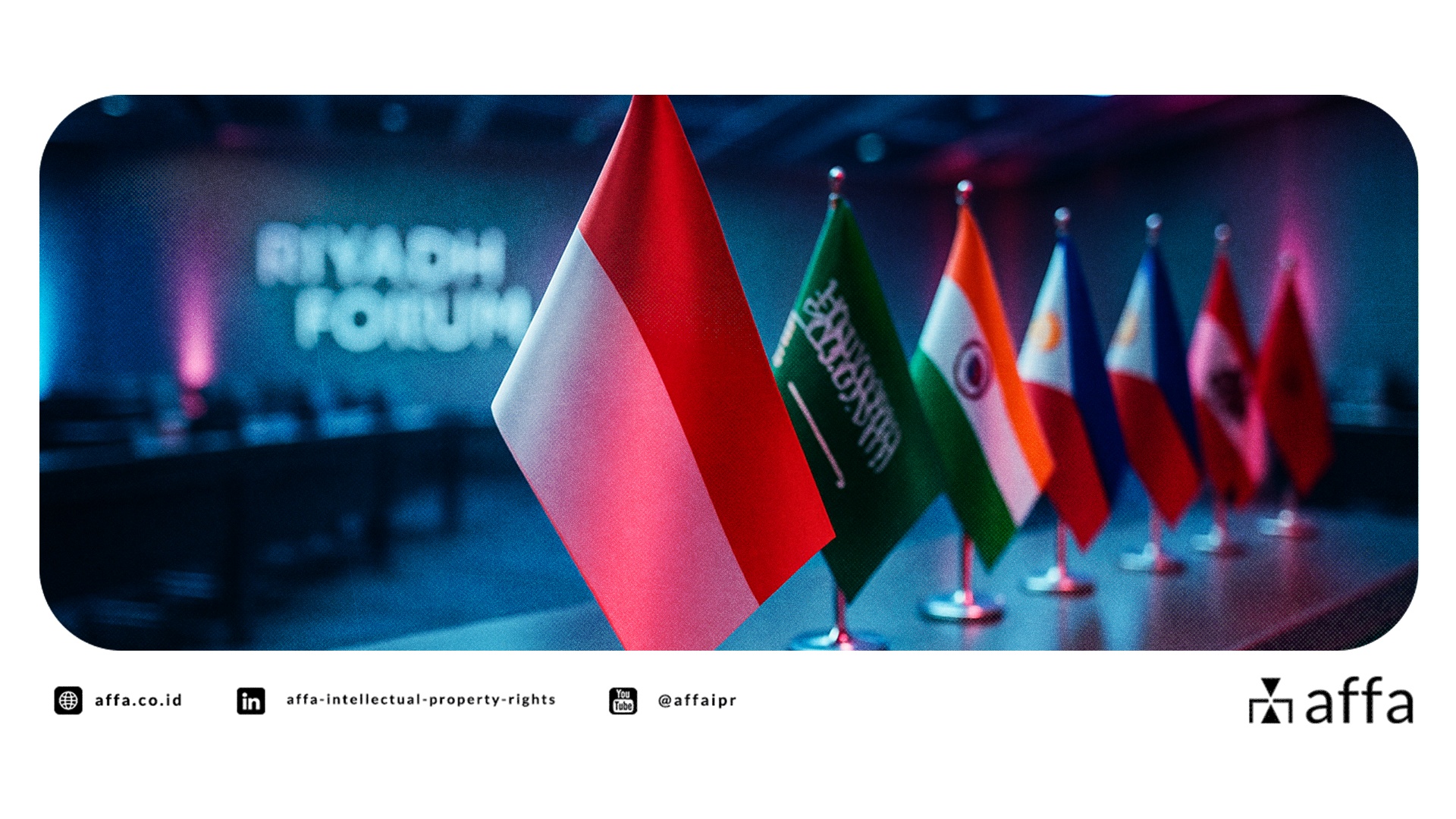
On July 8, 2025, Indonesia officially signed the Riyadh Design Law Treaty (RDLT), joining a growing number of countries committed to modernizing global design protection. This historic treaty was adopted earlier on November 22, 2024, at a WIPO Diplomatic Conference in Riyadh, following nearly two decades of negotiations.    With over 190 participating countries and 18 signatories on day one, the RDLT represents a significant milestone in international IP harmonization, aiming to streamline and simplify the procedural aspects of Industrial Design registration worldwide. The active participation of countries like India (which ratified the treaty in November 2024) and now Indonesia, underscores a strong regional commitment to future-ready IP infrastructure.   What the Treaty Introduces: Streamlined & Smart   With Indonesia’s accession reinforcing the treaty’s growing global significance, the RDLT introduces a unified, flexible framework for Industrial Design registration. It eliminates unnecessary bureaucracy and offers practical tools for navigating the digital era. Key features include: Standardized filing requirements, capped to a reasonable and predictable list. 12-month grace period for disclosures prior to filing—beneficial for creators who share designs publicly before formal registration. Multiple-design applications, allowing several designs to be filed in one submission. Flexible representation formats such as drawings, photographs, and digital media. Deferred publication of up to six months, helping manage confidentiality. Procedural safeguards like relief for missed deadlines and simplified renewals. Support for electronic filing systems and cross-border data exchange.   These measures aim to empower not only large corporations, but also SMEs, startups, and individual designers navigating the increasingly interconnected global market.   A Global Movement Backed by Regional Leaders As of the adoption date, the following 18 countries signed the RDLT: Bosnia and Herzegovina, Central African Republic, Congo, Costa Rica, Côte d’Ivoire, Democratic People’s Republic of Korea, Gambia, Ghana, Lebanon, Morocco, Paraguay, Philippines, Republic of Moldova, São Tomé and Príncipe, Saudi Arabia, Sudan, Uzbekistan, and Zimbabwe.   India followed shortly thereafter, signing and ratifying the treaty on November 26, 2024. With Indonesia joining on July 8, 2025, ASEAN’s largest economy signals its readiness to align domestic regulations with global standards—an important step for attracting design-driven investment and protecting creative industries across Southeast Asia.   Why the RDLT Matters for IP Stakeholders   The treaty’s adoption is more than a procedural update—it’s a strategic response to the evolving needs of the design economy: Greater consistency in design registration processes worldwide. Enhanced access for smaller players through reduced red tape. Recognition of digital realities, including electronic filing and digital design formats. Flexibility for national values, such as optional disclosures on traditional cultural expressions or traditional knowledge. Improved legal certainty, with clear deadlines and grace provisions that support creators in fast-moving industries.   For businesses operating across multiple jurisdictions, the RDLT brings long-overdue clarity and efficiency—crucial for accelerating go-to-market strategies and safeguarding innovation.   The Road Ahead   The RDLT will enter into force three months after 15 contracting parties deposit their instruments of ratification. Given the pace of recent accessions—including major economies like India and emerging creative markets like Indonesia—that threshold may be reached within the next 12 to 24 months.   Now is the time for designers, legal professionals, and IP-focused businesses to prepare. Understanding and adapting to the RDLT’s framework will be critical to staying competitive in a global design economy.   At AFFA Intellectual Property Rights, we’re tracking this landmark treaty rollout closely. Our team helps international clients assess their readiness, align procedures with the Riyadh standards, and embrace new IP filing strategies. If you’re a designer, brand owner, or business innovator looking to secure your design rights globally, reach out to explore how AFFA can support your international IP roadmap.   Need help protecting your Industrial Design in Indonesia? Book a free 15-minute call with our professional consultant:   ? E-Mail : [email protected] ? Book a Call : +62 21 83793812 ? WhatsApp : +62 812 87000 889   Source: World Intellectual Property Organization

Details
Indonesia and China Forge Strategic Copyright Alliance to Strengthen Global IP Protection - AFFA IPR

Indonesia and China Forge Strategic Copyright Alliance to Strengthen Global IP Protection

In a major step toward deeper international IP collaboration, the Government of Indonesia and the People’s Republic of China have signed a Memorandum of Understanding (MoU) to enhance cooperation in the field of Copyright and related rights. The agreement was formalized during the sidelines of the World Intellectual Property Organization (WIPO) General Assembly in Geneva, Switzerland, on July 8, 2025.   This landmark MoU, signed between Indonesia’s Ministry of Law and Human Rights and China’s National Copyright Administration, marks a pivotal moment in the bilateral IP relationship between two of Asia’s largest creative economies.   Responding to the Challenges of a Digital World   “This MoU represents a new chapter in our countries’ commitment to protect creativity in an increasingly borderless digital era,” said Minister of Law Supratman Andi Agtas. “It is more than an agreement—it’s a framework for resilience, cooperation, and innovation.”   At its core, the agreement focuses on strengthening Copyright enforcement, building institutional capacity, and fostering mutual promotion of the creative and cultural industries. Both countries have recognized the need for joint responses to transnational Copyright infringement, especially amid the rise of digital piracy and the development of generative AI.   Key Areas of Cooperation   Under the MoU, Indonesia and China will collaborate in the following areas: Exchange of legal and technical information on Copyright and related rights. Joint training programs for staff and professionals. Promotion of cross-border creative and cultural exchange. Facilitation of relations between Collective Management Organizations (CMOs). Public awareness campaigns to elevate IP education   Crucially, both parties agreed to develop annual work plans, appoint official contact points, and organize practical engagements—ranging from seminars and workshops to policy dialogues on emerging Copyright issues.   A Strategic – Soft Power Approach   While the MoU is non-binding, its strategic impact is significant. It reinforces Indonesia’s broader vision of positioning Intellectual Property as a tool of cultural diplomacy, especially within the fast-evolving global IP landscape.   The MoU will remain in effect for five years, with an option to renew for another term. Both countries may revise the agreement through mutual written consent, ensuring flexibility in addressing future challenges and opportunities.   As global stakeholders watch with growing interest, this Indonesia-China partnership sends a clear message: International Copyright cooperation is no longer optional—it is essential!   At AFFA Intellectual Property Rights, we support stronger international IP cooperation like the Indonesia–China partnership. Whether you’re expanding into Indonesia or managing IP across Asia, our consultants are ready to guide you.   Need help protecting your Copyright in Indonesia? Book a free 15-minute call with our professional consultant:   ? E-Mail : [email protected] ? Book a Call : +62 21 83793812 ? WhatsApp : +62 812 87000 889   Source: Directorate General of Intellectual Property

Details
Industrial Design Filing in Indonesia: Local Licensed IP Consultant Required for Foreign Applicants - AFFA IPR

Industrial Design Filing in Indonesia: Local Licensed IP Consultant Required for Foreign Applicants

If you’re considering Indonesia for Industrial Design protection, there’s one crucial fact you can’t afford to miss: Indonesia is not a member of the Hague Agreement. That means no international shortcut—and no room for error when it comes to choosing a reliable local partner.   For many IP holders, the Hague Agreement provides a streamlined route to securing design rights in multiple jurisdictions through the World Intellectual Property Organization (WIPO). But Indonesia is not party to the Hague Agreement under either the 1999 Geneva Act or the 1960 Hague Act.   This means you cannot designate Indonesia via an international design application. All applications must be filed directly with Indonesia’s Directorate General of Intellectual Property (DGIP).   Local Agent Is Mandatory for Foreign Applicants   According to Article 1(6) of Ministerial Regulation No. 8 of 2016 on Procedures for Filing Industrial Designs: “Foreign applicants must file their applications through an Intellectual Property Consultant registered with the DGIP.” In other words, foreign entities may not file directly, either physically or online, regardless of whether the design was first filed in a Paris Convention country or not.   What Happens If You Ignore This?   Without a registered local consultant: Your application will be deemed incomplete and may be rejected. You risk missing the 6-month priority period under the Paris Convention due to procedural delays. Any errors in translation or classification may invalidate your application.   A local IP consultant ensures your application meets all administrative, language, and document legalization requirements.   Key Facts About Design Filing in Indonesia   Topic Details International Route Not available (not a Hague member) Local Representation Mandatory for foreign applicants Term of Protection 10 years from filing date (non-renewable) Examination Yes, for both formalities and substantive matters. Opposition Period 3 months from publication date Governing Law Law No. 31 of 2000 on Industrial Design   Despite the absence of the Hague route and renewals, Indonesia’s design system is clear, relatively fast, and enforceable. It also operates in the context of Southeast Asia’s largest consumer market, with over 270 million people and growing enforcement capacity.   The DGIP recognizes priority rights under the Paris Convention (to which Indonesia is a party), so foreign applicants still benefit from global alignment, as long as they go through the right channel.   Need help filing your design in Indonesia? Book a free 15-minute call with a registered Industrial Design consultant:   ? E-Mail : [email protected] ? Book a Call : +62 21 83793812 ? WhatsApp : +62 812 87000 889

Details
Can You Protect a Furniture Design in Indonesia? Absolutely! - AFFA IPR

Can You Protect a Furniture Design in Indonesia? Absolutely!

Do you think designs are just for fashion or gadgets? Think again. When people hear the term “Industrial Design,” they often think of phone cases, handbags, or consumer electronics. But in Indonesia, protection for Industrial Design extends far beyond tech and fashion. From minimalist lounge chairs to futuristic bathtubs and even ornate lighting fixtures, furniture and home décor are eligible for protection under Indonesia’s Industrial Design Law.   For interior, furniture, and lifestyle brands targeting Southeast Asia’s largest consumer market, registering your designs isn’t just possible — it’s essential.   Why Furniture Design Matters in Indonesia   Indonesia has seen a steady rise in Industrial Design awareness and filings over the past five years. Applications climbed from 2,319 in 2017 to a record-breaking 3,533 in 2022. This growth reflects not only increasing local awareness but also foreign interest in protecting design assets in one of Asia’s most dynamic markets for manufacturing and retail.   As consumer tastes evolve and visual identity becomes a powerful sales driver, furniture designers need to protect what sets their products apart: shape, contours, lines, textures, and aesthetics.   Tips to Get Your Furniture Design Approved   Despite the growing support for design protection, improperly submitted applications are still rejected, often due to technical errors in how the design is presented. The Directorate General of Intellectual Property (DGIP) has strict guidelines for how Industrial Design applications should be illustrated.   If you’re filing a furniture design (or any large, 3D product), follow these 8 key visual submission rules to avoid costly rejections:   Avoid Mixed Features Don’t combine multiple styles, colors, or versions in a single design submission.  Use a Neutral Background Design representations must be shown on plain, uncluttered backgrounds — no textures, shadows, or staging. Exclude Irrelevant Elements Only the intended design should appear. Remove props, logos, or any decorative items not part of the design. Submit One View Per Image Provide one clear view per image: front, back, left, right, top, bottom, and perspective. No composites or collages. Upload Magnified Views Separately If you include zoomed-in details, upload them as individual images, not overlays. Disclaim Unregistered Features If some elements of your design aren’t meant to be protected, disclaim them consistently across all views. Show the Full Product Too If you’re submitting disassembled components (e.g., parts of a modular chair), include a full assembled version. For 2D Patterns, Show Them Alone If your design is a surface pattern (e.g., wood grain or textile texture), don’t show it applied on furniture — submit it as a stand-alone flat image.   Bottom Line: If It Has Shape, It Can Be Filed Whether you’re a boutique design studio or a global interior brand, protecting your creations in Indonesia gives you more than just legal peace of mind — it gives you the competitive edge. With over 270 million potential customers and a vibrant, design-conscious market, the value of your visual IP only increases over time.   Have a new piece ready for market? Make sure your design documents are clean, compliant, and enforceable — before someone else copies your style.   Need help filing your design in Indonesia? Book a free 15-minute call with a registered Industrial Design consultant and ensure your design meets all local requirements:   ? E-Mail : [email protected] ? Book a Call : +62 21 83793812 ? WhatsApp : +62 812 87000 889

Details
Indonesia Fosters a Thriving IP Ecosystem: Domestic and International Filings Soar Over the Past Decade - AFFA IPR

Indonesia Fosters a Thriving IP Ecosystem: Domestic and International Filings Soar Over the Past Decade

Indonesia’s Directorate General of Intellectual Property (DGIP) has achieved a remarkable milestone over the past decade. According to a report delivered by the Director General of Intellectual Property, Razilu, a total of 1,738,573 Intellectual Property (IP) applications were filed between 2015 and 2024. “This is a monumental figure that reflects the extraordinary enthusiasm of the Indonesian public in protecting their intellectual creations,” Razilu stated during the “Ten-Year Performance Exposé and IP Appreciation” event, held in celebration of World Intellectual Property Day 2025 at Graha Pengayoman, Jakarta, on Wednesday, June 4, 2025. The data show that IP filings have grown at an average annual rate of 18.5%. According to Razilu, this growth is more than just numbers — it reflects increasing awareness of the importance of IP as a national economic and cultural asset. Razilu emphasized that this performance exposé is not merely an evaluation, but also a strategic platform to shape future IP policies. The goal is to ensure that every innovation and creative work by Indonesians is not only protected by law but also fully empowered. Of the total filings, approximately 86.76% originated from within the country. Domestic applicants contributed nearly 99.8% of Copyright filings, 85.2% of Trademark filings, and 68.76% of Industrial Design filings. However, domestic contributions to Patent filings remain relatively low, standing at just 32.05%, highlighting an area for improvement. “These figures demonstrate the strong dominance of local IP filings across all categories. It’s a testament to the thriving innovation and creativity among individuals, entrepreneurs, and inventors across Indonesia,” Razilu added. Over the same period, micro, small, and medium enterprises (MSMEs) were significant contributors to Trademark filings. The most registered classes included: Culinary products (Classes 30 and 29) Fashion (Class 25) Hospitality services (Class 43) Cosmetics and personal care (Class 3) In the Industrial Design category, top applications were concentrated in: Other printed matter (Class 19-08) Chairs (Class 06-01) Garments (Class 02-02) Travel bags, handbags, key holders (Class 03-01) Bags, containers, tubes, capsules (Class 09-05)  Meanwhile, the most recorded Copyright works were books, written articles, computer programs, video recordings, and posters. For Geographical Indications, the top five products over the past decade were coffee, woven textiles, rice, batik, and traditional salt. In the domestic Patent category, top filings involved food chemistry, pharmaceuticals, chemical engineering, special machinery, and basic chemistry. On the other hand, foreign Patent applications were dominated by sectors such as pharmaceuticals, digital communications, transportation, basic chemistry, and metallurgy. At AFFA Intellectual Property Rights, we welcome this growing momentum in Indonesia’s IP landscape. Our team of experienced IP consultants stands ready to support businesses, creators, and innovators—not only in Indonesia but also around the world—in securing and maximizing the value of their Intellectual Property. Let us help you navigate your IP journey with confidence.   Need help filing your IP in Indonesia? Book a free 15-minute call with a registered IP consultant and ensure your IP meets all local requirements:   ? E-Mail : [email protected] ? Book a Call : +62 21 83793812 ? WhatsApp : +62 812 87000 889   Source: Directorate General of Intellectual Property

Details
Top 3 Mistakes Foreigners Make When Filing Industrial Designs in Indonesia - AFFA IPR

Top 3 Mistakes Foreigners Make When Filing Industrial Designs in Indonesia

Filing an Industrial Design in Indonesia may look simple, but even small missteps can lead to rejection—or worse, invalidate your rights after registration. For foreign applicants entering the Indonesian market, understanding what not to do is just as important as knowing the process.   Here are the top three mistakes we see most often—and how to avoid them:   Submitting Low-Quality or Blurry Images In Indonesia, clear and precise visual representation is the foundation of your Industrial Design protection. The Directorate General of Intellectual Property (DGIP) requires at least seven views of your design—front, back, left, right, top, bottom, and perspective. If the images are pixelated, low-resolution, or fail to reflect the design’s features accurately, your application will likely be rejected. Tip: Use high-resolution, black-and-white line drawings with no background noise. Avoid shadows, gradients, or photographic textures. Your images must clearly define the form, not confuse it. Including Functional Features in the Design Indonesia protects the appearance, not the function, of a product. If your design focuses on aspects driven purely by function (e.g., grooves, openings, or mechanisms necessary for the item to work), it may fall outside the scope of Industrial Design protection. The DGIP strictly excludes any design elements that are dictated solely by function. Including such elements can lead to rejection or later invalidation if challenged. Tip: Before filing, ask yourself: “Could this shape be different and still work the same?” If the answer is no, that feature likely won’t qualify. Filing After Public Disclosure—Without Knowing the Grace Period Rules Many foreign applicants mistakenly believe that any public disclosure automatically voids their ability to protect a design in Indonesia. While Indonesia does have strict novelty requirements, the law also provides a 6-month grace period for certain types of disclosures. Under Indonesian law, a design is considered novel only if it has not been made available to the public anywhere in the world before the filing or priority date. However, there are two exceptions: If the design was displayed at a nationally or internationally recognized exhibition, or If the design was disclosed by the designer themselves for education, research, or development purposes. In these cases, you still have up to 6 months to file your application without losing novelty. Tip: If you’ve already shown your design to the public, act fast. Check whether your situation qualifies for the grace period and file within six months—or risk permanent loss of rights.   Clean Up Your Designs Before You File   With rising interest in Indonesian design protection from global brands, getting it right the first time matters more than ever. A rejected or invalidated design not only costs time and money—it can expose your product to copycats in Southeast Asia’s biggest market.   Need help filing your design in Indonesia? Book a free 15-minute call with a registered Industrial Design consultant and ensure your design meets all local requirements:   ? E-Mail : [email protected] ? Book a Call : +62 21 83793812 ? WhatsApp : +62 812 87000 889

Details
Not Just Batik: Why Industrial Design is the Hidden Gem of IP in Indonesia - AFFA IPR

Not Just Batik: Why Industrial Design is the Hidden Gem of IP in Indonesia

When people think about Intellectual Property (IP) in Indonesia, their minds often go straight to Batik—a traditional cultural expression protected under Copyright. But beyond the cultural spotlight lies a vastly underappreciated and highly strategic asset in IP: Industrial Design.   Despite its growing importance, Industrial Design protection in Indonesia remains largely overlooked by creators, businesses, and even international investors. That’s a major missed opportunity, especially considering Indonesia’s growing importance in global trade and IP.   Industrial Design: More Than Just Aesthetic Appeal   An Industrial Design protects the visual appearance of a product—its shape, pattern, lines, contours, colors, or any combination thereof. It’s not about functionality, but about form. If you’ve created a distinctive bottle shape, a shoe silhouette, a furniture design, or unique packaging, it may qualify for protection under Industrial Design law.   In today’s consumer-driven world, where visual differentiation drives value, protecting these design elements is crucial.   The Untold Fact: Indonesia Is Quietly Active   Indonesia is not a passive player in industrial design. Since 2017, the country has consistently recorded over 2,000 industrial design applications annually, reflecting a healthy and growing awareness of design protection.   In fact, by 2022, filings reached a record high of 3,533 applications, indicating rising activity from both domestic and foreign applicants. This trend highlights how businesses are starting to treat design not just as an aesthetic enhancement, but as a strategic asset worth securing in Indonesia.   Foreign filings have also increased steadily, signaling that Indonesia is gaining global recognition not only as a major consumer market but also as a jurisdiction with valuable IP infrastructure.   Why Indonesia Attracts Design Filings   One reason behind the steady interest in Indonesia’s Industrial Design system is its clear and straightforward protection regime. An industrial design in Indonesia is protected for a fixed term of 10 years from the filing date, without the need for renewals. While this duration is standard compared to many jurisdictions, it offers legal certainty for businesses during a product’s most commercially active years.   Combined with Indonesia’s growing consumer market and increasing awareness of IP enforcement, this makes the country an attractive destination for securing design rights, especially for fast-moving consumer goods, packaging, and lifestyle products.   When Copyright Is Not Enough   Creators in Indonesia often wonder whether their work should be protected under Copyright or Industrial Design. The distinction can be subtle but important.   Take Batik motifs used in modern fashion products as an example. While the motif itself may be protected by Copyright, if it’s applied to mass-produced products and serves a commercial, aesthetic function, Industrial Design registration might provide stronger and more enforceable protection.   The same applies to everyday consumer items: phone cases, kitchenware, footwear, automotive parts, or cosmetic packaging—if it looks unique, it should be protected.   Securing Design in Southeast Asia’s Largest Market   With over 270 million people, Indonesia is Southeast Asia’s largest consumer market. Any successful product design that hits the market is bound to be imitated. Without proper protection, you risk losing your product’s most valuable differentiator—its visual identity.   Registering your Industrial Design gives you exclusive rights to prevent others from using, selling, or reproducing the same or similar designs. It also provides a solid legal foundation for enforcement in case of infringement.   If you’re expanding into Southeast Asia and want to secure your product’s visual identity in one of its most dynamic markets, Industrial Design protection in Indonesia is a smart first step.   Book a free 15-minute call with a registered Industrial Design consultant:   ? E-Mail : [email protected] ? Book a Call : +62 21 83793812 ? WhatsApp : +62 812 87000 889

Details