

Can a “Hashtag” Be Registered as a Trademark in Indonesia? - AFFA IPR

Can a “Hashtag” Be Registered as a Trademark in Indonesia?

In the digital era, hashtags (#) that precede certain slogans or statements have become an important tool in marketing strategies. They make it easier for the public to find specific campaigns on social media, strengthen promotional identity, and even build user communities.   Some examples of commonly encountered hashtags include: #FYP #photooftheday #KeepCookingMama #FreakyFriday #HowLowCanYouGo   However, when a hashtag grows more popular and becomes closely associated with the identity of a product or service—or there’s even an intention to monopolize it—the question arises: “Can a hashtag be registered as a Trademark?”   In Principle, Yes — But It’s Not Automatically Acceptable   By definition of the Indonesian Trademark Law, a Mark means any sign capable of being represented graphically in the form of drawings, logos, names, words, letters, numerals, color arrangements, in 2 (two) and/or 3 (three) dimensional shape, sounds, holograms, or a combination of 2 (two) or more of those elements to distinguish goods and/or services produced by a person or legal entity in trading goods and/or services. Nevertheless, in Trademark examination practice, the hashtag symbol (#) alone is not considered a distinctive element. In other words, when filing #HowLowCanYouGo, the examiner does not assess the “#” but evaluates the word elements “How Low Can You Go.”   Accordingly, a hashtag can be registered as a Trademark if the phrase within it meets the distinctiveness test as per Article 20 of the Indonesian Trademark Law, namely: Not generic Has distinctiveness Not descriptive Not merely a promotional call-to-action Not misleading Not to violate public order, regulations, or morality   If the phrase is too generic, the application risks being refused.   Hashtag + Removing Spaces Doesn’t Automatically Make It a New, Unique Word   There’s an assumption that a slogan will be easier to register if it’s written without spaces and prefixed with a hashtag, for example: “Indonesian Pride” → #IndonesianPride “Support Local Coffee” → #SupportLocalCoffee   However, this does not automatically turn it into a new, unique word. Examiners will still assess whether the phrase has distinctiveness. If the original meaning remains easily understood—e.g., as a promotional expression—its strength as a Trademark is still considered weak.   In short, adding “#” and removing spaces does not automatically increase the chances of registration!   Comparative Registration Chances   Form Example Chance to be  Registered Reason Descriptive Slogan INDONESIAN PRIDE Low Generic phrase/ Promotion. Without Spaces INDONESIANPRIDE Low-Medium Meaning remains clear. With Hashtag #INDONESIANPRIDE Low-Medium “#” adds no distinctiveness. Arbitrary/Fanciful Word XYRANGER High Non-descriptive & unique. Hashtag + Arbitrary #XYRANGER High Strength lies in the core word.   The core assessment remains the same: it’s not about the format, but how distinctive the phrase is.   How to Give a Hashtag a Better Chance of Being Registered in Indonesia?   If you want to protect a hashtag as a Trademark, consider: Using an arbitrary or unique word. Avoiding purely promotional phrases. Adding a distinctive brand element.   For example: #KROriginal #24hourbyMaduraShop #XyRangerEveryday   If the core wording has strong distinctiveness, the chances of successful registration are higher—even without the hashtag.   Therefore, if you use hashtags in marketing campaigns and want to protect them as a Trademark, ensure the wording is distinctive enough to differentiate your products or services from others.   Should you need more information on registering hashtags as Trademarks, contact us through the channels below and get a FREE 15-minute consultation!   ? E-Mail : [email protected] ? Book a Call : +62 21 83793812 ? WhatsApp : +62 812 87000 889

Details

A New Wave of Tuberculosis R&D in Indonesia: Industry Must Stay Alert—Drug Patents Are Heating Up! - AFFA IPR

A New Wave of Tuberculosis R&D in Indonesia: Industry Must Stay Alert—Drug Patents Are Heating Up!

At the beginning of 2025, Indonesia once again drew global attention as it joined international efforts to fight tuberculosis (TB), an ancient infectious disease. The collaboration between the Indonesian government and the Bill & Melinda Gates Foundation became a major highlight following news that Indonesia was selected as one of the sites for late-phase clinical trials of a TB vaccine.   This spotlight presents an intriguing paradox. Despite having one of the world’s highest TB burdens, Indonesia is now emerging as a leading candidate in medical innovation. How did this happen?   Indonesia: From Market to Innovation Player The collaboration with the Gates Foundation opens significant opportunities for new TB-related inventions—ranging from active compounds, drug or vaccine formulations, manufacturing methods, to diagnostic solutions. Patents play a key role in: Strengthening exclusive rights Supporting development and production, Facilitating commercialization. Indonesia’s pharmaceutical and biotech industries, therefore, cannot remain idle. This momentum must be leveraged to actively participate in research and Patent filing, through both local and global collaboration.   Clinical Trial Progress: What Is Happening in Indonesia? Vaccine development follows strict standardized stages: Pre-clinical Initial testing on animals Phase I 3–80 healthy volunteers; determines safe dosage Phase II 20–200 volunteers; tests early efficacy & immune response Phase III Hundreds–thousands of participants; confirms effectiveness & safety Phase IV Post-marketing long-term monitoring   According to the Ministry of Health (May 2025), the TB vaccine candidate M72/AS01_E has entered Phase III and involves 2,095 Indonesian participants as part of a global study. The Gates Foundation has contributed more than US$300 million to Indonesia since 2009 to support health, nutrition, sanitation, and vaccination systems—including TB vaccine research. This positions Indonesia not merely as a research site, but as a part of the global innovation ecosystem.   Open = Not New? Disclosure Risks to Novelty Participation in late-phase clinical trials carries both scientific and legal consequences. In Phases III–IV, transparency is required, including: Clinical trial registration, and Disclosure of research plans and results. However, transparency can be a double-edged sword. Barcombe et al. (2024) notes that in Europe and the U.S., excessive disclosure can threaten novelty, a core patentability requirement. Why? Various forms of publication, including: Trial protocols, Informed consent forms (ICF), Press releases, Study registry entries, can be considered prior art if they contain technical information enabling others to practice the invention. If information such as vaccine composition or dosage is revealed too early, it may even be categorized as public prior use, invalidating novelty.   Regulatory Framework Exists — But Not Enough Clinical trials in Indonesia are governed by: BPOM No. 8/2024 (Clinical Trials) BPOM No. 24/2025 (Drugs & New Drug Development) Both adopt ICH–GCP and CUKB (Good Clinical Practice) principles, emphasizing:  Confidentiality of data for both parties, Protection of sponsor & subject information, Quality control and distribution safety. The informed consent mechanism does not require sponsors to disclose detailed formulas or compositions to participants. However, regulatory protection alone does not guarantee Patent novelty. Information leaks may still occur through: Scientific publications, Recruitment materials, Trial registries identifying compounds or dosage regimens, Test subjects not bound by NDAs, Third parties, such as CROs, laboratories, logistics vendors, or IT providers, lack strong confidentiality clauses. Even simple items like: Open-label packaging, Certificates of Analysis (CoA), Batch-to-subject records, may reveal sensitive technical information. Thus, non-regulatory strategies are crucial to ensure confidentiality and preserve novelty.   TB Patent Landscape in Indonesia: Dynamic & Expanding International collaboration has created a “domino effect,” driving more TB-related Patent filings in Indonesia. Directorate-General IP (DJKI) data shows several emerging categories: Active Compound Examples: IDP000065523: Quabodepistat compound with strong antibacterial activity against Mycobacterium tuberculosis IDP000028943: Quinoline derivatives; protection expires in 2025, opening opportunities for generics and new formulations These demonstrate that Indonesia is no longer just a market, but a site for testing and adapting global molecules. Formulations & Compositions Examples: IDP000058680: Live-attenuated Mycobacterium vaccine formulation P00202402878: Fusion-protein & nucleic-acid vaccine platform P00202314496: Bone implant composition for post-TB complications Innovation extends beyond molecular discovery to optimizing therapeutic forms and platforms. Manufacturing Methods & Processes Some inventions protect synthesis and production techniques that improve efficiency and stability, offering additional protection over manufacturing technologies. Diagnostics Example:  IDP000067942: Liposomal KIT to detect mycolic acid, a key biomarker of M. tuberculosis Diagnostics research is paving the way to precision therapy.   When Should You File a Patent? Because disclosure may threaten novelty, the best time to secure a Patent is before technical information is made public. It is important to note: Patent filing does not require BPOM marketing authorization. Pre-clinical data is often sufficient to support a Patent application. In other words, the pre-clinical stage is the golden window to file a Patent. Delaying until research results are published increases the risk of losing novelty.   What Industry & Researchers Must Do With TB-related research and patenting on the rise, industry players and researchers must balance: Scientific innovation, Disclosure management, Legal protection strategies. Without proper strategies, valuable inventions may lose their Patent value.   From Experiment to Investment Indonesia now stands at a crucial crossroads. Once a country with one of the highest TB burdens, Indonesia is evolving into a center of research and innovation for TB vaccines and therapies. To maximize this opportunity, the local industry must actively protect research results through smart and structured Patent strategies. AFFA is ready to be your strategic partner to: Map Patent pathways, Conduct freedom-to-operate (FTO) analyses, Preserve the novelty of inventions, Prevent overlapping Patent rights. “Innovation without strategy is only experimentation — but innovation with protection is an investment.”   For more information on Patent filing and protection in Indonesia, please contact us through the channels below: ? E-Mail : [email protected] ? Book a Call : +62 21 83793812 ? WhatsApp : +62 812 87000 889

Details

Timor Leste Joins ASEAN: What It Means for Your Trademark Protection Strategy - AFFA IPR

Timor Leste Joins ASEAN: What It Means for Your Trademark Protection Strategy

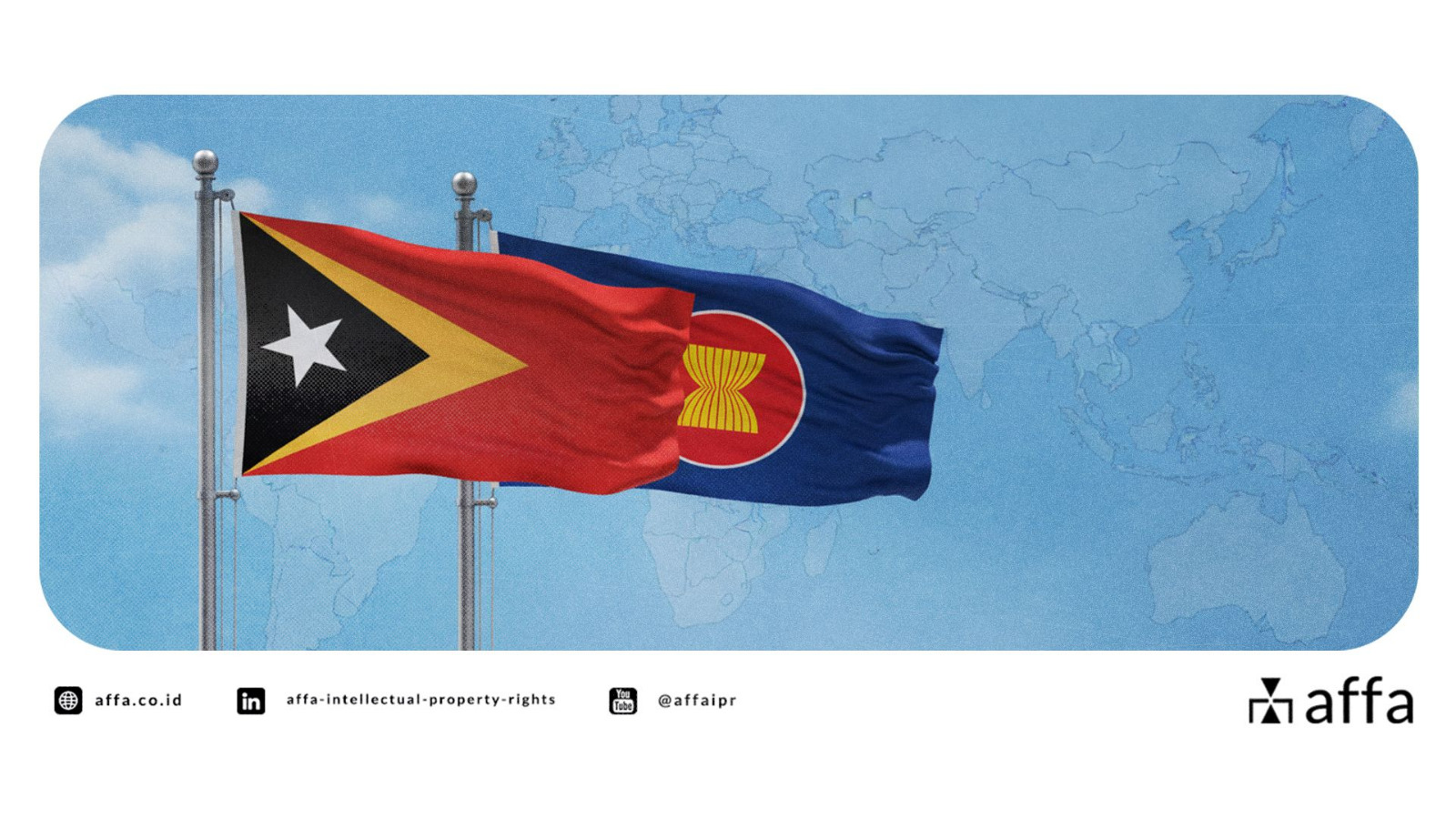
At the 47th ASEAN Summit held on 26–28 October in Kuala Lumpur, Malaysia, Timor Leste was ratified as the 11th member of ASEAN. Under the “Trade in Goods” framework, you may consider Timor Leste as your next export destination, since ASEAN membership brings more competitive tariffs, efficiency, and easier distribution within the region.   But how can you secure Trademark protection in Timor Leste? Remember: distributing and trading without Trademark protection is a high-risk move!   Trademark Regulations in Timor Leste At present, there is no dedicated government authority handling Trademark registration in Timor Leste. Therefore, Trademark protection is obtained by publishing Cautionary Notices in local newspapers to inform the public of your claim of ownership. The publication must include a statement of ownership and a warning to others not to use the Trademark without permission.   Trademarks That Can Be Recorded Because there is no formal Trademark registration system yet, there are no specific criteria for what can or cannot be registered. However, Trademarks published through Cautionary Notices should be: Unique and not imitative of other well-known Trademarks. Not in violation of local social or cultural norms. Conversely, Trademarks we do not recommend recording include: Purely descriptive or generic marks without distinctive elements. Marks that reference national or international symbols without authorization. Marks that are similar to well-known Trademarks abroad.   Required Conditions and Documents To publish Cautionary Notices in Timor Leste, you will need: Cautionary Notice Text: An official statement including the Trademark owner’s name and address, and a detailed description of the Trademark. Trademark Specimen: A clear representation of the Trademark to be published.   Procedure/Stages for Recording a Trademark via Cautionary Notices The publication procedure includes: Document Preparation: Drafting the Cautionary Notice text and preparing the Trademark specimen. Translation: Translating documents into the official language(s), if required. Publication: Submitting the Cautionary Notice to a local newspaper for publication. The duration of each stage may vary depending on process efficiency and newspaper schedules—ranging from several weeks to a few months. Additionally, because there is no formal registration system, no official certificate is issued.   What to Do After Your Trademark Is Published After publication of the Cautionary Notice, you as the Trademark owner are advised to actively use the Trademark in business to avoid the risk of claims by others. You—and your Trademark Consultant with representation in Timor Leste—should also actively monitor its use. If an unauthorized party uses the Trademark, you may take legal action based on the published notice.   Term of Protection in Timor Leste There is no specific protection period in Timor Leste due to the absence of a formal system. However, you are advised to renew the Cautionary Notice every two years to reinforce protection.   Since the system is not based on formal registration, there is no clear grace period if you are late with renewal. Nevertheless, the longer a Trademark goes without republication, the higher the risk that others may use it.   Ready to record your Trademark in Timor Leste? For more information, contact us through the channels below and get a FREE 15-minute consultation!   ? E-Mail : [email protected] ? Book a Call : +62 21 83793812 ? WhatsApp : +62 812 87000 889

Details

When Science Meets Beauty: The Patent Strategies Behind Cosmetic Innovation in Indonesia - AFFA IPR

When Science Meets Beauty: The Patent Strategies Behind Cosmetic Innovation in Indonesia

In an era when the definition of “beauty” is no longer a matter of taste but the result of scientific research and business strategy, Patents act like invisible fences protecting the technological gardens behind every cosmetic product. During the protection period, the inventor enjoys a time-limited monopoly, while the public still gains access to the underlying technology through mandatory disclosure. This exchange — between exclusive rights and knowledge transparency — makes Patents a valuable currency that can be licensed, negotiated, or leveraged for funding. Today, competition in the cosmetics industry extends not only to retail shelves but also to the lines of Patent claims.   Aesthetics Built by Science Discussing cosmetics means examining aesthetics shaped by science. As the market grows, so does formulation complexity. In the past, innovation stopped at creams, gels, and lotions. Now, the landscape extends to clear nanoemulsions, multi-lamellar emulsions mimicking the stratum corneum, and anhydrous solids designed for extremely dry skin. The trend of “skincare from within” has even blurred the line between cosmetics and pharmaceuticals through oral formulations. Yet, across all these evolutions, Patents serve as the locking mechanism of value — covering ingredients, carriers, system designs, and process parameters that make a product cosmetically elegant without losing efficacy.   New Value from Familiar Ingredients Names like hyaluronic acid, niacinamide, and ceramide are now household terms among consumers. As Patent Originators, the core molecular Patents behind these ingredients have long expired. However, in the hands of formulators, their role continues through formulation innovation. The new wave of Patents no longer revolves around what the ingredient is, but how it works — from delivery systems that improve penetration and comfort, to crystalline structures enhancing stability, and formulations that maintain transparency and a lightweight feel. The commercial value has shifted — and it is the “how” that is now fenced by claims.   Four Key Patent Claim Pathways in Cosmetics For formulation teams, four categories of claims hold the most value: Composition – e.g., the ceramide:cholesterol:free-fatty-acid ratio and the Hydrophilic–Lipophilic Balance (HLB) system. Process – such as the shear profile, number of passes in high-pressure homogenization, or the cooling curve. Use/Application – for instance, reducing Transepidermal Water Loss (TEWL), the amount of water naturally evaporating from the skin. Crystalline Architecture – which prevents precipitation and preserves sensory elegance, the tactile and aesthetic pleasure perceived by the senses. As long as these variables are measurable and reproducible, they can form legitimate new claims.   From Laboratory to Store Shelf Behind every claim like low-oxidation foundation, non-sticky moisturizer, or 12+ hour moisture-lock serum, there are scientists meticulously determining the right range of composition and process: Too little — ineffective. Too much — irritating; Incorrect pH — destabilizes the system; Wrong mixing order — triggers precipitation. Finding that optimal balance is the essence of invention. If it meets the criteria of novelty, inventiveness, and industrial applicability, it becomes a patentable invention. Often, what’s patented isn’t the substance itself, but the precise orchestration — ratios, droplet sizes, temperature, homogenization pressure, and crystallization kinetics.   Excipients: The Unsung Heroes In modern cosmetics, excipients — inactive ingredients that maintain stability and enhance performance — play a crucial role. Because the dosage of active ingredients is often limited by regulations, formulators rely on excipient architecture: Humectants to draw moisture, Emollients for smoothness, Surfactants for dispersion stability, Polymers to control viscosity and texture. Techniques like high-pressure homogenization, ultrasonication, and cooling control are now treated as scientific variables, not just production methods. When these protocols deliver measurable benefits — increased hydration, reduced TEWL, improved barrier function — the process itself transforms into an intellectual property asset.   The Ceramide Case: Between Stability and Sensation Take ceramide — a lipid that locks in moisture within the stratum corneum. Formulating it to be stable, pleasant, and effective is no small feat. Patent WO2023076537 (by L’Oréal) enhanced ceramide load without heaviness. Patent WO2024215106 stabilized specific crystalline forms to prevent precipitation. Patent WO2024167206 created transparent nanoemulsions with a light sensory feel. Patent WO2023048329 developed solid oil-dispersed formulations for extremely dry skin. The differentiation lies not in what is used, but in how it’s engineered. National strategies differ, too: China focuses on speed, volume, and diverse combinations — fitting its dynamic mass market. Japan emphasizes material precision, crystal form, and purity — for cleaner, longer-lasting formulas. Korea excels in sensorial design and lamellar architectures — gentle on sensitive skin and clinically tested. Three approaches, one goal: stable, effective, comfortable, and claimable innovation.   Indonesia’s Opportunity: Utility Models for Cosmetic Innovation Under Indonesia’s Patent Law, Utility Models require only novelty and functional improvement, without the complex inventive step demanded by regular Patents. This opens opportunities for incremental cosmetic innovations — adjustments in component ratios, crystal forms, or carrier/dispersant designs — to gain fast and affordable protection for local formulations. However, it’s a double-edged sword. Savvy companies can build Patent Thickets — a web of overlapping Patents to secure valuable combinations — while others risk losing protection over similar innovations. That’s why an Intellectual Property strategy is crucial: deciding when to file, when to publish defensively, and how to keep innovation space open.   From Lab Bench to Legal Strength In practice, Utility Models can extend protection through solid scientific data — such as evidence of reduced TEWL, improved hydration, or chemical stability. These data not only strengthen Patent claims but also narrow competitor movement while reinforcing brand positioning. At the same time, this mechanism encourages local downstream innovation, allowing domestically developed formulations to be protected and commercialized faster.   Regulatory and IP Synergy Remember: Product Registration Approval from the Indonesian National Agency of Drug and Food Control (BPOM) and Compliance Certification with Good Manufacturing Practice for Cosmetics (CPKB) ensure that a product is safe and high-quality, but they do not grant exclusive rights. Regulatory clearance doesn’t guarantee freedom from infringement. The best approach is to comply with regulations while reinforcing Intellectual Property protection. This dual strategy ensures a company is not only legally safe but also strategically secure — with…

Details
When Private Tech Goes Public: The Opening Chapter of SEP Litigation in Indonesia - AFFA IPR

When Private Tech Goes Public: The Opening Chapter of SEP Litigation in Indonesia

In recent years, the global conversation about Patents has shifted from who invented first to who controls the standard. Behind the arrival of 5G on our phones, Wi-Fi in every public space, and USB-C as a universal port, lies a term that increasingly dominates Intellectual Property discussions: Standard Essential Patents (SEP). This is no longer merely about exclusive rights, but about access to technology and the governance of the global digital industry. Indonesia may not yet be the main arena for SEP disputes, but several cases—such as Nokia’s Patent disputes in the Commercial Court—signal that this issue is no longer confined to Europe or the United States. When a company’s Patent has been adopted as part of a global technical standard, the question becomes more complex: how should its license be opened? Should there be a “public interest” limitation under FRAND (Fair, Reasonable, and Non-Discriminatory) terms? Unlike disputes in the pharmaceutical or life sciences sectors that often revolve around novelty, indication, or public domain, SEP issues introduce new dimensions: standardization, access, and interoperability. A Patent does not only protect technology—it can determine who may enter the market, and under what conditions.   Indonesia’s First SEP-Related Case The first SEP-related case in Indonesia emerged in 2015 between PT Polarchem, PT Garuda Tasco International, PT Star Metal Ware Industry, and PT Golden Agin against the holder of Patent IDS0001281. Patent IDS0001281 was registered as a Utility Model, describing the technical specifications of a sprayer, filed on 31 May 2012. The Utility Model closely resembled an Indonesian National Standard (SNI) established in 2018, which governed the criteria and testing methods for electric backpack sprayers. The Patent Holder objected to the enactment of SNI 8485:2018, arguing that it infringed on the Patent and refused to license the technology—an action that clearly violated the FRAND principle for inventions adopted as national standards. Initially, the Patent Holder won before the Central Jakarta Commercial Court (Decision No. 75/Pdt.Sus-Paten/2015/PN.Niaga.Jkt.Pst, 30 June 2016). However, upon judicial review, the Supreme Court (Decision No. 147 PK/Pdt.Sus-HKI/2018) determined that Patent IDS0001281 lacked technical novelty, ruling that the Utility Model was not new, and subject to cancellation.   The Nokia SEP Cases Another major development involved four cases between Nokia Technologies Oy and mobile phone assemblers or distributors in Indonesia. These cases demonstrated consistent SEP argumentation patterns. Nokia mapped its telecommunications Patent claims to specific 3GPP Technical Specifications adopted under Indonesia’s standardization framework. The first group involved 3G/UMTS Patents related to HSDPA 64QAM, covering efficient data packaging methods for faster transmission. Nokia referred to 3GPP TS 25.212, which defines UMTS multiplexing and channel coding, arguing that any 3G-compliant phone inherently implements the patented features. The second group concerned 4G Patents, referencing 3GPP TS 36.212 (v8.8.0) on multiplexing, channel coding, and mapping to physical channels in LTE. The claims covered methods for transmitting antenna configuration information using a bit mask—allowing synchronization between the user equipment (UE) and base stations (WTS), thereby improving data transmission. Since this specification forms part of global LTE standards (including in Indonesia), Nokia argued that any LTE device compliant with TS 36.212 necessarily performs the patented steps and thus requires a valid FRAND license. All groups referred to the ETSI definition of “essential”, which states that an IPR is considered essential if, on a technical (not commercial) basis, and given the state of the art during standardization, it is impossible to make, sell, or operate compliant equipment without infringing that IPR. Patent Holders must therefore submit an Intellectual Property Rights (IPR) Information Statement and irrevocable Licensing Declaration, agreeing to license under FRAND terms—preserving exclusivity, but balancing it with fair and non-discriminatory access.   Contractual and Institutional Dimensions The contractual dimension was reinforced through Nokia’s global and local licensing history, used to demonstrate its FRAND commitment and non-discriminatory practices. Disputes typically arose when existing licenses expired and renewal negotiations failed, leaving subsequent product distributions outside the licensing scope. At this stage, familiar SEP debates emerged: Was the FRAND offer economically fair and reasonable? Was there any discrimination? Who acted in good faith—the willing or unwilling licensee? And what remedies were proportionate—monetary compensation or injunctions? Expert testimony regarding the necessity of TS 36.212 for LTE devices supported the “implementation of standard = implementation of claim” reasoning typical in cross-border SEP disputes. Institutionally, 3GPP itself is a collaborative project among global standards organizations (ETSI in Europe, ATIS in the U.S., ARIB/TTC in Japan, TTA in Korea, CCSA in China, and others). Thus, 3G/4G/5G standards are collective products, not proprietary to a single developer. ETSI provides IPR policies and declaration procedures, not a license pool. Consequently, the prevailing commercialization model is bilateral FRAND licensing, though optional license pools exist in certain sectors. All four cases referred explicitly to the ETSI IPR Policy and 3GPP Working Procedures (particularly Article 55 on early IPR disclosure), emphasizing that: Technical contributions may contain essential IPR; Such IPR must be disclosed as early as possible; and Licenses must be available on FRAND terms to any willing implementer to ensure public interoperability.   Lessons and Legal Implications Together, these four cases represent Indonesia’s first publicly visible chapter in SEP litigation. The plaintiffs explicitly linked Patent claims to 3GPP Technical Specifications, affirmed ETSI declarations and FRAND commitments, and connected them to domestic device certifications as inferential proof of implementation. For industry players, the lesson is clear: When private technology “graduates” into a public standard, Patent rights remain—but they are burdened with access obligations under FRAND. Conversely, implementers gain access to standards but must negotiate in good faith for valid licenses. In the 5G/IoT horizon, similar disputes will likely intersect with competition law and cross-jurisdictional coordination (including anti-suit injunction issues). Thus, compliance playbooks—covering standard-to-claim mapping, negotiation documentation, and economic reasonableness assessments—should be prepared from the outset.   Reassessing Essentiality In evaluating such cases, it is critical to resist the assumption of “automatic essentiality.” As noted by Yi Yu et al. (2024), an effective defense begins by testing whether the disputed Patent is truly essential to the relevant standard or merely directed…

Details
Manufacturing Without Trademark Ownership - Is It Safe? - AFFA IPR

Manufacturing Without Trademark Ownership – Is It Safe?

This question often arises amid the growing investment climate in Indonesia’s manufacturing industry. But what if the answer is: “not entirely safe”? What should you do to address all the risks?   Risk of Infringement   Even if you are the one manufacturing the product, the Trademark being used may already have been registered by another party beforehand. This could lead to claims of Trademark Infringement, resulting in lawsuits and/or legal actions against your activities deemed to be violating the rights of others.   Production = Commercial Activity   It is important to note that production or manufacturing is considered a commercial activity, even if the products are not sold in the Indonesian market. This means that potential disputes still exist, even if the distribution is solely intended for export.   Risk of Customs Seizure   If a Trademark owner has recorded their Trademark with Customs, your products may be at risk of being blocked or seized during import or export. As a result, the goods may never reach the buyer, causing significant financial losses.   What Is the Solution?   Ensure that the products you manufacture are already protected by a registered Trademark in Indonesia. If you are not the owner of the Trademark, make sure you have obtained an official license from the rightful Trademark owner, duly recorded with the Indonesian Trademark Office (DGIP), to carry out the production. Without Trademark registration, your business will always remain vulnerable.   With ownership of a registered Trademark, your production, distribution, and export processes will be protected and safeguarded from disputes or legal barriers in the future.   For more information regarding Trademark registration in Indonesia, contact us directly through these channels and get a FREE 15-minute consultation!   ? E-Mail : [email protected] ? Book a Call : +62 21 83793812 ? WhatsApp : +62 812 87000 889

Details
AFFA Wins Two Categories at the Indonesia Law Firm Awards 2025 - AFFA IPR

AFFA Wins Two Categories at the Indonesia Law Firm Awards 2025

Jakarta, 18 September 2025 – We are pleased to share that AFFA has been recognized with two awards at the Indonesia Law Firm Awards 2025, organised by Asia Business Law Journal.   We received recognition as: Best Boutique Law Firm in Indonesia IP Enforcement Firm   About the Awards   The Indonesia Law Firm Awards 2025 highlight outstanding law firms across various practice areas. The winners were selected based on votes and feedback from in-house counsel and industry professionals, combined with editorial research by Asia Business Law Journal.   Our Recognition   Being named Best Boutique Law Firm reflects our focus and dedication as a specialized firm in Intellectual Property law. From Trademarks and Patents to Industrial Designs, Copyrights, and Geographical Indications, we have consistently worked to support both Indonesian and international clients in securing and managing their IP rights.   Our recognition in IP Enforcement further underlines our role in protecting clients’ rights in practice — ensuring that Intellectual Property is not only registered but also effectively defended.    Moving Forward   These acknowledgments encourage us to continue strengthening our services and staying committed to delivering clear, practical, and reliable IP solutions. While we are grateful for this recognition, our focus remains on supporting businesses, innovators, and creators in protecting and growing your Intellectual assets in Indonesia, globally, and beyond.   Need help protecting your IP in Indonesia? Book a free 15-minute call with a registered IP consultant and ensure your IP meets all local requirements:   ? E-Mail : [email protected] ? Book a Call : +62 21 83793812 ? WhatsApp : +62 812 87000 889

Details

Client’s Victory: The Court of Commerce Invalidates "Deli Waffle" Trademark Registration - AFFA IPR

Client’s Victory: The Court of Commerce Invalidates “Deli Waffle” Trademark Registration

In a significant development for Intellectual Property rights protection in Indonesia, AFFA Intellectual Property Rights has officially submitted a request to the Directorate General of Intellectual Property (DGIP) on 11 September 2025 to implement a landmark court decision by recording the invalidation of the “Deli Waffle + Logo” Trademark (No. IDM001120480) owned by ICEN LESTARI.   This follows a ruling issued on 10 July 2025 by the Commercial Court at the Central Jakarta District Court (Case No. 22/Pdt.Sus-Merek/2025/PN.NIAGA.JKT.PST), which fully granted a Trademark bad-faithi invalidation filed by Singapore-based PRIMA LIMITED—represented by AFFA—against ICEN LESTARI. The decision, which attained permanent legal force on 8 September 2025, affirms the principle of good faith in Trademark registration and reinforces Indonesia’s commitment to international brand protection.   Background of the Dispute   PRIMA LIMITED, a company established under Singaporean law, has actively developed and promoted its “Deli Waffle” products globally. The company has secured Trademark registrations for “Deli Waffle” in various jurisdictions, including Singapore (registered in 2020), Australia (registered in 2022), and China (registered in 2023). In Indonesia, PRIMA LIMITED had also initiated Trademark applications for “Deli Waffle + Logo” in 2022 and 2025.   The core of the dispute arose when PRIMA LIMITED discovered that ICEN LESTARI had registered a highly similar “Deli Waffle + Logo” Trademark (No. IDM001120480) in Indonesia, with a filing date of November 2022. This action prompted PRIMA LIMITED to file a Trademark invalidation lawsuit on 5 March 2025.   Key Arguments and Court’s Findings   PRIMA LIMITED contended that ICEN LESTARI’s Trademark registration exhibited fundamental similarities in its principal and overall elements, including visual appearance, phonetics, and the type of goods/services protected, with PRIMA LIMITED’s existing “Deli Waffle” mark. More critically, PRIMA LIMITED argued that ICEN LESTARI’s registration was undertaken in bad faith, with the intention to imitate or plagiarize a well-known mark. The plaintiff presented evidence of its extensive marketing efforts, including brochures and online presence, indicating its prior and widespread use of the “Deli Waffle” mark, including in Indonesia.   The Commercial Court’s deliberations extensively covered these points. Applying provisions from Law No. 20 of 2016 concerning Trademarks and Geographical Indications (Trademark Law), the Court concluded that there was indeed a fundamental similarity between the two marks. The Court highlighted that the similarity was evident in the word “Deli Waffle,” its spelling, and the accompanying logo, leading to potential consumer confusion and unfair competition.   Crucially, the Court found conclusive evidence of bad faith on the part of ICEN LESTARI. The ruling explicitly stated that the defendant’s actions were intended to mimic or plagiarize the plaintiff’s mark, thereby exploiting the reputation and market presence built by PRIMA LIMITED. The Court referenced Article 21 (3) of the UU Merek, which stipulates that Trademark applications filed in bad faith shall be rejected. The Court also upheld the principles of Article 21 (1) (a), which dictates that a Trademark should be rejected if it bears fundamental or overall similarity to an earlier-registered mark owned by another party for similar goods or services.   The Court’s Verdict   Based on these findings, the Commercial Court at the Central Jakarta District Court issued the following decisive orders on 10 July 2025: Granting the Plaintiff’s lawsuit in its entirety. Declaring PRIMA LIMITED as the legitimate owner of the “Deli Waffle + Logo” Trademark. Declaring the Defendant’s “Deli Waffle + Logo” Trademark (No. IDM001120480) to be fundamentally similar to the Plaintiff’s mark. Declaring that the Defendant’s Trademark registration (No. IDM001120480) was conducted in bad faith. Invalidating the registration of the Defendant’s “Deli Waffle + Logo” Trademark (No. IDM001120480) from the General Register of Trademarks, along with all its legal consequences. Ordering the Directorate General of Intellectual Property (DGIP) to record this invalidation and publicize it in the Official Trademark Gazette. Ordering the Defendant to pay the court costs amounting to IDR 1,120,000.00.   Significance for IP Protection in Indonesia   This ruling serves as a powerful deterrent against Trademark squatting and bad-faith registrations in Indonesia. It underscores the importance of conducting proper due diligence and registering Trademarks in good faith. For international companies like PRIMA LIMITED, this decision provides significant assurance that their intellectual property rights will be recognized and protected under Indonesian law, even against attempts to exploit their brand’s reputation.   AFFA Intellectual Property Rights is proud to have represented PRIMA LIMITED in securing this vital victory, reaffirming our commitment to defending our clients’ innovations and brands in the complex landscape of intellectual property law.   For more information regarding IP protection in Indonesia, please contact us through the following channels:   ? E-Mail : [email protected] ? Book a Call : +62 21 83793812 ? WhatsApp : +62 812 87000 889

Details

Guide to Apply for Accelerated Patent Publication in Indonesia - AFFA IPR

Guide to Apply for Accelerated Patent Publication in Indonesia

Under normal circumstances, the publication of a Patent application is carried out no later than 18 months after the application’s filing date. However, Applicants may request accelerated publication, allowing the application to be announced earlier, namely, 6 months from the filing date. How can this be done?   Requirements for Accelerated Publication   To utilize the accelerated publication procedure, the Applicant must complete the following steps. Please note, this procedure does not apply to Utility Model applications:   Submit a Request Letter for Accelerated Publication to the Directorate General of Intellectual Property (DGIP). Provide the reasons why the publication needs to be accelerated. Pay the official fee for acceleration in accordance with the applicable tariff.   Official Fee (Latest Tariff)   According to the latest Non-Tax State Revenue (PNBP) tariff from DGIP, the fee for filing an accelerated publication request is IDR 500,000 per application.   This fee does not include consultant service fees for handling the Patent application.   Procedure   File the Patent application as usual and ensure that a filing date has been obtained. Prepare a Request Letter for Accelerated Publication containing the application details, reasons for acceleration, and the Applicant’s/Attorney’s signature. Pay the acceleration fee of IDR 500,000. Upload the request documents and proof of payment through the DGIP system (Post-Application Patent Services). DGIP will process and publish the application six months after the filing date.   For more information regarding applying for Accelerated Patent Publication in Indonesia, please contact us through the following channels:   ? E-Mail : [email protected] ? Book a Call : +62 21 83793812 ? WhatsApp : +62 812 87000 889

Details

Why You Should File Your Trademark in Bahasa Indonesia? - AFFA IPR

为什么要在印度尼西亚以印尼语提交商标申请?

当您在像印度尼西亚这样的外国提交商标时,风险并不总是来自直接抄袭。当地的“抢注者”往往会将您的商标翻译、音译或改造为印尼语(Bahasa Indonesia),从而制造出一个混淆性相似的版本,依然能够吸引您的市场,但在概念上却与您的商标相似甚至相同。 印尼《商标法》不仅承认相同商标,也承认混淆性相似商标可能构成侵权。然而,如果您仅以原始外文提交商标申请,就可能给他人留下机会,去抢先注册其印尼语对应版本。 例如,您已经在第3类(化妆品)中申请了“ROSE”商标。但如果审查员在审查过程中未能充分注意到概念上的相似性,其他人依然有机会在相同类别中注册“MAWAR”(“ROSE”的印尼语翻译)。 通过在一开始就同时申请印尼语版本的商标,您就能够锁定品牌身份的两个版本,大大增加了当地“山寨者”利用翻译漏洞的难度。 ? 邮箱 : [email protected] ? 电话预约 : +62 21 83793812 ? 微信 : AFFAIPR

Details