

Indonesia Sets New Record for Madrid Protocol Trademark Filings in 2024 - AFFA IPR

Indonesia Sets New Record for Madrid Protocol Trademark Filings in 2024

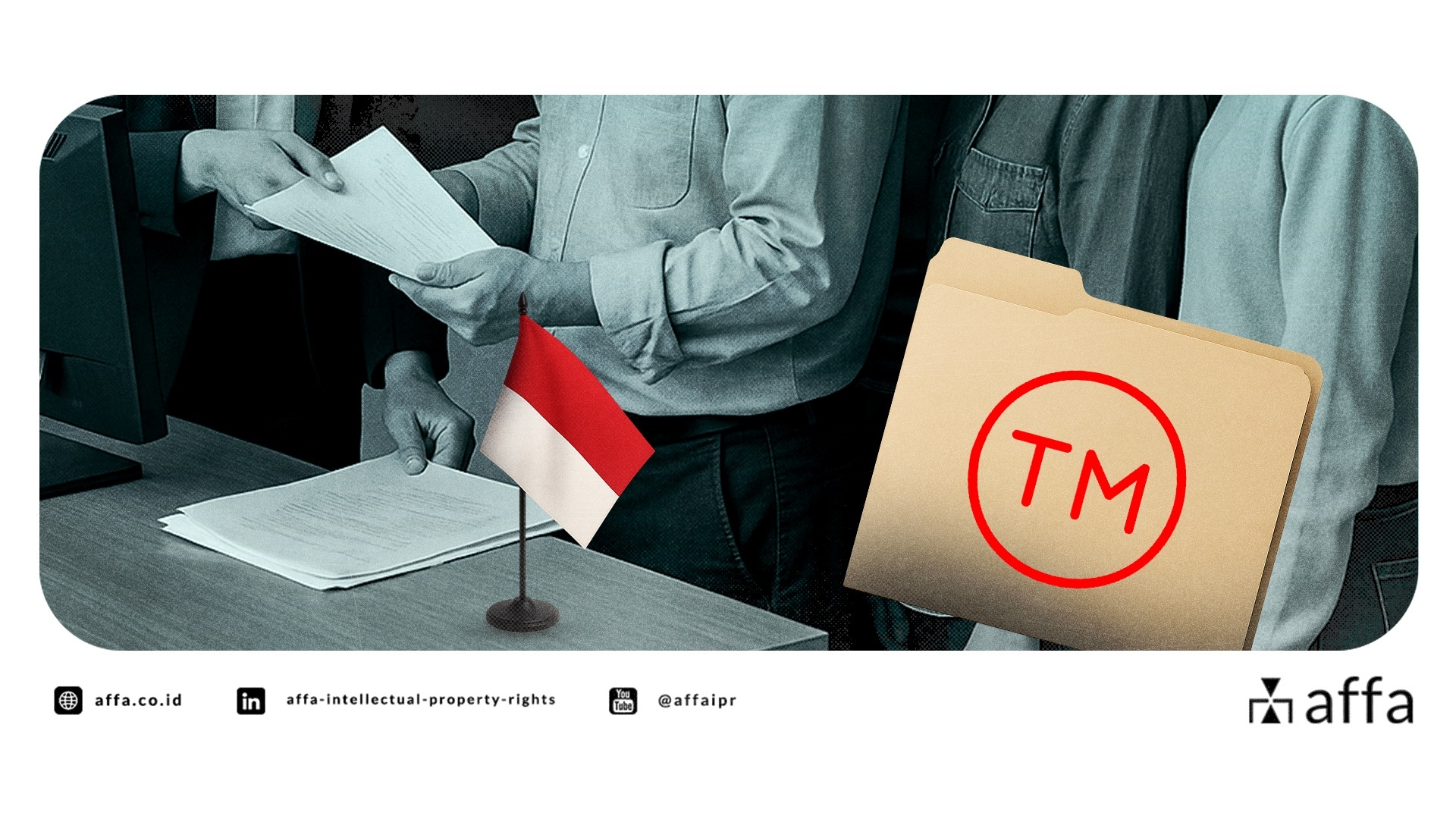
The use of the Madrid System — the international Trademark registration system administered by WIPO — continued to show positive growth globally throughout 2024. Indonesia has also become an important part of this growth, both as a designated country and as a country of origin for international trademark applications.   Throughout 2024, Indonesia received 8,678 international designations under the Madrid System. This means that thousands of global Trademark owners are now targeting Indonesia to secure exclusive rights in this strategically important domestic market. Compared to the previous year, designations to Indonesia increased by +10.3%, marking significant growth in the Southeast Asian region. Indonesia even entered the Top 20 destinations!   Together with Vietnam (+11.2%), Thailand (+11%), and Malaysia (+9.3%), Indonesia ranked among the countries with the highest growth in Trademark protection demand under the Madrid System in 2024. This reflects the global market’s growing confidence in Indonesia’s economic potential and the increasing importance of Trademark protection in the country. Outbound Trademark Applications from Indonesia Also on the Rise   Not only has Indonesia become more attractive to foreign applicants, but Indonesian Trademark owners are also increasingly utilizing the Madrid System to secure protection in multiple jurisdictions. In 2024, 113 Madrid applications were filed by applicants based in Indonesia, representing a 13% increase compared to the previous year.   This growth indicates rising awareness among Indonesian businesses — from SMEs to large corporations — of the importance of securing Trademark rights internationally at an early stage of business expansion. Strong Trademark protection in export destination countries has now become an integral part of the global business strategy for Indonesian companies. AFFA Intellectual Property Rights Handles 10% of Madrid Applications from Indonesia   Of these 113 outbound filings, approximately 10% were handled by AFFA Intellectual Property Rights, a registered Trademark consultant with an extensive international network.   With experience managing Madrid filings across major jurisdictions — including the United States, European Union, Japan, China, ASEAN, the Middle East, and Africa — AFFA IPR remains committed to being a strategic partner for Indonesian businesses expanding their international Trademark protection.   Read also: Trademark Registration Procedure in Bali   Should you need more information about filing Trademark applications designating Indonesia via the Madrid Protocol, please contact us at [email protected].   Source: WIPO Madrid Yearly Review 2025

Details

Indonesia Has a ‘First-to-File’ System. Here’s What That Really Means - AFFA IPR

Indonesia Has a ‘First-to-File’ System. Here’s What That Really Means…

In Indonesia, Trademark rights belong to the party that files first, not necessarily to the party that used the mark first. This system is similar to many jurisdictions that adopt the first-to-file principle, although some countries, such as the United States, recognize first use.   This creates serious risks, especially for foreign brand owners who enter the market through local distributors or partners. In many cases, these local parties may file your Trademark under their own name, either as leverage or as a bad-faith attempt to block your market entry.   While Indonesia allows legal actions to challenge bad-faith filings, these processes can be costly, time-consuming, and uncertain. The best strategy remains simple and preventive: file your Trademark as early as possible — ideally before entering the market or appointing any local partners.   Want to stop your competitors or squatters from beating you to it? Book a free 15-minute call, and we will help you secure your Trademarks before anyone else does.   ? E-Mail : [email protected] ? Book a Call : +62 21 83793812 ? WhatsApp : +62 812 87000 889

Details
Why You Should File Your Trademark in Bahasa Indonesia? - AFFA IPR

Why You Should File Your Trademark in Bahasa Indonesia?

When you file your Trademark in a foreign country like Indonesia, the risk is not always direct copying. Often, local squatters will translate, transliterate, or adapt your Trademark into “Bahasa Indonesia” (Indonesian language) to create a confusingly similar version that still attracts your market, but is still conceptually similar or identical.   Indonesia’s Trademark Law recognizes both identical and confusingly similar marks as potential infringements. However, if you only file your Trademark in its original foreign language, it may leave the door open for others to secure rights over its Bahasa Indonesia version.   For instance, you have filed a Trademark for “ROSE” in Class 3 covering cosmetics. However, another party still has a chance to secure registration for “MAWAR” (the Indonesian translation of Rose) in the same class if the examiner is not careful enough to check conceptual similarity with your Trademark.   By filing your Trademark in Bahasa Indonesia from the start, you lock in both versions of your brand identity, making it much harder for local copycats to exploit translation loopholes.   Book a free 15-minute call, and we will help you protect both the original and local versions of your Trademarks in Indonesia — before someone else does.   ? E-Mail : [email protected] ? Book a Call : +62 21 83793812 ? WhatsApp : +62 812 87000 889

Details
Collaborative Search and Examination (CS&E) between IPOS and DGIP - AFFA IPR

Collaborative Search and Examination (CS&E) between IPOS and DGIP

For innovators and Patent Holders seeking faster and higher-quality Patent prosecution, the Collaborative Search & Examination (CS&E) program offers a promising opportunity. A first in ASEAN, the IP Offices of Singapore and Indonesia have committed to accelerating the search and examination processes for the applicants who file Patents in both countries. The program was launched on January 2, 2025, for an initial period of two years. It is unclear whether this will be extended for now.   What Is CS&E?   CS&E is an international pilot initiative where participating Patent offices, such as those in Singapore (Intellectual Property Office of Singapore) and Indonesia (Directorate General of Intellectual Property), conduct joint searches and examinations on the same PCT (Patent Cooperation Treaty) application.   The result is a unified search and examination report that reflects insights from multiple jurisdictions, saving time, avoiding duplication, and improving quality.   Indonesia’s Role in CS&E   According to IPOS, Indonesia’s DGIP and IPOS share a combined quota for CS&E applications: Cap per year: 10 (shared by DGIP and IPOS) Cap per month: 1 (rollover allowed, up to max 2) Cap per applicant: 1 per month   This means that if you are entering the Indonesian national phase via PCT, and your application qualifies for CS&E, the DGIP may collaborate with IPOS to produce a joint search report, potentially accelerating your prosecution process.   Eligibility   Applicants who wish to take advantage of this program must meet the following criteria:   Appointment of local representative/address (i.e. registered IP agent/attorney). The application should contain 20 or fewer claims, including three or fewer independent claims. Adherence to the CS&E volume limit.   Key Features   Complimentary CS&E Request until 1 January 2027, but the fees for filing, search and examination should still be paid. Enhanced Prior Art Search and Examination Results.   How Can Applicants Benefit from CS&E in Indonesia or Singapore?   Accelerated First Office Action within 10 months. Prioritised Examination. Deferred Translation and Official Costs for Filing and/or Search and Examination.   You may request CS&E through IPOS or DGIP if: Your PCT application designates Indonesia and Singapore. You are within the quota (as above). You wish to leverage a unified search/exam result for faster decisions.   Want to explore CS&E or other Patent acceleration strategies in Indonesia? Contact us to book a free 15-minute consultation with our Patent Attorneys: ? E-Mail : [email protected] ? Book a Call : +62 21 83793812   Source: IPOS – Collaborative Search and Examination Programme Factsheet

Details
PCT National Phase in Indonesia: Is the 31-Month Deadline a Hard Deadline? - AFFA IPR

PCT National Phase in Indonesia: Is the 31-Month Deadline a Hard Deadline?

If you are eyeing Indonesia for your PCT National Phase entry, you have likely heard about the 31-month rule, which is calculated from the earliest priority date.   But here is  the key question: “Miss the deadline — and you’re out?”   The answer is: Not necessarily.   Unlike some jurisdictions, Indonesia offers a second chance. The Directorate General of Intellectual Property (DGIP) accepts late entry, up to 12 months after the 31-month deadline, provided: You pay an additional official fee, and Submit a written explanation justifying the delay.   This flexibility helps businesses avoid losing rights over paperwork or timing errors, but the longer you wait, the greater the risk.   Our advice? Don’t cut it close. However, if you really have to, be aware of your options and the extra requirements.   Need to file a late PCT national phase in Indonesia — or avoid the mistake in the first place? Please do not hesitate to contact a registered Patent Attorney in Indonesia.   ? E-Mail : [email protected] ? Book a Call : +62 21 83793812

Details
Trademark Oppositions: What Big Brands Are Doing Behind the Scenes - AFFA IPR

Trademark Oppositions: What Big Brands Are Doing Behind the Scenes

In Indonesia, the Trademark opposition window is only 2 months, but don’t let that short timeline fool you. For global companies and established brand owners, it’s one of the most powerful tools to block copycats before they ever reach the market.   Here’s how it works:   Every new Trademark application is published for public review for exactly two months. During this time, any party with a legal interest, especially those with prior filings in Indonesia, can oppose.   Miss this window, and your options shrink fast!   After the 2-month period, opposition is no longer possible. Your only remaining option is a court-based cancellation, which is more costly and time-consuming.   So what do big brands do?    They monitor new filings on a weekly basis and respond promptly. The goal? Stop bad-faith actors at the earliest stage, when it’s faster, cheaper, and more likely to succeed.   The catch?   To win, you usually need an existing application or registration in Indonesia. The sooner you file, the stronger your legal standing to oppose.   Want to monitor all new Trademark filings that may threaten your brand? Let us handle it.   Book a free 15-minute call, and we’ll show you how smart oppositions keep global brands safe in Indonesia.   ? E-Mail : [email protected] ? Book a Call : +62 21 83793812

Details
Trademark Squatting in Indonesia: Real or Hype? - AFFA IPR

Trademark Squatting in Indonesia: Real or Hype?

Spoiler: It’s real — and surprisingly common.   Trademark squatting is not just a scary headline. It frequently occurs in Indonesia, particularly in fast-moving consumer sectors such as beauty, fashion, and F&B. Both local and foreign parties rush to register brands that do not actually belong to them, hoping to profit when the rightful owner enters the market.   But here is the good news:  Most squatters lose — if challenged strategically and in time.   However, this requires you to complete your “homework” before we can fight the squatter before the Court of Commerce in Indonesia, such as:   At least 5 Trademark registrations filed overseas before the squatter(s) filed the same Mark in Indonesia. The more registrations there is, the better. Evidence of use overseas by your company. If possible, any leads or evidence that suggest the squatter(s) had past interactions with your company (i.e., asking for license or distribution rights).   Indonesia’s Trademark Law allows oppositions at the Trademark Office stage and cancellations based on bad faith at the Court of Commerce stage. However, cautions and preparations are needed before you can pursue your rights in this case.   Avoid the squat trap, email or book a free 15-minute call with us — let’s make sure your Trademark stays yours!   ? E-Mail: [email protected] ? Book a Call: +62 21 83793812

Details
How to Pay Patent Annuity Fees in Indonesia if the Patent Owner is a Foreign Individual or Entity? - AFFA IPR

How to Pay Patent Annuity Fees in Indonesia if the Patent Owner is a Foreign Individual or Entity?

For foreign Patent owners—whether individuals or entities—navigating Patent Annuity payments in Indonesia requires careful attention to local legal requirements. Under the latest Indonesian Patent Law (Law No. 65 of 2024), foreign applicants or Patent Holders are not permitted to interact directly with the Directorate General of Intellectual Property (DGIP) for official filings, including Annuity Payments. Instead, they are legally required to appoint a registered Intellectual Property Consultant as their proxy.   Legal Basis: Article 28 of Law No. 65 of 2024   “An Application filed by an Applicant who does not reside or does not have permanent domicile in the territory of the Republic of Indonesia must be filed by his/her Proxy. The Applicant, as referred to in Paragraph (1), is required to state and select the address of the Attorney as the legal domicile in Indonesia.”   This provision applies not only to initial Patent filings but also to any subsequent procedures related to the Patent—including annuity payments.   Why Is a Local Proxy Mandatory?   The purpose of requiring a legal representative within Indonesia is to avoid complications in service due to geographic distance and travel time. As stated in the explanation of the Law:   “The appointment of power of attorney and legal domicile in Indonesia aims to not complicate services due to distance and travel time.”   In practice, this means that even if a foreign Patent Holder wishes to make timely Annuity Payments, such payments will not be accepted by the DGIP unless submitted through a registered local proxy.   What Happens If a Foreign Patent Owner Pays Without a Local Proxy?   Without a legally appointed Indonesian Intellectual Property Consultant, the payment is considered invalid. This could result in: Rejection of the Annuity Payment by the DGIP; Legal status of the Patent becoming vulnerable, especially if deadlines are missed as a result; Loss of Patent Rights if annuity obligations are not fulfilled properly through the designated channels.   How to Appoint a Local Proxy?   To comply with Indonesian law, foreign individuals or entities must: Sign a Power of Attorney (PoA) authorizing a registered Indonesian IP Consultant; Provide the necessary details for the Consultant to act as legal proxy and domicile; Work with the Consultant to monitor and schedule annuity payments according to Indonesian regulations.   If you’re a foreign Patent Owner, it is not just a matter of convenience but a legal obligation to appoint a registered Indonesian IP Consultant to handle your Patent Annuity fees. Doing so ensures compliance, avoids unnecessary risks, and maintains the enforceability of your patent in Indonesia. Should you need more information about your annuity payments in Indonesia, feel free to contact us at [email protected].

Details
Trademark Renewal in Indonesia - AFFA IPR

Trademark Renewal in Indonesia

In Indonesia, the procedure for renewing a Trademark is governed by Law No. 20 of 2016 on Trademarks and Geographical Indications (“Trademark Law”). According to this regulation, a registered Trademark is valid for 10 years from the filing date and may be renewed within 6 months prior to its expiration date, and up to 6 months after the expiration date (under the grace period mechanism) with additional official fees.   Before the enactment of the current Trademark Law, failure to renew a Trademark on time meant automatic removal from the register, with no recovery route other than refiling a brand-new application. Fortunately, under the current regime, the system is more forgiving—albeit with additional cost implications. As in many areas of Intellectual Property, timeliness is essential, and renewal deadlines should be treated with the same gravity as initial filing deadlines.   What Happens If the Deadline Is Missed?   Missing the renewal deadline does not immediately result in loss of rights. Under the Trademark Law, owners are granted a 6-month grace period after the expiry date in which they may still renew their Trademark. However, this comes at a cost: the official fees are approximately doubled.   It is important to note that once the grace period lapses, renewal is no longer possible, and the Trademark will be removed from the register. The only available option at that point is to file a new Trademark application—a route that may come with increased risks, especially if similar marks have been filed in the interim.   When Can a Trademark Be Renewed?   A Trademark renewal may be filed as early as 6 months prior to the expiration date. To renew a registered Trademark in Indonesia, the following documents are required:   Statement of Use of Mark While a declaration of use is mandatory, no physical evidence of use is required to be submitted to the Directorate General of Intellectual Property (DGIP).  Power of Attorney Foreign Trademark owners must appoint a local agent or legal representative. A signed Power of Attorney is required for the renewal process.   Timeline Once the renewal application is submitted, the DGIP will issue a renewal receipt. Thanks to the digitization of the system, the renewal certificate or confirmation notice is generally issued within a day, making the process swift and efficient compared to earlier practices.   Should you need more information about the Trademark Renewal in Indonesia, feel free to contact us at [email protected].

Details
Blindboxes, Resellers, and IP: When Does Selling Cross the Line? - AFFA IPR

Blindboxes, Resellers, and IP: When Does Selling Cross the Line?

Action figure communities in Indonesia have recently been shaken by a wave of takedowns on popular products across e-commerce platforms. Not only unofficial sellers like casual collectors were affected, but even official resellers who had followed the “white list” registration procedures were hit. The trigger? An official notice from the Trademark Holder (a licensed distributor of the Trademark Owner) prohibits various uses of the brand name and logo and the sale of unboxed items.   This incident raises an important question among many collectors and business owners: Can Intellectual Property (IP) Holders arbitrarily ban secondhand sales? Is this legal?   The Exclusive Rights of Trademark Holders   Legally, a Trademark Holder has the exclusive right to control how their mark/name/logo is used, especially in marketing and product distribution. However, it’s important to note:   IP law does not automatically prohibit the resale of secondhand products, as long as the items are genuine and were lawfully acquired. Under a principle known as the “exhaustion doctrine”, the rights of a Trademark Holder are considered “exhausted” once the product is sold lawfully for the first time. This means the buyer may resell it. However, the Trademark Holder does retain the right to restrict the use of their brand in contexts such as store branding, product repackaging, or unauthorized logo usage that may mislead consumers or harm brand image.   In short, banning the resale of secondhand goods just because they are used can be legally disputed. But banning the unauthorized commercial use of logos, names, and other brand elements is legally valid.   Safe Tips for Selling Secondhand Items Without Violating IP Rights   To avoid infringing a brand’s rights when selling collectibles or secondhand products, here are some best practices:   Avoid using the brand name or logo in your store title. Use neutral descriptions like “blindbox collectible” or “random rare figure.” Clarify that the product is from a personal collection and is pre-owned. This can help show there’s no intention to violate distribution rights. Do not modify or rebrand the product. Repackaging or adding custom branding (like stickers) can be considered infringement. Avoid implying that you’re an official distributor. If you’re not part of the authorized distribution channel, avoid using terms like “official” or “authorized.” Do not sell opened blindbox items if the Trademark Holder prohibits it. If a product is meant to be a surprise item, unboxing and selling it by character name can be considered a violation of its commercial value.   But Why Can People Freely Sell Used iPhones?   This comparison has sparked debate. After all, people sell secondhand iPhones on online platforms all the time without issue. What’s the difference?   Apple and other phone manufacturers do not prohibit the sale of secondhand devices as long as they are genuine and unmodified. iPhones are not designed as “surprise” collectibles like blindboxes, so there’s no concern about damaged exclusivity due to unboxing. Sellers of secondhand iPhones also do not claim to be official distributors and don’t use Apple’s logo for store branding.   In essence, the issue is not the fact that the item is secondhand, but the context of branding and marketing.   Selling secondhand goods is legally allowed, as long as the products are genuine and the seller does not mislead consumers by misusing brand elements. For collectors and small sellers, understanding the limits of IP law is key to keeping your listings safe from takedowns or legal claims.   Should you need expert advice on Trademark usage in online sales, contact us at [email protected].

Details