[Policy Insight] Free from Tariffs for U.S. Brands to Indonesia — Why Trademark Protection Is Your First Move - AFFA IPR

[Policy Insight] Free from Tariffs for U.S. Brands to Indonesia — Why Trademark Protection Is Your First Move

A new trade agreement between the United States and Indonesia, announced by President Donald J. Trump, marks a turning point for U.S. businesses eyeing Southeast Asia. The key highlights:   Full market access for U.S. goods—no tariffs, no non-tariff barriers. Indonesia commits to purchasing $15 billion in U.S. energy, $4.5 billion in agricultural goods, and 50 Boeing jets. A 19% tariff remains on Indonesian goods entering the U.S.   What Does This Mean for U.S. Brand Owners?   Indonesia, with over 280 million consumers, is now one of the most accessible emerging markets for U.S. companies. But while opportunity is ripe, first-mover advantage goes only to those who protect their brands early.   Seamless Market Entry, But Not Without Risk Lower costs and fewer trade barriers mean U.S. brands in fashion, beauty, tech, F&B, automotive and lifestyle can expand into Indonesia faster than ever. However, this also means faster exposure to copycats. Register Your Trademark Before Someone Else Does Indonesia follows a first-to-file Trademark system. That means anyone can register your brand name if you haven’t already—and legally block your business. Early registration isn’t just a legal formality; it’s your strongest business shield. Expect Counterfeits & Trademark Squatters With increased visibility comes increased risk. Unauthorized sellers, counterfeiters, and opportunistic squatters often rush to register well-known foreign brands locally. Once they do, legal recovery becomes costly and time-consuming.   Secure Your Brand Now—Not After the Damage Is Done This trade deal opens the floodgates—but only for brands that are protected. Don’t let your U.S. success be undermined overseas. Register your Trademark in Indonesia before launching your products or entering into distributor agreements.   Need help protecting your Trademark in Indonesia? Book a free 15-minute call with our professional consultant:   ? E-Mail : [email protected] ? Book a Call : +62 21 83793812 ? WhatsApp : +62 812 87000 889

Indonesia Joins the Riyadh Design Law Treaty - AFFA IPR

Indonesia Joins the Riyadh Design Law Treaty

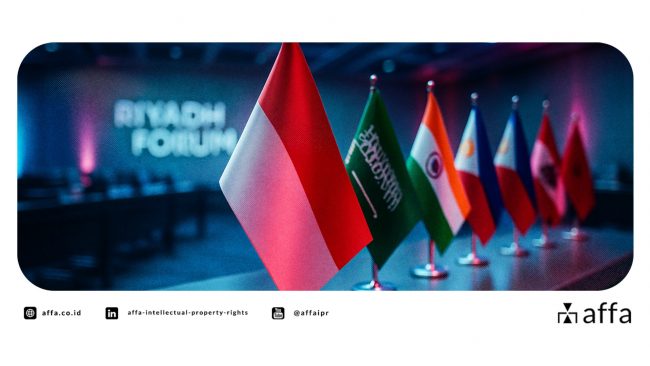
On July 8, 2025, Indonesia officially signed the Riyadh Design Law Treaty (RDLT), joining a growing number of countries committed to modernizing global design protection. This historic treaty was adopted earlier on November 22, 2024, at a WIPO Diplomatic Conference in Riyadh, following nearly two decades of negotiations.    With over 190 participating countries and 18 signatories on day one, the RDLT represents a significant milestone in international IP harmonization, aiming to streamline and simplify the procedural aspects of Industrial Design registration worldwide. The active participation of countries like India (which ratified the treaty in November 2024) and now Indonesia, underscores a strong regional commitment to future-ready IP infrastructure.   What the Treaty Introduces: Streamlined & Smart   With Indonesia’s accession reinforcing the treaty’s growing global significance, the RDLT introduces a unified, flexible framework for Industrial Design registration. It eliminates unnecessary bureaucracy and offers practical tools for navigating the digital era. Key features include: Standardized filing requirements, capped to a reasonable and predictable list. 12-month grace period for disclosures prior to filing—beneficial for creators who share designs publicly before formal registration. Multiple-design applications, allowing several designs to be filed in one submission. Flexible representation formats such as drawings, photographs, and digital media. Deferred publication of up to six months, helping manage confidentiality. Procedural safeguards like relief for missed deadlines and simplified renewals. Support for electronic filing systems and cross-border data exchange.   These measures aim to empower not only large corporations, but also SMEs, startups, and individual designers navigating the increasingly interconnected global market.   A Global Movement Backed by Regional Leaders As of the adoption date, the following 18 countries signed the RDLT: Bosnia and Herzegovina, Central African Republic, Congo, Costa Rica, Côte d’Ivoire, Democratic People’s Republic of Korea, Gambia, Ghana, Lebanon, Morocco, Paraguay, Philippines, Republic of Moldova, São Tomé and Príncipe, Saudi Arabia, Sudan, Uzbekistan, and Zimbabwe.   India followed shortly thereafter, signing and ratifying the treaty on November 26, 2024. With Indonesia joining on July 8, 2025, ASEAN’s largest economy signals its readiness to align domestic regulations with global standards—an important step for attracting design-driven investment and protecting creative industries across Southeast Asia.   Why the RDLT Matters for IP Stakeholders   The treaty’s adoption is more than a procedural update—it’s a strategic response to the evolving needs of the design economy: Greater consistency in design registration processes worldwide. Enhanced access for smaller players through reduced red tape. Recognition of digital realities, including electronic filing and digital design formats. Flexibility for national values, such as optional disclosures on traditional cultural expressions or traditional knowledge. Improved legal certainty, with clear deadlines and grace provisions that support creators in fast-moving industries.   For businesses operating across multiple jurisdictions, the RDLT brings long-overdue clarity and efficiency—crucial for accelerating go-to-market strategies and safeguarding innovation.   The Road Ahead   The RDLT will enter into force three months after 15 contracting parties deposit their instruments of ratification. Given the pace of recent accessions—including major economies like India and emerging creative markets like Indonesia—that threshold may be reached within the next 12 to 24 months.   Now is the time for designers, legal professionals, and IP-focused businesses to prepare. Understanding and adapting to the RDLT’s framework will be critical to staying competitive in a global design economy.   At AFFA Intellectual Property Rights, we’re tracking this landmark treaty rollout closely. Our team helps international clients assess their readiness, align procedures with the Riyadh standards, and embrace new IP filing strategies. If you’re a designer, brand owner, or business innovator looking to secure your design rights globally, reach out to explore how AFFA can support your international IP roadmap.   Need help protecting your Industrial Design in Indonesia? Book a free 15-minute call with our professional consultant:   ? E-Mail : [email protected] ? Book a Call : +62 21 83793812 ? WhatsApp : +62 812 87000 889   Source: World Intellectual Property Organization

Indonesia and China Forge Strategic Copyright Alliance to Strengthen Global IP Protection - AFFA IPR

Indonesia and China Forge Strategic Copyright Alliance to Strengthen Global IP Protection

In a major step toward deeper international IP collaboration, the Government of Indonesia and the People’s Republic of China have signed a Memorandum of Understanding (MoU) to enhance cooperation in the field of Copyright and related rights. The agreement was formalized during the sidelines of the World Intellectual Property Organization (WIPO) General Assembly in Geneva, Switzerland, on July 8, 2025.   This landmark MoU, signed between Indonesia’s Ministry of Law and Human Rights and China’s National Copyright Administration, marks a pivotal moment in the bilateral IP relationship between two of Asia’s largest creative economies.   Responding to the Challenges of a Digital World   “This MoU represents a new chapter in our countries’ commitment to protect creativity in an increasingly borderless digital era,” said Minister of Law Supratman Andi Agtas. “It is more than an agreement—it’s a framework for resilience, cooperation, and innovation.”   At its core, the agreement focuses on strengthening Copyright enforcement, building institutional capacity, and fostering mutual promotion of the creative and cultural industries. Both countries have recognized the need for joint responses to transnational Copyright infringement, especially amid the rise of digital piracy and the development of generative AI.   Key Areas of Cooperation   Under the MoU, Indonesia and China will collaborate in the following areas: Exchange of legal and technical information on Copyright and related rights. Joint training programs for staff and professionals. Promotion of cross-border creative and cultural exchange. Facilitation of relations between Collective Management Organizations (CMOs). Public awareness campaigns to elevate IP education   Crucially, both parties agreed to develop annual work plans, appoint official contact points, and organize practical engagements—ranging from seminars and workshops to policy dialogues on emerging Copyright issues.   A Strategic – Soft Power Approach   While the MoU is non-binding, its strategic impact is significant. It reinforces Indonesia’s broader vision of positioning Intellectual Property as a tool of cultural diplomacy, especially within the fast-evolving global IP landscape.   The MoU will remain in effect for five years, with an option to renew for another term. Both countries may revise the agreement through mutual written consent, ensuring flexibility in addressing future challenges and opportunities.   As global stakeholders watch with growing interest, this Indonesia-China partnership sends a clear message: International Copyright cooperation is no longer optional—it is essential!   At AFFA Intellectual Property Rights, we support stronger international IP cooperation like the Indonesia–China partnership. Whether you’re expanding into Indonesia or managing IP across Asia, our consultants are ready to guide you.   Need help protecting your Copyright in Indonesia? Book a free 15-minute call with our professional consultant:   ? E-Mail : [email protected] ? Book a Call : +62 21 83793812 ? WhatsApp : +62 812 87000 889   Source: Directorate General of Intellectual Property

Industrial Design Filing in Indonesia: Local Licensed IP Consultant Required for Foreign Applicants - AFFA IPR

Industrial Design Filing in Indonesia: Local Licensed IP Consultant Required for Foreign Applicants

If you’re considering Indonesia for Industrial Design protection, there’s one crucial fact you can’t afford to miss: Indonesia is not a member of the Hague Agreement. That means no international shortcut—and no room for error when it comes to choosing a reliable local partner.   For many IP holders, the Hague Agreement provides a streamlined route to securing design rights in multiple jurisdictions through the World Intellectual Property Organization (WIPO). But Indonesia is not party to the Hague Agreement under either the 1999 Geneva Act or the 1960 Hague Act.   This means you cannot designate Indonesia via an international design application. All applications must be filed directly with Indonesia’s Directorate General of Intellectual Property (DGIP).   Local Agent Is Mandatory for Foreign Applicants   According to Article 1(6) of Ministerial Regulation No. 8 of 2016 on Procedures for Filing Industrial Designs: “Foreign applicants must file their applications through an Intellectual Property Consultant registered with the DGIP.” In other words, foreign entities may not file directly, either physically or online, regardless of whether the design was first filed in a Paris Convention country or not.   What Happens If You Ignore This?   Without a registered local consultant: Your application will be deemed incomplete and may be rejected. You risk missing the 6-month priority period under the Paris Convention due to procedural delays. Any errors in translation or classification may invalidate your application.   A local IP consultant ensures your application meets all administrative, language, and document legalization requirements.   Key Facts About Design Filing in Indonesia   Topic Details International Route Not available (not a Hague member) Local Representation Mandatory for foreign applicants Term of Protection 10 years from filing date (non-renewable) Examination Yes, for both formalities and substantive matters. Opposition Period 3 months from publication date Governing Law Law No. 31 of 2000 on Industrial Design   Despite the absence of the Hague route and renewals, Indonesia’s design system is clear, relatively fast, and enforceable. It also operates in the context of Southeast Asia’s largest consumer market, with over 270 million people and growing enforcement capacity.   The DGIP recognizes priority rights under the Paris Convention (to which Indonesia is a party), so foreign applicants still benefit from global alignment, as long as they go through the right channel.   Need help filing your design in Indonesia? Book a free 15-minute call with a registered Industrial Design consultant:   ? E-Mail : [email protected] ? Book a Call : +62 21 83793812 ? WhatsApp : +62 812 87000 889