Demystifying-the-Public-Domain-Permissions-and-Limitations-affa-global

Demystifying the Public Domain: Permissions and Limitations

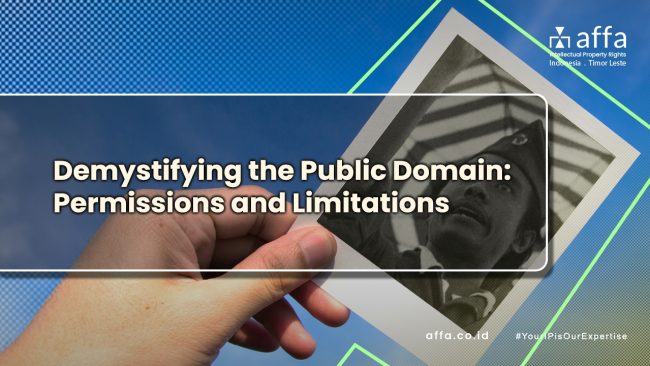
Demystifying the Public Domain: Permissions and Limitations We can almost always see this iconic portrait of Bung Tomo‘s enthusiastic speech every November 10th, as Indonesia celebrates National Heroes’ Day. In fact, according to Tempo Magazine‘s journalistic investigation, this photo was not taken on that date but later in 1947 by Frans Mendur, when Bung Tomo chaired a meeting in Malang, East Java.   As a Work, this iconic portrait was first published in 1949, together with other historical photos of the Indonesian struggle, including photographs of the Proclamation, taken by Alex Mendur, Frans Mendur, and Abdoel Wahab Saleh, in a photo album “Revolutionary Paintings” courtesy of the Indonesia Press Photo Service (IPPHOS). The first two names are the brothers who founded IPPHOS. Because the portrait of Bung Tomo in Malang is more in line with the public’s imagination about the war spirit of November 10, rather than the actual conditions, where orations were only given in radio studios, this portrait is widely used to support Heroes’ Day.   However, a portrait is still a Work that has copyright protection. Articles 1 and 9 of the Indonesian Copyright Law specifically state that a portrait is a photographic Work with human objects, and only the Creator has Economic Rights to publish, reproduce in all forms, adapt, transform, and distribute a Work. If another party wants to use it, they must obtain permission from the Creator or Copyright Holder.   What if the Creator or Copyright Holder no longer exists? The Copyright Law regulates the validity period of Economic Rights, a reference for whether we still have to obtain permission from the Creator or Copyright Holder for a Work. If the validity period has passed, the Work has entered the Public Domain, and the public can use it freely without asking anyone for permission.   The Copyright Law in Indonesia divides the validity period of Economic Rights over Work into three different periods:   1. 25 years since the first publication; Applies to Works of Applied Art in the form of fine art created by using art to a product so that it has an aesthetic impression to meet practical needs, including images, motifs, or ornaments on a product.   2. 25 years since the first publication; This applies to the following three categories: Photographic works; portrait; cinematographic; video games; computer program; the appearance of written work; translations, interpretations, adaptations, anthologies, databases, adaptations, arrangements, modifications, and other works resulting from transformation; translation, adaption, arrangement, transformation or modification of traditional cultural expressions; compilation of works or data, either in a format that computer programs or other media can read; and the compilation of traditional cultural expressions as long as the compilation is an original work. Works Made for Hire; Anonymous Works and Pseudonymous Works.   3. During the life of the creator and 70 years after the creator’s death; Books, pamphlets, and all other written works; lectures, lectures, speeches, and other similar works; demonstration materials created for educational and scientific purposes; songs or music with or without text; drama, musical drama, dance, choreography, puppetry, and pantomime; works of fine art in all forms such as paintings, drawings, carvings, calligraphy, sculpture, statues or collages; architectural works; map; and batik artwork or other motif art.   4. Limitless Time Applies to held Traditional Cultural Expressions by government, which includes the following six categories: a. textual verbal, both spoken and written, in the form of prose or poetry, in various themes and message content, which can be in the form of literary works or informative narratives; b. music, including, among other things, vocal, instrumental, or a combination thereof; c. movement, including, among other things, dance; d. theater, including, among other things, puppet shows and folk plays; e. fine arts, both in two-dimensional and three-dimensional form, made from various materials such as leather, wood, bamboo, metal, stone, ceramics, paper, textiles, etc., or a combination thereof; and f. traditional ceremonies.   From the four categories above, it can be concluded that all works, if not included in Traditional Cultural Expressions, will ultimately fall into the Public Domain. Therefore, the portrait of Bung Tomo, first published in 1949, has been in the Public Domain since 1999.   In addition, there are regulations in Article 43 (e) of the Copyright Law regarding Copyright Restrictions, which states that duplication, announcement, and/or distribution of portraits of the President, Vice President, Former President, Former Vice President, National Heroes, heads of state institutions, leaders ministries/non-ministerial government agencies, and/or regional authorities with due regard for dignity and fairness by the provisions of laws and regulations are not considered a Copyright Infringement. Since 2008, Bung Tomo has been designated as a National Hero, so the public’s use of this iconic portrait is not Copyright infringement.   However, it would be best to remember that the legal basis governing Copyright varies in each country. So, the rules that apply in Indonesia may be different from other countries.   Comparison of Public Domains Abroad Duration of Copyright in the United States The Copyright Law in the United States divides the duration of Copyright as follows:      1. During the life of the creator and 70 years after the creator’s death; The creator’s identity is known for all works created after January 1, 1978.      2. 95 years from the year of its first publication, or a term of 120 years from the year of its creation, whichever expires first; For Anonymous Works, Pseudonymous Works, and Works Made for Hire      3. 45 years after the creation; Works created before January 1, 1978, but expired before December 31, 2002; and, if the work is published on or before December 31, 2002      4. 28 years after the publication. Any Posthumous Work or of any periodical, cyclopedic, or other composite work upon which the copyright was originally secured by the proprietor thereof, or any Work copyrighted by a corporate body (otherwise than as assignee or licensee of the individual author) or by an employer for whom…

The-Minimum-Requirements-for-Industrial-Design-Registration-in-Indonesia-affa-global

The Minimum Requirements for Industrial Design Registration in Indonesia

The Minimum Requirements for Industrial Design Registration in Indonesia Having your Industrial Design registered and protected means you are ready to advance your product to the next stage. Because the exemplary Industrial Design plays a vital role in targeting specific market segments, creating new market niches, and strengthening the company’s branding and positioning.   Industrial Design in Indonesia: A Brief Overview Industrial Design refers to an article’s ornamental or aesthetic aspect, encompassing its visual appearance and features. It is not concerned with the technical or functional aspects of the product. In Indonesia, Industrial Design protection is governed by Law No. 31 of 2000 concerning Industrial Designs. This legal framework provides creators with the means to protect their original designs from unauthorized use or reproduction.   In previous articles, we have explained the importance of novelty in Industrial Design. This time, the comprehensive guide continues with the minimum requirements, including what must be prepared to apply for Industrial Design Registration.   Minimum Application Requirements 1. Fill out the Application Form Independently or Through a Registered Intellectual Property Consultant You can submit this filling process online on the Directorate General of Intellectual Property (DGIP) portal or through a reliable, experienced Intellectual Property Consultant. Using a Consultant will give you professional advice early on the chances of your registration application being accepted. This way, the application fee you pay will not be in vain. In addition to that, you don’t need to worry about completing the required documents.   To fill out the Application Form, you must include the following data: Types of Industrial Design: When applying, you must determine what Industrial Design you wish to register among the following 4 (four) options: 1. One Design What is meant by One Design is the overall product design, for example, a chair design or a food packaging design.   2. Set Design This category is selected if your design includes several products at once—for example, a set of tables and chairs or speakers and subwoofer.   3. Divisional/Partial Design This category is chosen if your design is only part of a pre-existing product. For example, the sole part of the shoes you have previously registered or the frame part that surrounds the glass of a pair of glasses.   4. Divisional/Partial Set Design As the name suggests, this category is selected if the design you are registering is only part of several products—for example, just the outer appearance of the speaker tubes of a set of loudspeakers.   Applicant Information Contains the full name, nationality, detailed address consisting of country, province, city/district, sub-district, postal code, email, and telephone number of the Applicant.   Designer Information If the data is not the same as the Applicant, then the Designer data must be filled in with full name, nationality, and country. Designer Data can also contain more than one Designer.   Consultant Information If you use a Consultant, the data required is the Consultant’s full name and address, as well as email and telephone number.   Desain Information This data must include the following information: 1. Title of Industrial Design The general name of the product in Indonesian, without including the brand or type of item. For example, for bottle products, just write “bottle,” without adding “- 30 cm plastic”.   2. Description This section is the place to explain the product’s uses, product characteristics, and product features that you want to protect.   3. Claim In this section, you can choose the registered design, which is the complete product shape (for example, a car or shoes), configuration (for example, a car dashboard), line composition (for example, a pattern installed on a car seat), color composition (for example a colored batik design), or a combination thereof.   4. Locarno CLassification Locarno here refers to the “Locarno Agreement,” an international agreement in the field of Industrial Design that determines international classification based on a list of class and sub-class indications, as well as explanatory notes intended solely for administrative purposes of Industrial Design registration. Locarno consists of 32 class titles arranged sequentially, and class numbers are assigned according to the type, nature, or function of the goods indicated according to the relevant class title. You can choose the category according to your product type.   Priority Data This data must be filled in if the applicant comes from outside Indonesia. The information required is country of origin, priority number, priority date, and additional notes (if any).   2. Providing Figures and Descriptions The figures can be in a form of Technical Drawing, Computer Rendered Image, or Photo with the following appearance: Views: Perspective View Top view Bottom View Front look Back view Left Side View Right-side view Application Documents (administrative): Power of Attorney (if using a Consultant) Industrial Design Ownership Letter Assignment Document of Industrial Design Rights from Designer to Applicant A required letter if the Designer is not the same as the Applicant. Therefore, this letter must contain the following information: Assignor = Designer; Assignee = Industrial Design Owner/Applicant; Designers are individuals, one or more than one; The owner is an individual or a legal entity; Legal entities are represented by parties who are responsible for representing them, as evidenced by a position decree or similar. Priority Document along with its translation into Indonesian (must be sworn translated)   3. Pay the Application Fee Once all the documents are complete, you will receive detailed fees, and if payment has been made, it will continue with the Formality Examination, Publication, and Substantive Examination. All of these documents will be provided to you by us later on.   Furthermore, if no problems are found with the application or no existing design is found, DGIP will issue an Industrial Design Rights Certificate as proof of ownership of Industrial Design Rights. This protection certificate is valid for 10 (ten) years and cannot be extended, valid from the date the application was received, not from the time the certificate was issued.   Should you have other questions about the Industrial…

The-Impact-Of-Intellectual-Property-On-The-Quality-Of-Life-For-People-With-Disabilities-affa-global

The Impact of Intellectual Property on the Quality of Life for People with Disabilities

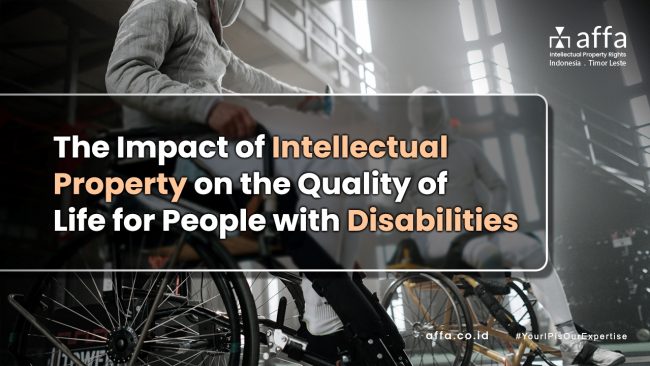
The Impact of Intellectual Property on the Quality of Life for People with Disabilities   The 2022* Asian Para Games, which ended yesterday in Hangzhou, China, showcased human civilization’s sportsmanship, high fighting spirit, and demonstrated the impact of Intellectual Property (IP) on the quality of life of people with disabilities in many ways. For example, the Games featured a wide range of patented assistive technologies used by athletes with disabilities to compete at the highest level. These patented assistive technologies included:   Running Prosthetics:  Losing a leg (or both) is not an obstacle for paralympic athletes to run; they no longer use prosthetic legs in the form of legs but unique legs in the form of carbon fiber plates, which are lighter and enable them to run like Olympic athletes. One of the Running Prosthetic manufacturers whose products are widely used is Ottobock, which currently has more than 1,800 patents.   Racing Wheelchairs: There are three sports where wheelchair use is permitted at the 2022 Asian Para Games: basketball, fencing, and tennis. Of course, they don’t compete with ordinary wheelchairs, but wheelchairs with innovative technology that makes them lighter but more robust, which allows them to act more quickly and safely.   Swim Fins: Swimming athletes who don’t have legs can use artificial fins made from silicon worn on their hands to swim faster and more efficiently.   Blindfolds: Because not all Paralympic athletes are entirely blind, for the competition to be fair, they are required to use unique cloth coverings, for example, when competing in athletics. These blindfolds are also made with an innovative design to be worn comfortably throughout the competition.   At the 2022 Asian Para Games, Indonesia achieved the highest achievement by reaching 6th place, under China, the Islamic Republic of Iran, Japan, the Republic of Korea, and India. The economic benefits obtained certainly do not only come to people with disabilities. The sporting event, which took place from October 22nd to 28th, 2023, generated billions of dollars in economic activity and created thousands of jobs from its implementation and innovative products protected by Intellectual Property.   Intellectual Property continues to play an essential role in improving the quality of life of people with disabilities in various ways, including: Encourage innovation in assistive technologies to help people with disabilities live more independent and fulfilling lives. For example, IP rights have been instrumental in developing technologies such as screen readers, speech-to-text software, and prosthetic limbs. Make assistive technologies more affordable and accessible to people with disabilities. For example, IP rights can establish licensing agreements allowing manufacturers to produce and sell assistive technologies at lower prices. Promote the inclusion of people with disabilities in the workplace and society. For example, IP rights can be used to protect the intellectual property of businesses that employ people with disabilities. This can help to create jobs for people with disabilities and reduce the stigma associated with disability.   Overall, the 2022 Asian Para Games were a powerful reminder of the positive impact that IP can have on the quality of life for people with disabilities. IP-protected assistive technologies can help people with disabilities live more independent and fulfilling lives, participate in the workplace and society, and achieve their full potential.    If you need more information about IP protection in Indonesia or abroad, please feel free to contact us via email at [email protected] Source: WIPO Magazines 2022 Asian Para Games   *) Dated 2022, as it originally marked the event scheduled for 2022, which was subsequently rescheduled to 2023 due to the COVID-19 Pandemic.

The-Intellectual-Property-Landscape-of-Tokusatsu-A-Comprehensive-Overview-affa

The Intellectual Property Landscape of Tokusatsu: A Comprehensive Overview

The Intellectual Property Landscape of Tokusatsu: A Comprehensive Overview Tokusatsu (特撮) is a Japanese term for live-action (non-anime) films or television programs that heavily use practical special effects. However, in its development, this genre in Japan is mainly used in movies or series with superhero themes. From giant monsters (Kaiju) such as Godzilla and Gamera, humans who turn into giant Ultraman, masked heroes riding a bike (Kamen Rider), colorful Super Sentai heroes, metallic heroes like Gavan, and many more.   In Japan, Tokusatsu has become an enormous industry. Every year, there are at least 3 (three) new series, 2 (films) on the big screen, and dozens of OTT content, with some toys that consistently record best-selling toy sales. The BANDAI toy company, as the Master Licensee of Kamen Rider, Ultraman, and Super Sentai, records revenues of around 60 billion Yen per year from the above Intellectual Properties. Of course, this is apart from the income from broadcasting rights received by Production Houses from broadcasting throughout the world.   Then, what other Intellectual Properties are related to Tokusatsu? Here is the explanation:   1.      Copyright Copyright is Intellectual Property in science, art, and literature resulting from inspiration, ability, thoughts, imagination, dexterity, skills, or expertise expressed in real form. According to the Copyright Law, the work is called Creation, and the creator is for sure called the Creator. Because one individual does not make Tokusatsu but is a joint work of several companies, the Creator can be the designer or production leader with the title of Producer, but these companies own the Copyright Holder. For example, the late Shotaro Ishinomori is recognized as the creator of the Kamen Rider series. Still, the Copyright Holder is listed as jointly owned by Ishimori Pro (Shotaro’s company), TV Asahi (the broadcasting TV station), and TOEI (the production house). Companies registered as Copyright Holders can also be seen from writing such as “(C) 2023 石森プロ・テレビ朝日・東映” in various published materials. Tokusatsu’s works related to Copyright are not only the series or films but also the songs, scripts, characterizations, illustrations, and books related to them. Copyright is protected as long as the creator is alive, plus 70 years after that, and cannot be extended. Protected here means that only the Copyright Holder has Economic Rights and Moral Rights, so that no other party may publish, duplicate, translate, adapt/arrange/transform, distribute, announce, communicate, or rent it without the permission of the Copyright Holder.   2.      Trademark Trademark in Tokusatsu is not the additional protection but the primary Intellectual Property, which makes the name unique, along with the logo, which makes it different from other works already on the market. In contrast to Copyright, which does not need to be registered, Trademarks must be registered to obtain protection. When applying for a Trademark, it is necessary to provide information about the appropriate protection classes according to its products and/or services. The number of classes registered for the Tokusatsu series, which airs throughout the year, usually reaches 22 classes, but for films, it is only around 6 (six) to a dozen. This significant difference in numbers is because broadcasts present throughout the year will also have more derivative products and services that can be produced, and all of them must be protected from the possibility of being exploited by other irresponsible parties. Some of the trademark classes that are usually registered for the Tokusatsu series that air throughout the year are classes 32 (beverages), 30 (processed food), 28 (toys), 25 (clothing), 16 (paper), and 9 (electronic equipment). Uniquely, the Trademark Registration process is open from the start of the application process, which can be accessed by the public via the Japanese Patent Information site, providing a means for fans to get a sneak peek at the name of the new Tokusatsu series, several months before the official announcement.   3.      Industrial Design In the world of Tokusatsu, there is a unique symbiotic mutualistic relationship between toy manufacturers and Copyright Holders. It is so unique that it is common knowledge that the Tokusatsu series is called a toy advertisement that airs throughout the year. As a toy manufacturer and shareholder of the Tokusatsu producers, BANDAI also provides other support, namely making character designs, so that they can be immediately ready to be produced in various kinds of toys liked by fans of various ages from abroad. The Industrial Designs for Tokusatsu toys registered by BANDAI can also be seen on the Japanese Patent Information site. Uniquely, even though the Industrial Design is registered and owned by BANDAI, all names involved in the creative process, including representatives from the production house, are still registered as the Designer. Registration of Industrial Designs for these toys is essential so that no other party makes imitation products. Because the practice of pirating Tokusatsu toys is usually done by producing the same toys but with different Trademarks. So by registering, even if these pirates escape the trap of Trademark violations, they will not escape Industrial Design violations.   4.      Patent Patents are one type of Intellectual Property that needs to be understood in Indonesia. It is as if the patent is Intellectual Property, even though it is only one type. Patents are Intellectual Property directly related to innovation and technology with novelty value. If associated with Tokusatsu, the patent protection could be in the thin but strong action figure joint technology, toy sensors that can be activated by finger movements or inserting a coded card, and BANDAI owns all the patents.   5.      Trade Secret The formula used to make a hero’s costume that is strong but light, to the right amount of chemicals to cause a significant but safe explosion, as well as other secret formulas, can be kept as Trade Secrets. These secrets make Tokusatsu a spectacle that continues to amaze fans, and all team members involved are bound by a Non-Disclosure Agreement (NDA).   6.      License Agreement After having a recorded Copyright…

The-Strategic-Genius-of-Hiding-Trademarks-in-Plain-Sight-The-Case-of-X-Corp-affa

The Strategic Genius of Hiding Trademarks in Plain Sight: The Case of X Corp

The Strategic Genius of Hiding Trademarks in Plain Sight: The Case of X Corp In the world of business and Trademarks, it’s often a chess game with high stakes. While more giant corporations might seem to have an advantage in this intricate dance of Intellectual Property, a move is so strategic yet surprisingly underutilized. It involves the clever art of hiding your intentions while securing valuable Trademark rights. This game plan is akin to hiding in plain sight and is more common than you think. One of the most recent examples? Elon Musk’s Twitter-to-X transformation.   It’s been three months since the tech mogul announced his brainchild, Twitter, would undergo a radical name change to simply ‘X.’ Yet, the element of surprise was maintained impeccably. The company’s first “X” Trademark filings with the United States Patent and Trademark Office (USPTO) only occurred on September 22. Intriguingly, these filings weren’t initiated within the United States but instead on the vibrant shores of Jamaica back in March.   So, what’s the secret sauce to this cunning move? Priority. The priority date is a vital element in the Trademark universe. By initially filing the “X” Trademarks in Jamaica, the masterminds at X Corp gained a crucial head start without giving away the existence of their filings. How did they do this? Through a globally binding treaty known as the Paris Convention.   The Paris Convention, inked by 178 countries, allows companies to take a strategic step. Suppose a Trademark is filed in one of these countries. In that case, it can be filed in any of the other signatory countries within six months while retaining the priority date of the original filing. The “X” Trademark’s Jamaican journey was pivotal in this context. Filed on March 24, 2023, it laid the foundation for the X Corp’s United States Trademark filings on September 22, 2023.   This move is nothing short of genius. While traditional “squatters” might have attempted to stake claims over the past two months, they now find themselves behind X Corp’s queue. In the complex world of intellectual property, the strategic deployment of geography and treaties can be a game-changer. As the name ‘X’ heralds a new era for Twitter, it’s a testament to how intellectual property strategies can be both intelligent and remarkably effective, hiding in plain sight until the right moment to strike. It’s a lesson in how thinking several moves ahead can protect your assets and, in this case, a company’s name from potential spoilers.   But then, it is possible in the US to obtain a trademark registration on a single letter. Under US law, given the amount of market presence that Twitter/X has, distinctiveness is not an issue preventing this mark’s registration. But it is more likely a problem in other countries around the world.   If you look at the current database from the World Intellectual Property Organization (WIPO), apart from the United States, “X” has also been submitted in Canada, Mexico, and the European Union. Indonesia, which is also one of the member countries of the Paris Convention, is not a destination because regulations will hamper registration of this one-letter mark unless it is considered a well-known mark.   Should you require further consultation regarding Trademark registration in Indonesia or abroad, please contact us at [email protected]. Source: Josh Gerben: Twitter/X Has Finally Made Its “X” Trademark FIlings With The USPTO

Racing-Ahead-A-Comprehensive-Guide-to-IP-in-MotoGP-affa-global

Racing Ahead: A Comprehensive Guide to IP in MotoGP

Racing Ahead: A Comprehensive Guide to IP in MotoGP   The 2023 Mandalika MotoGP in Indonesia on October 15 again brought Ducati racer Francesco Bagnaia to the top of the standings with 346 points. The event, officially called “Pertamina Grand Prix of Indonesia 2023”, is the 15th race of the 20 MotoGP World Championship series, which is in a year generating a turnover of around 500 million Euros or about 8.3 trillion Rupiah.   Dorna Sports S.L., a company from Spain that has held MotoGP Commercial Rights from the Fédération Internationale de Motocyclisme (FIM) since 1992. In Dorna’s hands, the fastest motorbike racing event on land has become the most expensive in the world with its Intellectual Property business. In 2021, Dorna Sports successfully recorded 137 million Euros just from selling Broadcast Rights to various TV and streaming platforms to broadcast each competition live. Income from Broadcasting Rights is said to reach 66% of the total income from all Intellectual Property (IP) businesses carried out. So, what other IPs are related to the implementation of MotoGP?   Trademark The first is, of course, MotoGP’s unique naming and logo. Dorna has registered MotoGP in 22 existing Trademark classes, whose protection extends to 53 countries worldwide. Of the 22 Trademark classes, it includes class 25 (clothing, shoes, hats), 28 (toys), and 30 (tea & coffee), apart from, of course, class 41 (sports activities), which is the core of its business. In Indonesia, the “MotoGP” Trademark is still protected until 2027 and can be extended every ten years.   Apart from that, Dorna also registered Trademarks for various derivative businesses related to MotoGP, such as MotoGP Kids, MotoGP VIP Village, and MotoGP Legends. By registering all the Trademarks, Dorna has become the owner of the Exclusive Rights to MotoGP and prevents the possibility of other parties registering identical or similar names in the future.   Copyright Race materials, images, promotions, and other content related to MotoGP are included in the Copyright category. As the holder of Commercial Rights to MotoGP, Dorna also owns the Copyright to MotoGP. Thus, it has the right to regulate and control the use of all Copyrights related to MotoGP, including Broadcast Rights, to broadcast the race live on various platforms worldwide. The granting of Broadcasting Rights licenses is the most significant income for Dorna. It has been recorded that from 2015 to 2021, except for 2020, there has always been an increase in revenue from Broadcasting Rights. It started from 105, 115, 125, 135, 130, and 137 million Euros (around 2.3 trillion Rupiah) in 2021. For the 2023 MotoGP World Championship, there are more than 90 channels that are official broadcasters, representing 63 countries in the world. In Indonesia, MotoGP broadcast rights are held by Trans7, MNC Vision, KVision, UseeTV, and Maxstream-SpoTV.   Patent A large-scale sports competition, especially one related to the automotive industry, indeed cannot be separated from technological inventions, whether closely related to engine construction and speed or safety equipment, which are objects that can be patented. MotoGP has also become a place for innovation competition between motorbike manufacturers and safety equipment to get maximum exposure before the technology is applied to commercial products sold to the public.   Industrial Design Suppose the design of a motorbike, riding equipment, safety equipment, and other racing equipment does not contain elements of inventions but still has an aesthetic novelty design. In that case, it can be registered and receive Industrial Design protection. The most straightforward example is the commercialization of helmets used by MotoGP racers.   Trade Secret Specific racing strategies are Trade Secrets, including technical details and other confidential information. These secrets give MotoGP teams a competitive advantage by not disclosing certain important information to competitors, and all team members involved are bound by a Non-Disclosure Agreement (NDA).   Domain Name Domain names related to MotoGP are significant for maintaining online presence and marketing. Dorna has registered “motogp.com” to prevent cybersquatting and brand misuse. This domain is also available in many languages, including Indonesian, to facilitate the marketing and disseminating of official information to all media and MotoGP fans worldwide.   Licensing Agreement Apart from the Copyright previously mentioned, the License Agreement can also cover other Intellectual Property regimes, such as Brand Licenses to produce and sell merchandise, mobile phone applications, video games, and many more. Because if we talk about business, a robust Intellectual Property License Agreement can mutually benefit all parties involved.   From Dorna Sports’ financial report in 2021, more than 100 million Euros were spent on organizing MotoGP. However, they managed to record a profit of 46 million from revenue of 207 million Euros. This figure is undoubtedly quite fantastic for sporting activities supported by solid IPs.   Because a successful sports business is also an Intellectual Property business, would you be serious about getting into it? In that case, you can start on the most miniature scale, from events that are local but have the potential for a broad audience, and continue to present exciting and competitive matches so that more and more parties are interested in joining in getting a license.   If you need further information about Licensing Agreements, Trademark registration, Patent protection, or anything related to Intellectual Property, please do not hesitate to contact us via [email protected].

Porsches-Sound-Trademark-Appeal-A-Battle-of-Electric-Car-Acoustics-affa-global

Porsche’s Sound Trademark Appeal: A Battle of Electric Car Acoustics

Porsche’s Sound Trademark Appeal: A Battle of Electric Car Acoustics In the rapidly evolving world of electric vehicles (EVs), car manufacturers are racing to perfect the technology and the auditory experience. With the calm acceleration of EVs, the industry has turned to artificial sounds to alert pedestrians and create a unique brand identity. One such innovator, Porsche, known for its iconic sports cars, embarked on the journey to craft a distinct sound for its EVs. However, their recent efforts hit a roadblock when European Trademark authorities rejected their sound Trademark Application, deeming it unmemorable. Porsche is revving its legal engines to prove their engineered sound deserves recognition.   Porsche’s quest began in November 2022 when they submitted a distinctive sound meant to replace the near-silence of an electric vehicle accelerating. While Porsche’s unique creation may remind some of everyday sounds like a vacuum cleaner or a VHS tape rewinding, the motivation behind these sound Trademarks goes beyond whimsy. Car-makers must ensure that vision-impaired pedestrians can readily identify approaching electric vehicles by sound. However, the European Union Intellectual Property Office (EUIPO) needed to be convinced, citing a lack of distinctiveness and memorability as grounds for rejection.   EUIPO went further, contending that Porsche’s sound imitation too closely resembled a traditional internal combustion engine’s roar, making it indistinguishable as a Porsche. In the world of IP, the question wasn’t about realism but rather the sound’s ability to set Porsche apart from its competitors. Porsche countered, emphasizing that the sound was a deliberate creation, a product of ingenuity that extended beyond mere imitation.   Porsche also drew parallels to iconic sound trademarks like the Lightsabers from Star Wars and KITT‘s scanner from the Knight Rider television series, highlighting that simplicity didn’t diminish their memorability. They also pointed out a precedent set by their rival, BMW, which secured approval for a fake acceleration sound as a sound Trademark made by an Academy Award-winner Hans Zimmer.   The appeal now rests on the fine line between uniqueness and memorability. Will Porsche’s engineered sound earn its rightful place in the EV soundscape, or will it be forever silenced in the world of sound Trademarks? As the battle unfolds, Porsche’s appeal sets a notable precedent for the legal recognition of sound in the realm of Intellectual Property. Please stay tuned for more updates on this case as we witness the intersection of automotive innovation and Intellectual Property rights.   In Indonesia, registering sounds as Trademarks is also common. For example, we have Tokopedia, Walls, Mamypoko, and Netflix with its “ta-dum” already registered in the Indonesian Trademark Office (Directorate General Intellectual Property/ DGIP). The registration is somewhat different because it is included in the non-traditional Trademark category, namely by providing a more detailed description. It must consist of a sound recording accompanied by a notation or sonogram (visualization of the sound resulting from ultrasonic examination).   Should you require further consultation regarding Sound Trademark registration in Indonesia or abroad, please contact us at [email protected]. Source: DRIVE

Beyond-the-Racket-Intellectual-Property-in-the-World-of-Badminton-affa-global

Beyond the Racket: Intellectual Property in the World of Badminton

Beyond the Racket: Intellectual Property in the World of Badminton The 2022 Asian Games ended yesterday with a victory for the People’s Republic of China (PRC) with 383 medals. This achievement is far beyond Japan and South Korea, who are in second and third place with 188 and 190 medals. It is called the 2022 Asian Games because this 4 (four) annual event was supposed to be held in 2022, but due to the COVID-19 pandemic, it was finally shifted to September-October 2023, still in Hangzhou, China.   Of the 40 sports that are contested, 481 competitions have their charm. Imagine the enormous potential for sponsors when billions of eyes from different countries are focused on their favorite matches. Local brands can be instantly recognized throughout Asia.   The Trademark is not only displayed on the sidelines but also on the team shirts of each country. Therefore, the team’s failure to compete until the end is also a loss for their sponsors.   At the 2022 Asian Games, the Indonesian Badminton Team failed to win a medal for the first time since competing in 1962. So, what kind of Intellectual Property is there in Badminton?   1.     Copyrights Copyright Law applies to various aspects of Badminton, including written materials like coaching manuals, training guides, and literature related to the sport. Photographs and videos of Badminton matches, tournaments, and events are protected by Copyright. The rights to reproduce, distribute, and display these materials are typically owned by the creators, organizations, or governing bodies involved in Badminton.     Copyrights also apply to broadcasting and live streaming of Badminton matches and events. Broadcasting companies and event organizers have exclusive rights to transmit these events, and unauthorized use can lead to Copyright Infringement claims.   2.    Trademarks Trademarks protect logos, brand names, symbols, and mascots associated with Badminton equipment manufacturers, event organizers, and governing bodies. For example, recognizable Trademarks like the Yonex logo are protected to prevent unauthorized use that could confuse consumers or dilute the brand’s reputation.     When discussing a big event like the Asian Games, mascots and merchandise cannot be missed because many participants and spectators will hunt for merchandise as souvenirs. For this reason, the organizer needs to register the event name in various Trademark classes that protect merchandise products.   3.    Patents Patents come into play when Badminton equipment or technological innovations are developed. This could include Patent protection for new racket designs, shuttlecock technologies, or other equipment that offers a unique and inventive solution. These Patents prevent others from making, selling, or using these innovations without permission.     4.    Trade Secrets Some aspects of Badminton, especially proprietary techniques or training methods used by elite athletes or coaches, may be considered Trade Secrets. These are typically not publicly disclosed and are protected by maintaining their confidentiality. Unauthorized access or disclosure can lead to legal action.   It’s important to note that the specific IP regimes and their enforcement can vary from country to country and depend on the agreements between stakeholders in Badminton, such as equipment manufacturers, athletes, event organizers, and governing bodies. Legal protections are in place to encourage innovation, protect commercial interests, and ensure that the sport is conducted fairly and with respect for the Intellectual Property of all involved parties.   If you need further information about Trademark registration, Patent protection, or anything related to Intellectual Property, please do not hesitate to contact us via [email protected].

Switzerland-Maintains-Its-Innovation-Leadership-in-2023-Indonesia-Secures-61st-Position-affa-global

Switzerland Maintains Its Innovation Leadership in 2023; Indonesia Secures 61st Position

Switzerland Maintains Its Innovation Leadership in 2023; Indonesia Secures 61st Position The World Intellectual Property Organization (WIPO) Global Innovation Index (GII) 2023 has been released, and it reveals that global innovation is on the rise, with the average GII score reaching an all-time high of 35.9. Switzerland leads with 67.6 points and Angola is in last place, 132nd, with only 10.3.   The GII ranks 132 countries based on their seven innovation performance categories, further divided into several criteria to generate these points. The details are as follows: 1. Institutions a. Institutional Environment i. Operational Stability for Businesses ii. Government Effectiveness b. Regulatory Environment i. Regulatory Quality ii. Rule of Law iii. Cost of Redundancy Dismissal c. Business Environment i. Policies for Doing Business ii. Entrepreneurship Policies and Culture   2. Human Capital & Research a. Education i. Expenditure on Education ii. Government Funding per Student iii. School Life Expectancy iv. PISA Scales in Reading, Maths, and Science v. Student-Teacher Ratio b. Tertiary Education i. Tertiary Environment ii. Graduates in Science and Engineering iii. Tertiary Inbound Mobility c. Research and Development (R&D) i. Researchers ii. Gross Expenditure on R&D iii. Global Corporate R&D Investors iv. Quacquarelli Symonds (QS) University Ranking   3. Infrastructure a. Information and Communication Technologies (ICTs) i. ICT Access ii. ICT Use iii. Government Online Service iv. E-Participation b. General Infrastructure i. Electricity Output ii. Logistic Performance iii. Gross Capital Information c. Ecological Sustainability i. GDP per Unit of Energy Use ii. Environmental Performance iii. ISO 14001 Environment   4. Market Sophistication a. Credit i. Finance for Startups and Scaleups ii. Domestic Credit to Private Sector iii. Loans from Microfinance Institutions b. Investment i. Market Capitalization ii. Venture Capital (VC) Investors iii. VC Recipients iv. VC Received c. Trade, Diversification, and Market Scale i. Applied Tariff Rate ii. Domestic Industry Diversification iii. Domestic Market Scale   5. Business Sophistication a. Knowledge Workers i. Knowledge-Intensive Employment ii. Firms Offering Formal Training iii. GERD Performed by Business iv. GERD Financed by Business v. Females Employed with Advanced Degrees b. Innovation Linkages i. University-Industry R&D Collaboration ii. State of Cluster Development iii. GERD Financed by Abroad iv. Joint Venture/ Strategic Alliance v. Patent Families c. Knowledge Absorption i. Intellectual Property Payments ii. High-Tech Imports iii. ICT Services Imports iv. FDI Net Inflows v. Research Talent   6. Knowledge & Technology Outputs  a. Knowledge Creation i. Patents by Origin ii. PCT Patents by Origin iii. Utility Models by Origin iv. Scientist and Technical Articles v. Citable Documents H-Index b. Knowledge Impact i. Labor Productivity Growth ii. Unicorn Valuation iii. Software Spending iv. High-Tech Manufacturing c. Knowledge Diffusion i. Intellectual Property Receipts ii. Production and Export Complexity iii. High-Tech Exports iv. ICT Services Exports v. ISO 9001 Quality   7. Creative Outputs  a. Intangible Assets i. Intangible Asset Intensity ii. Trademarks by Origin iii. Global Brand Value iv. Industrial Design by Origin b. Creative Goods and Services i. Cultural and Creative Services Exports ii. National Feature Films iii. Entertainment and Media Market iv. Creative Goods Exports c. Online Creativity i. Generic Top-Level Domains ii. Country-Code Top-Level Domains iii. GitHub Commits iv. Mobile App Creation   Switzerland tops the GII rankings for the 13th year in a row, followed by Sweden, the United States, the United Kingdom, and Singapore. The top 10 economies are all high-income countries. Still, several middle-income countries are also performing well in innovation, such as Indonesia joining China, Türkiye, India, the Islamic Republic of Iran, and Vietnam as the most impressive innovation climbers of the last decade.     For the 13th consecutive year, Switzerland ranks first in the GII. It is the global leader in innovation outputs, ranking first in both Knowledge and technology outputs and Creative outputs. Sweden overtakes the United States (US) to climb to second position. Sweden leads in Business sophistication (1st), Infrastructure (2nd), and Human capital and research (3rd). It holds top positions for its Researchers (1st) and Knowledge-intensive employment (3rd). The United States continues to head the league table of scoring best in the world in 13 of the 80 GII 2023 innovation indicators. It is number one in the world in indicators that include Global corporate R&D investors, Venture capital received, the quality of its universities, the combined valuation of its unicorn companies (a new GII indicator), software spending, and the value of corporate Intangible asset intensity.   Singapore enters the top five leading in South East Asia, East Asia, and Oceania (SEAO) region economies. Finland (6th) gets closer to the top five, gaining three ranks this year. It comes top worldwide in Infrastructure (1st).   Denmark (9th) and the Republic of Korea (10th) remain in the top 10. France (11th) gets closer, improving one rank this year, while Japan remains strong as the 13th most innovative economy. Israel re-enters the top 15, reaching 14th place.     After a rapid ascent, gaining 23 positions over the last decade, China ranks 12th this year, dropping one rank relative to 2022. China remains the sole middle-income economy to secure a position among the top 30, retaining 3rd place in the SEAO region and top spot in the upper middle-income group. Apart from China, there are only four other middle-income economies among the top 40 economies, namely, Malaysia (36th), Bulgaria (38th), Türkiye (39th) and India (40th).   Standout Countries’ 4-year Innovation Surge, 2019–2023 In the last four years, and since the pandemic, Saudi Arabia (48th), Brazil (49th), Mauritius (57th), Indonesia (61st), and Pakistan (88th) ascended most in the GII, in order of their rank progression.      In 2019, Indonesia was ranked 85th with 29.7 points. In 2020, although the points decreased to 26.5, the ranking remained at number 85. The increase was only one point in the following years (2021-2022), but it was enough to increase the ranking to the top 75. Of course, The peak this year is 61st place with 31.3 points.   Indonesia makes marked improvements in innovation outputs, notably in Knowledge Creation and Online Creativity. It excels in…

The-Coffee-Business-and-Intellectual-Property-A-Perfect-Blend-affa-global

The Coffee Business and Intellectual Property: A Perfect Blend

The Coffee Business and Intellectual Property: A Perfect Blend The world of coffee is a flavorful fusion of tradition and innovation. From unique blends to cutting-edge brewing methods, the coffee industry is rich with Intellectual Property opportunities. In this article, we’ll explore the various aspects of Intellectual Property, from Trademarks to Patents, Copyrights, and more, and how they’re intertwined with the coffee business. Whether you’re a coffee connoisseur or a seasoned roaster, here’s a breakdown of the fundamental Intellectual Properties related to the coffee industry:   Trademarks Coffee Brand Names Trademarks protect the unique names and logos of coffee brands. Think of iconic brands like “Starbucks” or “Kapal Api.” Coffee Shop Names Trademarks also apply to coffee shop names, creating brand recognition for businesses like “The Coffee Bean & Tea Leaf” or “Kenangan Coffee.”   Patents Coffee Brewing Technology Patents protect innovative coffee brewing methods and machines—for instance, the invention of the espresso machine in 1884 by an Italian inventor, Angelo Moriondo. Coffee Roasting Equipment Patents can cover advancements in coffee roasting technology, ensuring that unique processes are protected.   Copyrights Coffee Art and Labels Coffee packaging often includes artistic designs and labels. Copyrights safeguard these creative elements. Coffee Literature Copyrights can apply to books, articles, or marketing materials related to coffee, including coffee history, brewing guides, and more.   Trade Secrets Coffee Blends Coffee companies may have closely guarded trade secrets related to their unique coffee blends and recipes. Roasting Profiles The specific roasting profiles for different coffee beans can also be considered Trade Secrets.   Geographical Indications Origin-Based Labels Some coffee regions, like Arabica Gayo coffee or Jamaican Blue Mountain coffee, are known for their distinct flavors. Geographical Indications protect these regional characteristics.   Industrial Designs Coffee Machine Aesthetics The design of coffee machines, from espresso makers to grinders, can be protected by Industrial Design rights. Unique Packaging The distinctive packaging of coffee products, making them easily recognizable on store shelves, can also be registered as Industrial Design.   Plant Variety Protection Unique Coffee Varieties: Specific coffee plant varieties may sometimes be protected to ensure that only authorized growers can cultivate them. For example, Gayo Arabica coffee has several varieties registered as Plant Variety Protection in Indonesia.   Licensing & Franchising Agreements Distribution Rights To distribute a specific brand of coffee, you must obtain official approval from the owner, stating several details, such as distribution scope, licensing validity period, and how much royalties can be given. Franchising Coffee businesses with networked shops usually have a franchise agreement, where the franchisee has obtained permission from the franchisor with a registered Trademark to open a coffee shop based on a predetermined business model.   From a coffee business, there are many additional opportunities to increase income from various existing Intellectual Property, and it would be a shame if they were not maximized. If you need further information about Trademark registration, Patent protection, or anything related to Intellectual Property, please do not hesitate to contact us via [email protected].