
Can a “Hashtag” Be Registered as a Trademark in Indonesia? - AFFA IPR

Can a “Hashtag” Be Registered as a Trademark in Indonesia?

In the digital era, hashtags (#) that precede certain slogans or statements have become an important tool in marketing strategies. They make it easier for the public to find specific campaigns on social media, strengthen promotional identity, and even build user communities.   Some examples of commonly encountered hashtags include: #FYP #photooftheday #KeepCookingMama #FreakyFriday #HowLowCanYouGo   However, when a hashtag grows more popular and becomes closely associated with the identity of a product or service—or there’s even an intention to monopolize it—the question arises: “Can a hashtag be registered as a Trademark?”   In Principle, Yes — But It’s Not Automatically Acceptable   By definition of the Indonesian Trademark Law, a Mark means any sign capable of being represented graphically in the form of drawings, logos, names, words, letters, numerals, color arrangements, in 2 (two) and/or 3 (three) dimensional shape, sounds, holograms, or a combination of 2 (two) or more of those elements to distinguish goods and/or services produced by a person or legal entity in trading goods and/or services. Nevertheless, in Trademark examination practice, the hashtag symbol (#) alone is not considered a distinctive element. In other words, when filing #HowLowCanYouGo, the examiner does not assess the “#” but evaluates the word elements “How Low Can You Go.”   Accordingly, a hashtag can be registered as a Trademark if the phrase within it meets the distinctiveness test as per Article 20 of the Indonesian Trademark Law, namely: Not generic Has distinctiveness Not descriptive Not merely a promotional call-to-action Not misleading Not to violate public order, regulations, or morality   If the phrase is too generic, the application risks being refused.   Hashtag + Removing Spaces Doesn’t Automatically Make It a New, Unique Word   There’s an assumption that a slogan will be easier to register if it’s written without spaces and prefixed with a hashtag, for example: “Indonesian Pride” → #IndonesianPride “Support Local Coffee” → #SupportLocalCoffee   However, this does not automatically turn it into a new, unique word. Examiners will still assess whether the phrase has distinctiveness. If the original meaning remains easily understood—e.g., as a promotional expression—its strength as a Trademark is still considered weak.   In short, adding “#” and removing spaces does not automatically increase the chances of registration!   Comparative Registration Chances   Form Example Chance to be  Registered Reason Descriptive Slogan INDONESIAN PRIDE Low Generic phrase/ Promotion. Without Spaces INDONESIANPRIDE Low-Medium Meaning remains clear. With Hashtag #INDONESIANPRIDE Low-Medium “#” adds no distinctiveness. Arbitrary/Fanciful Word XYRANGER High Non-descriptive & unique. Hashtag + Arbitrary #XYRANGER High Strength lies in the core word.   The core assessment remains the same: it’s not about the format, but how distinctive the phrase is.   How to Give a Hashtag a Better Chance of Being Registered in Indonesia?   If you want to protect a hashtag as a Trademark, consider: Using an arbitrary or unique word. Avoiding purely promotional phrases. Adding a distinctive brand element.   For example: #KROriginal #24hourbyMaduraShop #XyRangerEveryday   If the core wording has strong distinctiveness, the chances of successful registration are higher—even without the hashtag.   Therefore, if you use hashtags in marketing campaigns and want to protect them as a Trademark, ensure the wording is distinctive enough to differentiate your products or services from others.   Should you need more information on registering hashtags as Trademarks, contact us through the channels below and get a FREE 15-minute consultation!   ? E-Mail : [email protected] ? Book a Call : +62 21 83793812 ? WhatsApp : +62 812 87000 889

Timor Leste Joins ASEAN: What It Means for Your Trademark Protection Strategy - AFFA IPR

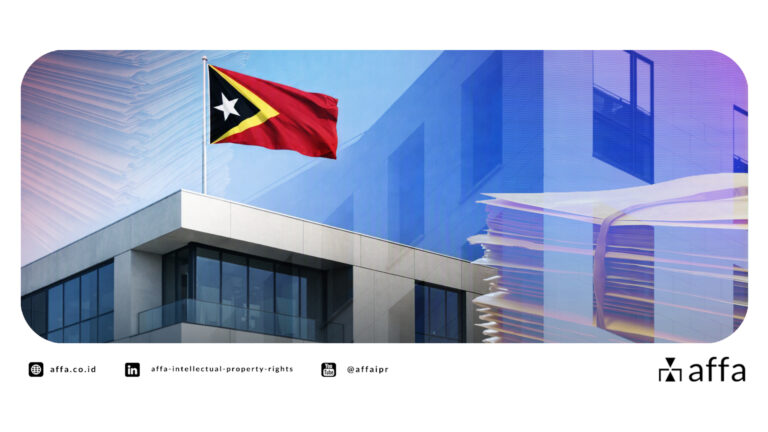
Timor Leste Joins ASEAN: What It Means for Your Trademark Protection Strategy

At the 47th ASEAN Summit held on 26–28 October in Kuala Lumpur, Malaysia, Timor Leste was ratified as the 11th member of ASEAN. Under the “Trade in Goods” framework, you may consider Timor Leste as your next export destination, since ASEAN membership brings more competitive tariffs, efficiency, and easier distribution within the region.   But how can you secure Trademark protection in Timor Leste? Remember: distributing and trading without Trademark protection is a high-risk move!   Trademark Regulations in Timor Leste At present, there is no dedicated government authority handling Trademark registration in Timor Leste. Therefore, Trademark protection is obtained by publishing Cautionary Notices in local newspapers to inform the public of your claim of ownership. The publication must include a statement of ownership and a warning to others not to use the Trademark without permission.   Trademarks That Can Be Recorded Because there is no formal Trademark registration system yet, there are no specific criteria for what can or cannot be registered. However, Trademarks published through Cautionary Notices should be: Unique and not imitative of other well-known Trademarks. Not in violation of local social or cultural norms. Conversely, Trademarks we do not recommend recording include: Purely descriptive or generic marks without distinctive elements. Marks that reference national or international symbols without authorization. Marks that are similar to well-known Trademarks abroad.   Required Conditions and Documents To publish Cautionary Notices in Timor Leste, you will need: Cautionary Notice Text: An official statement including the Trademark owner’s name and address, and a detailed description of the Trademark. Trademark Specimen: A clear representation of the Trademark to be published.   Procedure/Stages for Recording a Trademark via Cautionary Notices The publication procedure includes: Document Preparation: Drafting the Cautionary Notice text and preparing the Trademark specimen. Translation: Translating documents into the official language(s), if required. Publication: Submitting the Cautionary Notice to a local newspaper for publication. The duration of each stage may vary depending on process efficiency and newspaper schedules—ranging from several weeks to a few months. Additionally, because there is no formal registration system, no official certificate is issued.   What to Do After Your Trademark Is Published After publication of the Cautionary Notice, you as the Trademark owner are advised to actively use the Trademark in business to avoid the risk of claims by others. You—and your Trademark Consultant with representation in Timor Leste—should also actively monitor its use. If an unauthorized party uses the Trademark, you may take legal action based on the published notice.   Term of Protection in Timor Leste There is no specific protection period in Timor Leste due to the absence of a formal system. However, you are advised to renew the Cautionary Notice every two years to reinforce protection.   Since the system is not based on formal registration, there is no clear grace period if you are late with renewal. Nevertheless, the longer a Trademark goes without republication, the higher the risk that others may use it.   Ready to record your Trademark in Timor Leste? For more information, contact us through the channels below and get a FREE 15-minute consultation!   ? E-Mail : [email protected] ? Book a Call : +62 21 83793812 ? WhatsApp : +62 812 87000 889

Manufacturing Without Trademark Ownership - Is It Safe? - AFFA IPR

Manufacturing Without Trademark Ownership – Is It Safe?

This question often arises amid the growing investment climate in Indonesia’s manufacturing industry. But what if the answer is: “not entirely safe”? What should you do to address all the risks?   Risk of Infringement   Even if you are the one manufacturing the product, the Trademark being used may already have been registered by another party beforehand. This could lead to claims of Trademark Infringement, resulting in lawsuits and/or legal actions against your activities deemed to be violating the rights of others.   Production = Commercial Activity   It is important to note that production or manufacturing is considered a commercial activity, even if the products are not sold in the Indonesian market. This means that potential disputes still exist, even if the distribution is solely intended for export.   Risk of Customs Seizure   If a Trademark owner has recorded their Trademark with Customs, your products may be at risk of being blocked or seized during import or export. As a result, the goods may never reach the buyer, causing significant financial losses.   What Is the Solution?   Ensure that the products you manufacture are already protected by a registered Trademark in Indonesia. If you are not the owner of the Trademark, make sure you have obtained an official license from the rightful Trademark owner, duly recorded with the Indonesian Trademark Office (DGIP), to carry out the production. Without Trademark registration, your business will always remain vulnerable.   With ownership of a registered Trademark, your production, distribution, and export processes will be protected and safeguarded from disputes or legal barriers in the future.   For more information regarding Trademark registration in Indonesia, contact us directly through these channels and get a FREE 15-minute consultation!   ? E-Mail : [email protected] ? Book a Call : +62 21 83793812 ? WhatsApp : +62 812 87000 889

AFFA Wins Two Categories at the Indonesia Law Firm Awards 2025 - AFFA IPR

AFFA Wins Two Categories at the Indonesia Law Firm Awards 2025

Jakarta, 18 September 2025 – We are pleased to share that AFFA has been recognized with two awards at the Indonesia Law Firm Awards 2025, organised by Asia Business Law Journal.   We received recognition as: Best Boutique Law Firm in Indonesia IP Enforcement Firm   About the Awards   The Indonesia Law Firm Awards 2025 highlight outstanding law firms across various practice areas. The winners were selected based on votes and feedback from in-house counsel and industry professionals, combined with editorial research by Asia Business Law Journal.   Our Recognition   Being named Best Boutique Law Firm reflects our focus and dedication as a specialized firm in Intellectual Property law. From Trademarks and Patents to Industrial Designs, Copyrights, and Geographical Indications, we have consistently worked to support both Indonesian and international clients in securing and managing their IP rights.   Our recognition in IP Enforcement further underlines our role in protecting clients’ rights in practice — ensuring that Intellectual Property is not only registered but also effectively defended.    Moving Forward   These acknowledgments encourage us to continue strengthening our services and staying committed to delivering clear, practical, and reliable IP solutions. While we are grateful for this recognition, our focus remains on supporting businesses, innovators, and creators in protecting and growing your Intellectual assets in Indonesia, globally, and beyond.   Need help protecting your IP in Indonesia? Book a free 15-minute call with a registered IP consultant and ensure your IP meets all local requirements:   ? E-Mail : [email protected] ? Book a Call : +62 21 83793812 ? WhatsApp : +62 812 87000 889

Client’s Victory: The Court of Commerce Invalidates "Deli Waffle" Trademark Registration - AFFA IPR

Client’s Victory: The Court of Commerce Invalidates “Deli Waffle” Trademark Registration

In a significant development for Intellectual Property rights protection in Indonesia, AFFA Intellectual Property Rights has officially submitted a request to the Directorate General of Intellectual Property (DGIP) on 11 September 2025 to implement a landmark court decision by recording the invalidation of the “Deli Waffle + Logo” Trademark (No. IDM001120480) owned by ICEN LESTARI.   This follows a ruling issued on 10 July 2025 by the Commercial Court at the Central Jakarta District Court (Case No. 22/Pdt.Sus-Merek/2025/PN.NIAGA.JKT.PST), which fully granted a Trademark bad-faithi invalidation filed by Singapore-based PRIMA LIMITED—represented by AFFA—against ICEN LESTARI. The decision, which attained permanent legal force on 8 September 2025, affirms the principle of good faith in Trademark registration and reinforces Indonesia’s commitment to international brand protection.   Background of the Dispute   PRIMA LIMITED, a company established under Singaporean law, has actively developed and promoted its “Deli Waffle” products globally. The company has secured Trademark registrations for “Deli Waffle” in various jurisdictions, including Singapore (registered in 2020), Australia (registered in 2022), and China (registered in 2023). In Indonesia, PRIMA LIMITED had also initiated Trademark applications for “Deli Waffle + Logo” in 2022 and 2025.   The core of the dispute arose when PRIMA LIMITED discovered that ICEN LESTARI had registered a highly similar “Deli Waffle + Logo” Trademark (No. IDM001120480) in Indonesia, with a filing date of November 2022. This action prompted PRIMA LIMITED to file a Trademark invalidation lawsuit on 5 March 2025.   Key Arguments and Court’s Findings   PRIMA LIMITED contended that ICEN LESTARI’s Trademark registration exhibited fundamental similarities in its principal and overall elements, including visual appearance, phonetics, and the type of goods/services protected, with PRIMA LIMITED’s existing “Deli Waffle” mark. More critically, PRIMA LIMITED argued that ICEN LESTARI’s registration was undertaken in bad faith, with the intention to imitate or plagiarize a well-known mark. The plaintiff presented evidence of its extensive marketing efforts, including brochures and online presence, indicating its prior and widespread use of the “Deli Waffle” mark, including in Indonesia.   The Commercial Court’s deliberations extensively covered these points. Applying provisions from Law No. 20 of 2016 concerning Trademarks and Geographical Indications (Trademark Law), the Court concluded that there was indeed a fundamental similarity between the two marks. The Court highlighted that the similarity was evident in the word “Deli Waffle,” its spelling, and the accompanying logo, leading to potential consumer confusion and unfair competition.   Crucially, the Court found conclusive evidence of bad faith on the part of ICEN LESTARI. The ruling explicitly stated that the defendant’s actions were intended to mimic or plagiarize the plaintiff’s mark, thereby exploiting the reputation and market presence built by PRIMA LIMITED. The Court referenced Article 21 (3) of the UU Merek, which stipulates that Trademark applications filed in bad faith shall be rejected. The Court also upheld the principles of Article 21 (1) (a), which dictates that a Trademark should be rejected if it bears fundamental or overall similarity to an earlier-registered mark owned by another party for similar goods or services.   The Court’s Verdict   Based on these findings, the Commercial Court at the Central Jakarta District Court issued the following decisive orders on 10 July 2025: Granting the Plaintiff’s lawsuit in its entirety. Declaring PRIMA LIMITED as the legitimate owner of the “Deli Waffle + Logo” Trademark. Declaring the Defendant’s “Deli Waffle + Logo” Trademark (No. IDM001120480) to be fundamentally similar to the Plaintiff’s mark. Declaring that the Defendant’s Trademark registration (No. IDM001120480) was conducted in bad faith. Invalidating the registration of the Defendant’s “Deli Waffle + Logo” Trademark (No. IDM001120480) from the General Register of Trademarks, along with all its legal consequences. Ordering the Directorate General of Intellectual Property (DGIP) to record this invalidation and publicize it in the Official Trademark Gazette. Ordering the Defendant to pay the court costs amounting to IDR 1,120,000.00.   Significance for IP Protection in Indonesia   This ruling serves as a powerful deterrent against Trademark squatting and bad-faith registrations in Indonesia. It underscores the importance of conducting proper due diligence and registering Trademarks in good faith. For international companies like PRIMA LIMITED, this decision provides significant assurance that their intellectual property rights will be recognized and protected under Indonesian law, even against attempts to exploit their brand’s reputation.   AFFA Intellectual Property Rights is proud to have represented PRIMA LIMITED in securing this vital victory, reaffirming our commitment to defending our clients’ innovations and brands in the complex landscape of intellectual property law.   For more information regarding IP protection in Indonesia, please contact us through the following channels:   ? E-Mail : [email protected] ? Book a Call : +62 21 83793812 ? WhatsApp : +62 812 87000 889

A Strong Signal to Proceed Confidently with Your IP Registrations - AFFA IPR

DGIP Resolves 92.99% of IP Applications in Q2 2025 — A Strong Signal to Proceed Confidently with Your IP Registrations

In an encouraging update from Indonesia’s Directorate General of Intellectual Property (DGIP), the second quarter of 2025 recorded a total of 82,661 IP applications, with an impressive 92.99% of them already resolved—an increase of 7.45% compared to the same period last year.   Here’s a quick breakdown: Copyrights: 41,855 applications, 100% resolved Trademarks: 33,613 applications, 30,630 resolved Patents: 2,876 applications, 2,336 resolved Industrial Designs: 1,856 applications, 2,030 resolved (some carried over from previous periods) Geographical Indications, Trade Secrets, and DTLST: minimal but all handled Others (post-application matters): 2,447 recorded What does this mean for IP owners and applicants?   DGIP continues to demonstrate improved efficiency—particularly in Copyright and Trademark matters, which make up the majority of total submissions. For businesses and creators, this is a strong signal to proceed confidently with their IP registrations.   At AFFA Intellectual Property Rights, we are proud to serve as your trusted partner in working with DGIP. As a registered and authorized IP consultant in Indonesia, we assist clients at every stage of the process: from filing and responding to office actions, to license recordals and post-registration services.   Let us take care of the complexities, so you can stay focused on what you do best—growing your business and innovating.   Need help protecting your IP in Indonesia? Book a free 15-minute consultation with one of our professional IP consultants:   ? E-Mail : [email protected] ? Book a Call : +62 21 83793812 ? WhatsApp : +62 812 87000 889   Source:  Ministry of Law of the Republic of Indonesia

Indonesia Sets New Record for Madrid Protocol Trademark Filings in 2024 - AFFA IPR

Indonesia Sets New Record for Madrid Protocol Trademark Filings in 2024

The use of the Madrid System — the international Trademark registration system administered by WIPO — continued to show positive growth globally throughout 2024. Indonesia has also become an important part of this growth, both as a designated country and as a country of origin for international trademark applications.   Throughout 2024, Indonesia received 8,678 international designations under the Madrid System. This means that thousands of global Trademark owners are now targeting Indonesia to secure exclusive rights in this strategically important domestic market. Compared to the previous year, designations to Indonesia increased by +10.3%, marking significant growth in the Southeast Asian region. Indonesia even entered the Top 20 destinations!   Together with Vietnam (+11.2%), Thailand (+11%), and Malaysia (+9.3%), Indonesia ranked among the countries with the highest growth in Trademark protection demand under the Madrid System in 2024. This reflects the global market’s growing confidence in Indonesia’s economic potential and the increasing importance of Trademark protection in the country. Outbound Trademark Applications from Indonesia Also on the Rise   Not only has Indonesia become more attractive to foreign applicants, but Indonesian Trademark owners are also increasingly utilizing the Madrid System to secure protection in multiple jurisdictions. In 2024, 113 Madrid applications were filed by applicants based in Indonesia, representing a 13% increase compared to the previous year.   This growth indicates rising awareness among Indonesian businesses — from SMEs to large corporations — of the importance of securing Trademark rights internationally at an early stage of business expansion. Strong Trademark protection in export destination countries has now become an integral part of the global business strategy for Indonesian companies. AFFA Intellectual Property Rights Handles 10% of Madrid Applications from Indonesia   Of these 113 outbound filings, approximately 10% were handled by AFFA Intellectual Property Rights, a registered Trademark consultant with an extensive international network.   With experience managing Madrid filings across major jurisdictions — including the United States, European Union, Japan, China, ASEAN, the Middle East, and Africa — AFFA IPR remains committed to being a strategic partner for Indonesian businesses expanding their international Trademark protection.   Read also: Trademark Registration Procedure in Bali   Should you need more information about filing Trademark applications designating Indonesia via the Madrid Protocol, please contact us at [email protected].   Source: WIPO Madrid Yearly Review 2025

Calendar Days vs Working Days: Understanding Trademark Refusal Deadlines in Indonesia - AFFA IPR

Calendar Days vs Working Days: Understanding Trademark Refusal Deadlines in Indonesia

Under Article 1 Point 22 of the Indonesian Trademark Law, the term “days” mentioned in this law refers to working days, not calendar days. However, this information can sometimes become unclear when conveyed as brief notices to IP owners or their representatives abroad. This misunderstanding often leads to incorrect expectations about the speed of application processing or even delays in document preparation, resulting in unnecessary losses.   How to Differentiate Calendar Days from Working Days?   For example, Article 24 of the Trademark Law states, “Within a maximum period of 30 (thirty) days from the date of sending the notification letter regarding an application that cannot be registered or has been rejected, the applicant or their representative may submit a written response stating their reasons,” the 30-day period here does not mean one month. Instead, it could extend to 1.5 months.   Here’s the calculation: 30 days = 30 working days Working days = Monday – Tuesday – Wednesday – Thursday – Friday (5 days per week) Thus, 30 working days = 6 weeks (30 ÷ 5) If converted into total days, it becomes 6 × 7 = 42 days Or approximately 8 weeks = 1.5 months (42 ÷ 5).   However, the exact duration will depend on whether the period includes February or months with only 30 days. It is also necessary to consider whether the period consists of public or national holidays.   What About Trademark Application Refusals Filed Through the Madrid Protocol? Example of a Trademark Refusal Notification Sent by WIPO for an Application Filed Through the Madrid Protocol   If your Trademark is filed through the Madrid Protocol, designating Indonesia as one of the target countries, and it gets refused, the World Intellectual Property Organization (WIPO) will send a complete notification, specifying: The date on which the time limit to reply begins The time limit to reply The final deadline to respond   However, the information provided by WIPO is not entirely accurate because it calculates 30 calendar days instead of 30 working days as stipulated by the Indonesian Trademark Law. This means that the deadline stated in the sample letter—February 12, 2025—is incorrect. The actual deadline should be February 21, 2025. There is a discrepancy of nine calendar days between the date stated in WIPO’s notification and the actual deadline.   Calculating deadlines based on working days may seem beneficial as it provides a longer timeframe. However, if you are looking for a faster resolution, you must be prepared for a longer waiting period, especially if there are additional public holidays not reflected in international calendars.   EXCEPT when the regulation specifies a time limit in months. For example, the period for applicants or their representatives to file an objection against an Official Trademark Gazette Announcement. According to Article 17 of the Trademark Law, it states:   “An objection shall be submitted in writing within a maximum period of 2 (two) months from the date of sending the copy of the objection received.”   In this case, you should interpret it as two full months in calendar days. Thus, your deadline is strictly 2 × 30 days, not 2 × 45 days.   To avoid such confusion, you should contact a trusted Trademark Consultant in Indonesia. With its integrated system, you will always be informed about the latest status of your Trademark. By understanding these deadlines, you can better plan and prepare the necessary budget and documents.   You might also want to read: Indonesia in BRICS: A Golden Opportunity for Further Trademark Protection Should you need more information regarding the trademark registration and protection process in Indonesia or globally, feel free to contact us via email: [email protected].

AFFA Represents APRIL International Enterprise Pte. Ltd. to Win a Trademark Non-Use Cancellation Action in Indonesia - AFFA IPR

AFFA Represents APRIL International Enterprise Pte. Ltd. to Win a Trademark Non-Use Cancellation Action in Indonesia

In today’s increasingly competitive business environment, Trademark protection is a key factor in maintaining a company’s identity and competitive advantage. However, Trademark registration often faces obstacles due to the existence of previously registered Trademarks that, in reality, are not being used. This was the case with PRINT ONE, where AFFA successfully represented APRIL International Enterprise Pte. Ltd., the owner of the well-known brand PAPER ONE, in winning a Trademark non-use cancellation action against PRINT ONE, which had long been unused in Indonesia, based on prior investigation results.   The case began when APRIL International Enterprise Pte. Ltd. filed a Trademark application for “PRINT ONE” under Application Number DID2021062992 with the Directorate General of Intellectual Property (DGIP) in 2021. However, the application was rejected by DGIP because it was considered similar to the “PRINT ONE,” which had been registered under PT Daksa Sinergi since May 12, 2020.   An independent investigation revealed that the PRINT ONE Trademark had never been used in commerce for over three years since its registration. Based on these findings, AFFA filed a trademark non-use cancellation action with the Central Jakarta Commercial Court in April 2024.   Legal Basis for Trademark Non-Use Cancellation Action   This action was filed under Article 74, Paragraph (1) of Law No. 20 of 2016 on Trademarks and Geographical Indications, which states that a Trademark that has not been used for three consecutive years from the date of registration may be canceled upon request by an interested party.   During the trial, PT Daksa Sinergi failed to appear, despite being legally summoned. This further strengthened the evidence that the Trademark was not actively used in the market.   Court Decision   After a series of hearings, in October 2024, the Central Jakarta Commercial Court finally granted the lawsuit filed by AFFA. In its ruling, the court declared that:   The plaintiff has a legal interest in filing the Trademark non-use cancellation action. The PRINT ONE Trademark owned by PT Daksa Sinergi is officially removed from the General Register of Trademarks. DGIP is ordered to revoke the Trademark and announce its removal in the Official Trademark Gazette. PT Daksa Sinergi is required to pay court fees amounting to IDR 8,820,000.   This decision marks a significant victory for APRIL International Enterprise Pte. Ltd., which can now reapply for its Trademark registration in Indonesia without any obstacles.   Lessons from the PRINT ONE Trademark Cancellation Case in Indonesia   This case is a clear example that a non-use Trademark can be canceled, even if it is still officially registered. Therefore, Trademark owners should take note of these three key factors:   Ensure that your registered Trademark is actively used in Indonesia. If not, other parties may file for cancellation. If an unused Trademark blocks your Trademark, legal solutions are available. Trademark cancellation is one of the strategies to pave the way for a new Trademark registration. Entrust your Trademark registration to an experienced Intellectual Property Consultant to ensure your brand is properly protected in Indonesia.   Current Trademark Cancellation Practice in Indonesia   However, it is important to note that following the Constitutional Court Decision No. 144/PUU-XXI/2023, a Trademark can now only be canceled if it has not been used for five consecutive years from the date of registration.   Additionally, a Trademark cannot be canceled if: There is a ban on importing goods or services that use the Trademark. There are licensing restrictions related to the goods or services associated with the Trademark. The Trademark cannot be used due to a force majeure situation.   You might also want to read: AFFA Represents Trek Bicycle to Win a Trademark Non-Use Cancellation Action in Indonesia This success story is a testament that with thorough preparation and investigation, a non-use cancellation action is possible in Indonesia. Should you need more information about Trademark registration and protection in Indonesia or abroad, please email us at [email protected].

Indonesian IP Office Declares 2025 the Year of Copyright and Industrial Design - What Are the Benefits? - AFFA IPR

Indonesian IP Office Declares 2025 the Year of Copyright and Industrial Design – What Are the Benefits?

The Indonesian IP Office (DGIP) has reaffirmed its commitment to supporting the protection and development of Intellectual Property (IP) in Indonesia. 2025 has been declared the Year of Copyright and Industrial Design, marking a new strategic initiative to strengthen Indonesia’s IP ecosystem. This policy not only aims to raise awareness of the importance of Copyrights and Industrial Designs but also to create a more conducive environment for businesses and investors, both domestic and international.   This declaration is based on several initiatives and policies implemented by DGIP over recent years. After the 2024 Year of Geographical Indications, DGIP recorded a significant increase in IP applications, demonstrating heightened public awareness of the importance of IP protection. With the declaration of the Year of Copyright and Industrial Design, DGIP aims to continue this positive trend, particularly by increasing the registration of Copyrights and Industrial Designs.   DGIP has set ambitious targets, with the Director General of Intellectual Property aiming for increased Non-Tax State Revenue (PNBP) for 2026: IDR 28,156,750,000 from Copyrights, IDR 354,753,680,000 from Trademarks, and IDR 529,167,083,000 from Patents and Trade Secrets.   DGIP’s Achievements in 2024 As a foundation for 2025, DGIP achieved several milestones during 2024:   Increase in Intellectual Property Applications DGIP recorded a significant increase in IP applications, including Copyrights, Industrial Designs, and Geographical Indications. In 2024, more than 15,000 Copyright applications were recorded, a 20% increase compared to the previous year. DGIP also received approximately 5,000 Industrial Design applications, reflecting a 15% growth. Furthermore, 50 new Geographical Indication applications were filed, indicating rising public awareness of protecting local wealth-based products. Launch of the 2025-2029 National Geographical Indications Roadmap This strategy aims to strengthen the management and preservation of Geographical Indication-based products, providing direct economic benefits to local communities. Enhanced Services and Transparency Through various initiatives, including the 2024 IP Program Financial Coordination Meeting, DGIP improved service efficiency, especially by expediting IP registration processes to enhance user experience. International Collaboration DGIP successfully established partnerships with international organizations to strengthen IP protection in Indonesia. These collaborations included training, capacity-building for human resources, and promoting Indonesian IP products in global markets. Key IP-Based Regional Programs This initiative encourages the development of IP-based regions to support sustainable economies, enhancing the competitiveness of local products in international markets. These programs range from the Development of Geographical Indications-Based Local Products, Creative Economy Zones Based on IP, to IP-Based SME Assistance.   Strategic Policies Supporting the Year of Copyright and Industrial Design To ensure the success of this initiative, DGIP has formulated several strategic policies and measures:   Updating the 2024-2029 Strategic Plan During the Strategic Plan Update meeting in Bogor in December 2024, DGIP designed data-driven programs to anticipate future needs and challenges. This step ensures that policies related to Copyrights and Industrial Designs align with global dynamics. Strengthening Services and Financial Management Through the 2024 IP Program Financial Coordination Meeting, DGIP focused on improving services and the potential for Non-Tax State Revenue (PNBP). Efficient financial management has become a priority to support optimal operations, particularly in expediting the registration and protection of Copyrights and Industrial Designs. IP-Based Regional Programs DGIP launched flagship programs that utilize IP-based regions to support sustainable economies. This approach aims to enhance the competitiveness of local products with IP value in global markets, providing direct economic benefits to communities and businesses. 2025-2029 National Geographical Indications Roadmap While focusing on Geographical Indications, this roadmap serves as an example of how DGIP designs comprehensive strategies for IP management. Similar approaches are expected to be applied to Copyrights and Industrial Designs, emphasizing preservation and innovation.   Positive Impacts for Businesses and Investors Through these policies, DGIP not only strengthens Indonesia’s IP ecosystem but also sends positive signals to international businesses and investors. These conducive conditions include:   Faster Services: Improved speed and transparency in IP recordation, registration, and protection processes.   Legal Certainty: Structured policies provide better protection for rights holders.   Global Competitiveness: Strengthened IP-based regions allow local products to compete more effectively in international markets.   You might also want to read: Fighting IP Crimes: Indonesia’s IP Office Task Force Destroys IDR 5.35 Billion Worth of Counterfeit Goods!   Despite the many initiatives launched, challenges remain, such as low public awareness of the importance of IP protection and the need for adequate infrastructure. However, with DGIP’s commitment, 2025 is expected to be a monumental year for strengthening Copyright and Industrial Design protection in Indonesia.   The declaration of the 2025 Year of Copyright and Industrial Design is DGIP’s tangible step in solidifying Indonesia’s position as a country that supports Intellectual Property protection. This policy aims to raise awareness of the importance of Copyrights and Industrial Designs and create a more conducive environment for businesses and investors, both domestic and international. Should you need more information on Copyright and Industrial Design protection in Indonesia, please contact us at [email protected].