
Türkiye to Increase Official Intellectual Property Fees Starting 1 January 2026 - AFFA IPR

Türkiye to Increase Official Intellectual Property Fees Starting 1 January 2026

The Turkish Patent and Trademark Office (TÜRKPATENT) will increase official fees for various Intellectual Property procedures effective 1 January 2026. The increase will apply to Patents, Utility Models, Trademarks, and Industrial Designs.   The revised fees will affect multiple stages of the process, including application filing, examination, registration, recordals, and renewals.   What Does This Mean for New Filings or Existing IP Rights Holders in Türkiye?   With the implementation of the new fee structure as of 1 January 2026, any application or renewal filed on or after that date will be subject to higher official fees in accordance with the latest TÜRKPATENT regulations.   This means that: Applicants who are planning new filings in Türkiye may face higher costs if submissions are made in 2026. Trademark, Patent, or Industrial Design owners with renewal deadlines approaching 2026 should carefully plan the timing of their payments. For multi-class Trademark applications or multi-stage Patent procedures, the cumulative financial impact of the fee increase may be significant.   Recommended Actions   To optimize costs and ensure legal certainty, AFFA recommends that clients consider the following steps:   Accelerate Filing Plans If the decision to file in Türkiye has already been made, we strongly recommend initiating the process before the end of 2025 to benefit from the current fee structure. Review Renewal Schedules Ensure that the renewal deadlines for your IP rights in Türkiye are accurately mapped, including the applicable rules on payments made before or after 1 January 2026. Plan Budgets in Advance For clients with extensive IP portfolios or planned business expansion into Türkiye, early cost planning is a strategic necessity that should not be overlooked.   AFFA Intellectual Property Rights will continue to closely monitor official developments from TÜRKPATENT, including the publication of detailed 2026 fee tariffs. We will keep you informed so that you receive timely and accurate information for filing and renewal planning, official fee and professional cost estimation, and the strategic and efficient management of your IP portfolio in Türkiye.   Should you need more information on Trademark protection in Türkiye or other jurisdictions, please contact us through the channels below and receive a FREE 15-minute consultation.   📩 E-Mail: [email protected] 📞 Book a Call: +62 21 83793812 💬 WhatsApp: +62 812 87000 889

Nice Classification 13 Takes Effect in 2026 – What Trademark Owners Must Know When Filing Abroad - AFFA IPR

Nice Classification 13 Takes Effect in 2026 – What Trademark Owners Must Know When Filing Abroad

Starting 1 January 2026, the World Intellectual Property Organization (WIPO) will implement the 13th Edition of the Nice Classification (Nice 13-2026) as the latest international reference for the classification of goods and services in Trademark registrations.   For many Trademark Owners, this announcement is often misunderstood as a change that will automatically apply uniformly worldwide. In practice, however, the reality is far more complex—and misunderstanding this point can have a direct impact on your overseas Trademark filing strategy.   This article explains what is actually changing, what is not, and what foreign Trademark Owners need to consider strategically.   What Is the Nice Classification and Why Does It Matter?   The Nice Classification is an international system that divides goods and services into 45 classes (34 classes for goods and 11 for services). It is used by almost all Trademark offices worldwide for Trademark searches, filing, substantive examination, and enforcement.   In other words, the class you select determines the scope of legal protection of your Trademark. Errors in classification may result in rejection, limited protection, or protection gaps that only become apparent when a dispute arises.   What Will Change Starting 1 January 2026?   WIPO will begin applying the 13th Edition of the Nice Classification to new international Trademark registrations processed through the Madrid System (Madrid Protocol) as of 1 January 2026.   Key changes introduced in Nice 13 include: The transfer of certain categories of goods to different classes (e.g. optical products, emergency vehicles, electrically heated clothing). A classification approach that places greater emphasis on the function and intended use of goods. Terminology updates to reflect current commercial practices and technological developments better.   However, this is where an important and often overlooked issue arises.   Not All Countries Automatically Follow WIPO’s Nice 13   The fact is that not all countries will immediately adopt Nice 13, even though WIPO has put it into effect. While WIPO acts as the coordinator of the international system, each national or regional Trademark office retains sovereignty to decide when and how a particular edition of the Nice Classification is adopted—whether immediately, gradually, or with delay.   As a result, in 2026, the world will not be operating under a single, uniform version of the Nice Classification.   Countries That Have Announced Adoption of Nice 13   Several major jurisdictions have announced that they will adopt Nice 13 for applications filed from 1 January 2026, including Singapore, the United States, Hong Kong, as well as some European countries and other Madrid member states.   However, these announcements are not universal. Many countries have not yet issued official statements or continue to apply earlier editions of the Nice Classification—including Indonesia, which still adopts Nice Classification Edition 11.   Accordingly, overseas Trademark filings must follow different versions of the Nice Classification depending on the destination country. This also applies to foreign applicants filing Trademarks in Indonesia, who must still use Nice 11, with no official indication yet as to when Indonesia will adopt Nice 12 or Nice 13.   Instead of Uniformity, Trademark Class Strategy Becomes More Complex   Therefore, as a Trademark Owner, you must understand the following key aspects: Country Designation Strategy Trademark Owners must identify which countries have adopted Nice 13 and which still apply earlier editions before determining the designated countries in an international application. Clearance Search Trademark searches must be conducted using the relevant classes under the Nice edition applicable in the destination country, in order to avoid future conflict risks. Drafting of Goods and Services Specifications The description of goods and/or services must be compatible with the Nice Classification edition applied in the destination country and should not merely replicate the specifications used in the local registration. Trademark Portfolio Management Changes in classification may create protection gaps or overlaps with other Trademarks, which should be anticipated and addressed through regular Trademark portfolio audits.   Should you need more information on Trademark filings in Indonesia and mapping the relevant Nice Classification classes, please contact us directly through the following channels and receive a FREE 15-minute consultation.   📩 E-Mail : [email protected] 📞 Book a Call : +62 21 83793812 💬 WhatsApp : +62 812 87000 889

Resolution 2026: Own Your Trademark – The First Step to Starting Any Business - AFFA IPR

Resolution 2026: Own Your Trademark – The First Step to Starting Any Business

As we enter 2026, business practices are undergoing increasingly significant changes. Business is no longer limited to selling physical products or providing conventional services on online platforms. The rise of content creators, podcasters, streamers, influencers, and professionals with strong personal brands has made the business landscape more competitive, dynamic, and diverse. They, too, engage in commercial activities—monetizing value, reputation, and trust built through their public personas.   Amid intensifying competition, one element stands out as a key differentiator: Trademark.   A strong name is not merely an identity; it is the foundation of branding that allows a product, service, or persona to stand apart, be recognized, and be remembered.   BMW? Nike? Amazon? Certainly. But today, we are also familiar with names such as ISawSpeed, MrBeast, or You Can’t See Me by John Cena, and IP-based characters like Bumblebee and Kamen Rider—brands that are not only popular but have also been registered as Trademarks.   Because branding without legal protection is a risk that is often only realized when problems have already arisen.   Branding Alone Is Not Enough Without Legal Ownership   Many business owners and content creators focus on building their name, audience, and reputation over the years. Followers increase, loyal customers are formed, and commercial value grows. Unfortunately, many overlook one critical question: “Do we actually own this name legally?”   Without Trademark registration, there is no exclusive legal ownership of the name being used. This means another party may still have the opportunity to register the same name first. If that happens, the consequences can be severe—an established product, service, or persona may be forced to change its name and could even face legal claims.   This situation is far from rare. In fact, it often affects those who have already achieved success without securing Trademark protection from the outset.   A Trademark Is an Asset—From Day One   There is still a common perception that Trademark registration is only relevant for large companies. In practice, however, a Trademark is most critical at the earliest stage—when a business, channel, or personal brand is just being built.   Whether you are running a small or medium-sized enterprise, a digital startup, a service-based business, or developing a personal brand as a content creator or professional, the name you use is a commercial asset. The more your activities grow, the more valuable that asset becomes. Without legal protection, it is highly vulnerable.   How to Become the Lawful Owner of a Trademark   To obtain lawful and exclusive ownership, Trademark registration must be carried out strategically. The process is not merely about filling out forms; it requires legal understanding and sound business planning. Below are five key steps to consider:   Conduct a Trademark Search A search aims to ensure that the intended name does not conflict with an existing registered Trademark. Similarity is assessed not only visually, but also in terms of pronunciation, sound, and overall impression. This step is essential to avoid the risk of rejection at a later stage. Understand Whether the Name is Registrable Not all names qualify for Trademark protection. Names that are too generic, merely descriptive of the goods or services, misleading, contrary to law, or similar to well-known Trademarks may be rejected. An ideal Trademark has distinctiveness and a clear identity. Determine the Appropriate Trademark Class Trademark registration is based on classifications of goods and/or services. Class selection must be done carefully, as it defines the scope of protection. Incorrect class selection may result in inadequate protection or create opportunities for others to register the same name in different fields. Understand the Examination Stages Once filed, a Trademark application goes through formality examination, publication, and substantive examination. During these stages, refusals or objections from third parties may arise. Proper handling requires legal insight and a well-prepared strategy. Consult a Trademark Consultant to Protect Your Business Future If your focus is on long-term business sustainability, the role of a Trademark Consultant becomes highly relevant. A consultant does not merely handle administrative matters, but also: analyzes risks from the outset; provides strategic recommendations on names and classes; assists in responding to refusals or objections; and ensures that Trademark protection aligns with long-term business plans.   For example, if you plan to add product variants, diversify your business, or expand internationally, a Trademark Consultant can provide precise guidance on how your Trademark should be protected.   With proper assistance, Trademark registration becomes a legal investment, not merely a formal obligation. From a cost perspective, this investment is highly reasonable, considering that Trademark protection is valid for 10 years.   Your Resolution – Your Future   Resolution 2026 is not only about increasing revenue, expanding markets, or gaining more followers. A far more fundamental resolution is ensuring that whatever you build—products, services, or personas—stands on a solid legal foundation.   A Trademark is not an accessory; it is an identity and an exclusive right. Register your Trademark from the outset to ensure that your business journey is secure, sustainable, and legally protected.   Because in the business world, those who endure are not only those who grow the fastest, but those who are best prepared to protect their assets.   Should you need more information on Trademark registration in Indonesia or globally, please contact us directly through the following channels and receive a FREE 15-minute consultation:   📩 E-Mail : [email protected] 📞 Book a Call : +62 21 83793812 💬 WhatsApp : +62 812 87000 889

One Product with Multiple Trademarks: A Smart Protection Strategy or Simply Overkill? - AFFA IPR

One Product with Multiple Trademarks: A Smart Protection Strategy or Simply Overkill?

In business practice, it is not uncommon to find a single product displaying more than one Trademark. This may include not only the primary logo, but also series names, sub-brands, flavor variants, mascots, and other visual elements—each of which may have been registered as a separate Trademark.   This phenomenon is commonly found in snacks, beverages including syrups, sports shoes, apparel, and even professional jerseys.   The question is: is the “one product, multiple Trademarks” strategy truly effective, or is it excessive?   Understanding the Concept: House Mark vs. Sub-Brand vs. Product Variants From a branding perspective, not every sign appearing on a product serves the same function. In general, Trademarks as a branding strategy can be broken down into three layers:   House Mark The core identity of the company or brand (for example, the main logo). Sub-Brand or Line Name The name of a specific product line (such as running shoes, basketball shoes, or lifestyle collections). Product Variants Flavor names, special editions, or distinctive names that are developed and used consistently.   If each of these layers is used consistently, functions to distinguish products, and is recognized by consumers as an indicator of origin, then each may legally be registered as a Trademark.   When Do Multiple Trademarks Become a Good Strategy? From a Trademark protection perspective, this approach can be considered appropriate and high-value when:   Each Trademark Has Independent Commercial Value Example: Flavor variant names for certain beverages that are more widely recognized than the corporate brand itself. Shoe series that have their own dedicated fan base, independent of the house mark. In such cases, separate registrations help secure future business assets, including for licensing, collaborations, and product spin-offs. High Risk of Imitation in the Market The more famous an element of a product becomes, the higher the risk of imitation. If only the main logo is registered: Imitators may avoid using the logo, but still replicate popular series names or product variants. Registering multiple Trademarks narrows legal loopholes and broadens the basis for enforcement. Long-Term Brand Architecture Strategy For large companies, multiple Trademarks are not merely about protection—they form part of a structured brand architecture. With a well-organized system, each element can be independently developed, sold, or licensed.   When Does This Strategy Become Overkill? That said, not every “multiple Trademark” approach reflects a sound strategic decision. It may become overkill when:   The Trademark Is Not Genuinely Used If a name appears only once, is used inconsistently, or is not recognized by the market, its registration risks cancellation for non-use and may become a renewal cost with no real business value.  Costs Are Disproportionate to Value Each Trademark registration entails filing fees, maintenance costs, and renewal fees. Without proper portfolio analysis, a company may end up merely “collecting certificates” without achieving effective protection.  Consumer Confusion Too many logos and names on a single product can weaken the core brand identity, blur brand messaging, and even dilute differentiation.   Case Example: Sports Jerseys and Sponsor Logos Sports jerseys provide an interesting example of one product bearing multiple Trademarks, as they typically display the club’s Trademark, the apparel brand’s Trademark, the main sponsor’s logo, and additional sponsor logos.   This multi-logo product raises several legal implications: Each logo represents a separate Trademark owned by a different party. Replica or counterfeit jerseys may simultaneously infringe: the club’s Trademark, the apparel brand’s Trademark, and the sponsor’s Trademark(s).   In other words, a single counterfeit product can result in multiple Trademark infringements within one object. However, not all sponsors register their Trademarks in apparel-related classes. Counterfeit manufacturers often exploit this gap to evade enforcement actions.   Ultimately, Strategy Matters More Than Quantity Therefore, the question of whether this approach is “smart or wasteful” is not determined by the number of Trademarks, but by their business function, consistency of use, and long-term protection strategy.   One product with multiple Trademarks can be a very powerful strategy—but without proper planning, it can also become a cost without value. This is why Trademark portfolio audits, imitation risk mapping, and proportional registration strategies are essential.   Should you need further information regarding Trademark protection strategies domestically or internationally, please contact us through the following channels and get a FREE 15-minute consultation:   📩 E-Mail : [email protected] 📞 Book a Call : +62 21 83793812 💬 WhatsApp : +62 812 87000 889

Maldives Adopts Its First Trademark Act: 12-Month Transition Period for Brand Owners - AFFA IPR

Maldives Adopts Its First Trademark Act: 12-Month Transition Period for Brand Owners

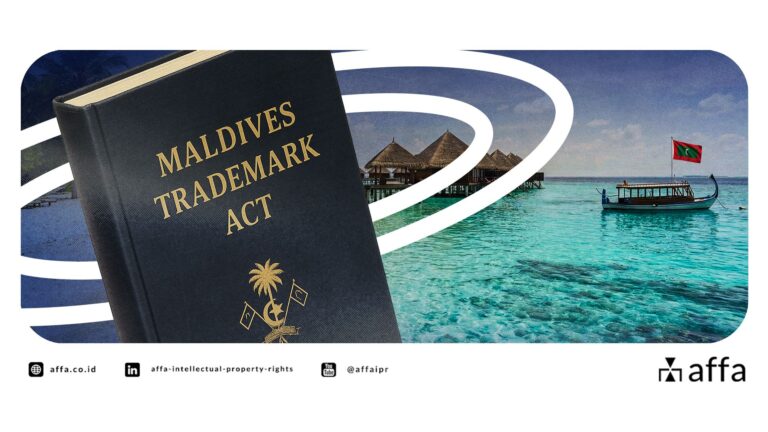
On 11 November 2025, the President of the Maldives, Dr. Mohamed Muizzu, ratified the Trademark Bill, which has now been promulgated as the Trademark Act (Law No. 19/2025) through publication in the Government Gazette.   The Act will enter into force on 11 November 2026, followed by a 12-month transition period for existing Trademark owners who have been relying on cautionary notices. This milestone marks the establishment of the country’s first comprehensive, registration-based Trademark protection system, replacing the long-standing practice of relying on cautionary notice publications.   Key Features of the New Trademark Act First-to-File System Trademark rights will be determined based on the filing date, with examination on both absolute and relative grounds. Additional safeguards are provided for well-known marks. Term of Protection and Renewal Registered Trademarks will be valid for 10 years from the filing or registration date and may be renewed indefinitely in successive 10-year periods. Transition Requirements for Existing Owners Brand owners currently relying on cautionary notices must file formal Trademark applications within 12 months from 11 November 2026 to maintain uninterrupted protection. Strengthened Enforcement Mechanisms The Act equips rights holders with a full suite of enforcement tools, including: Civil actions (injunctions, damages, and destruction or removal of infringing goods); Criminal penalties for counterfeiting; and Customs border measures to block the importation of infringing products. Issuance of Implementing Regulations Competent authorities are required to publish implementing regulations and guidelines in the Government Gazette within 6 months of the Act taking effect.   What Should Businesses Do Now? Businesses operating in or entering the Maldivian market are advised to: Review Your Trademark Portfolio Identify Trademarks currently protected only through cautionary notices. Prepare for Re-Registration Prepare documentation for filing once the 12-month transition window opens on 11 November 2026 to ensure continuity of protection. Update Internal IP Processes Align brand protection and enforcement strategies with the upcoming registration-based regime.   Should you need more information on Trademark registration in the Maldives or other international jurisdictions, contact us through the channels below and get a FREE 15-minute consultation!   📩 E-Mail : [email protected] 📞 Book a Call : +62 21 83793812 💬 WhatsApp : +62 812 87000 889

MATCHAMAN’s Trademark Strategy: A Blueprint for Indonesian Brands Going Global through the Madrid Protocol - AFFA IPR

MATCHAMAN’s Trademark Strategy: A Blueprint for Indonesian Brands Going Global through the Madrid Protocol

In an increasingly competitive global market, Trademark protection is no longer optional—it is a fundamental foundation for business growth. One Indonesian brand leading by example is MATCHAMAN, a matcha-based beverage brand owned by PT. Puyo Grup Indonesia, widely recognized for its silky pudding outlets across the country.   Today, MATCHAMAN has become a rising name among premium matcha enthusiasts, gaining attention through its two flagship locations in Melawai Blok M and Pacific Place SCBD, South Jakarta.   A Contemporary Matcha Experience   Matcha is not new in Jakarta. Yet, MATCHAMAN brought fresh excitement to the scene when it launched in Blok M. Drawing inspiration from contemporary matcha cafés in Bangkok, MATCHAMAN emphasizes a casual, on-the-go drinking experience supported by a striking interior—metallic grays, vibrant emerald tones, and warm wood elements that pay homage to Japanese design.   At its heart lies an open bar under a high ceiling, softly lit—yellow during the day, green after sunset—where matcharistas prepare every cup using traditional techniques learned from Tokyo and Kyoto tea houses: Hot water at exactly 80°C, whisked with bamboo tools in handmade chawan, producing silky, foamy perfection!   Building a Strong Brand Foundation   MATCHAMAN has taken exemplary steps to protect its business identity. In December 2024, the brand filed its Trademark in Indonesia under: Class 30: matcha-based beverages, matcha latte, green tea, powdered green tea, etc. Class 43: beverage service, hot and cold drink bars, boba service, and similar activities.   MATCHAMAN successfully obtained registration in June 2025, with protection valid until December 2034.   This careful and timely registration ensures that MATCHAMAN retains exclusive rights over its brand in Indonesia—preventing misuse, counterfeiting, and unfair competition.   Going Global with the Madrid Protocol   With a strong foundation at home, MATCHAMAN wasted no time in taking the next step. In September 2025, the brand filed an international application under the Madrid Protocol through WIPO, designating: Australia Japan Malaysia Singapore   AFFA supported the Trademark filing under the Madrid Protocol, streamlining the process for securing overseas protection.   Why the Madrid Protocol Matters?   The Madrid Protocol allows brand owners to: File once to cover multiple countries. Manage and renew registrations centrally. Save time and cost compared to filing country-by-country. Expand quickly with legal security.   This strategy exemplifies global best practice: Register in the home country first. Use the Madrid Protocol to efficiently reach new markets.   By securing its identity abroad, MATCHAMAN ensures its brand remains exclusive and protected wherever it intends to grow.   Fast Execution: MATCHAMAN Lands in Japan   Soon after filing its international Trademark application, MATCHAMAN moved swiftly to tap into overseas markets—starting at the very heart of matcha culture: Japan!   MATCHAMAN made its Japan debut through a collaboration with a local F&B player, attracting enthusiastic public response. The collaboration demonstrated strong market interest and validated MATCHAMAN’s positioning as a modern matcha brand with global appeal.   This early success signals promising opportunities for future development abroad—made possible by proactive Trademark protection.   As MATCHAMAN stands as a model for Indonesian businesses aiming to expand globally, its strategy demonstrates key lessons: Trademark first — expansion second. Protect at home, then secure key foreign markets. Use efficient international systems like the Madrid Protocol. Move fast once legal protection is in place.   By protecting its brand early, MATCHAMAN ensures that its creativity, identity, and business potential stay exclusively its own—allowing it to grow confidently and competitively worldwide.   With strong IP protection, businesses like MATCHAMAN can step boldly into the global arena—safe, confident, and ready to thrive.   Should you need more information on registering a Trademark in Indonesia and globally, contact us through the channels below and get a FREE 15-minute consultation!   ? E-Mail : [email protected] ? Book a Call : +62 21 83793812 ? WhatsApp : +62 812 87000 889

Can a “Hashtag” Be Registered as a Trademark in Indonesia? - AFFA IPR

Can a “Hashtag” Be Registered as a Trademark in Indonesia?

In the digital era, hashtags (#) that precede certain slogans or statements have become an important tool in marketing strategies. They make it easier for the public to find specific campaigns on social media, strengthen promotional identity, and even build user communities.   Some examples of commonly encountered hashtags include: #FYP #photooftheday #KeepCookingMama #FreakyFriday #HowLowCanYouGo   However, when a hashtag grows more popular and becomes closely associated with the identity of a product or service—or there’s even an intention to monopolize it—the question arises: “Can a hashtag be registered as a Trademark?”   In Principle, Yes — But It’s Not Automatically Acceptable   By definition of the Indonesian Trademark Law, a Mark means any sign capable of being represented graphically in the form of drawings, logos, names, words, letters, numerals, color arrangements, in 2 (two) and/or 3 (three) dimensional shape, sounds, holograms, or a combination of 2 (two) or more of those elements to distinguish goods and/or services produced by a person or legal entity in trading goods and/or services. Nevertheless, in Trademark examination practice, the hashtag symbol (#) alone is not considered a distinctive element. In other words, when filing #HowLowCanYouGo, the examiner does not assess the “#” but evaluates the word elements “How Low Can You Go.”   Accordingly, a hashtag can be registered as a Trademark if the phrase within it meets the distinctiveness test as per Article 20 of the Indonesian Trademark Law, namely: Not generic Has distinctiveness Not descriptive Not merely a promotional call-to-action Not misleading Not to violate public order, regulations, or morality   If the phrase is too generic, the application risks being refused.   Hashtag + Removing Spaces Doesn’t Automatically Make It a New, Unique Word   There’s an assumption that a slogan will be easier to register if it’s written without spaces and prefixed with a hashtag, for example: “Indonesian Pride” → #IndonesianPride “Support Local Coffee” → #SupportLocalCoffee   However, this does not automatically turn it into a new, unique word. Examiners will still assess whether the phrase has distinctiveness. If the original meaning remains easily understood—e.g., as a promotional expression—its strength as a Trademark is still considered weak.   In short, adding “#” and removing spaces does not automatically increase the chances of registration!   Comparative Registration Chances   Form Example Chance to be  Registered Reason Descriptive Slogan INDONESIAN PRIDE Low Generic phrase/ Promotion. Without Spaces INDONESIANPRIDE Low-Medium Meaning remains clear. With Hashtag #INDONESIANPRIDE Low-Medium “#” adds no distinctiveness. Arbitrary/Fanciful Word XYRANGER High Non-descriptive & unique. Hashtag + Arbitrary #XYRANGER High Strength lies in the core word.   The core assessment remains the same: it’s not about the format, but how distinctive the phrase is.   How to Give a Hashtag a Better Chance of Being Registered in Indonesia?   If you want to protect a hashtag as a Trademark, consider: Using an arbitrary or unique word. Avoiding purely promotional phrases. Adding a distinctive brand element.   For example: #KROriginal #24hourbyMaduraShop #XyRangerEveryday   If the core wording has strong distinctiveness, the chances of successful registration are higher—even without the hashtag.   Therefore, if you use hashtags in marketing campaigns and want to protect them as a Trademark, ensure the wording is distinctive enough to differentiate your products or services from others.   Should you need more information on registering hashtags as Trademarks, contact us through the channels below and get a FREE 15-minute consultation!   ? E-Mail : [email protected] ? Book a Call : +62 21 83793812 ? WhatsApp : +62 812 87000 889

Timor Leste Joins ASEAN: What It Means for Your Trademark Protection Strategy - AFFA IPR

Timor Leste Joins ASEAN: What It Means for Your Trademark Protection Strategy

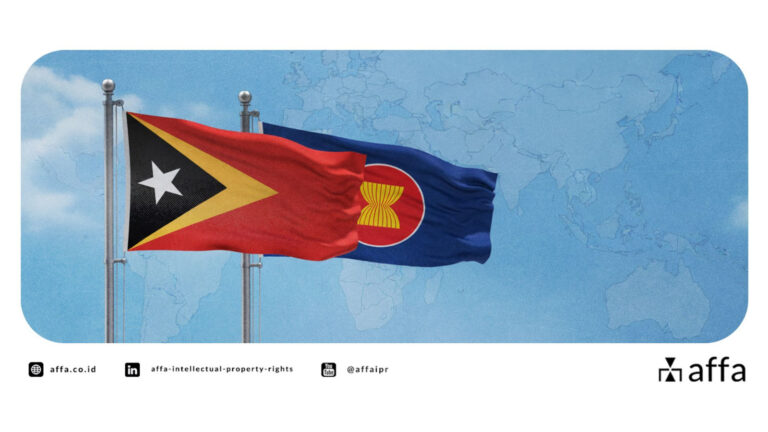
At the 47th ASEAN Summit held on 26–28 October in Kuala Lumpur, Malaysia, Timor Leste was ratified as the 11th member of ASEAN. Under the “Trade in Goods” framework, you may consider Timor Leste as your next export destination, since ASEAN membership brings more competitive tariffs, efficiency, and easier distribution within the region.   But how can you secure Trademark protection in Timor Leste? Remember: distributing and trading without Trademark protection is a high-risk move!   Trademark Regulations in Timor Leste At present, there is no dedicated government authority handling Trademark registration in Timor Leste. Therefore, Trademark protection is obtained by publishing Cautionary Notices in local newspapers to inform the public of your claim of ownership. The publication must include a statement of ownership and a warning to others not to use the Trademark without permission.   Trademarks That Can Be Recorded Because there is no formal Trademark registration system yet, there are no specific criteria for what can or cannot be registered. However, Trademarks published through Cautionary Notices should be: Unique and not imitative of other well-known Trademarks. Not in violation of local social or cultural norms. Conversely, Trademarks we do not recommend recording include: Purely descriptive or generic marks without distinctive elements. Marks that reference national or international symbols without authorization. Marks that are similar to well-known Trademarks abroad.   Required Conditions and Documents To publish Cautionary Notices in Timor Leste, you will need: Cautionary Notice Text: An official statement including the Trademark owner’s name and address, and a detailed description of the Trademark. Trademark Specimen: A clear representation of the Trademark to be published.   Procedure/Stages for Recording a Trademark via Cautionary Notices The publication procedure includes: Document Preparation: Drafting the Cautionary Notice text and preparing the Trademark specimen. Translation: Translating documents into the official language(s), if required. Publication: Submitting the Cautionary Notice to a local newspaper for publication. The duration of each stage may vary depending on process efficiency and newspaper schedules—ranging from several weeks to a few months. Additionally, because there is no formal registration system, no official certificate is issued.   What to Do After Your Trademark Is Published After publication of the Cautionary Notice, you as the Trademark owner are advised to actively use the Trademark in business to avoid the risk of claims by others. You—and your Trademark Consultant with representation in Timor Leste—should also actively monitor its use. If an unauthorized party uses the Trademark, you may take legal action based on the published notice.   Term of Protection in Timor Leste There is no specific protection period in Timor Leste due to the absence of a formal system. However, you are advised to renew the Cautionary Notice every two years to reinforce protection.   Since the system is not based on formal registration, there is no clear grace period if you are late with renewal. Nevertheless, the longer a Trademark goes without republication, the higher the risk that others may use it.   Ready to record your Trademark in Timor Leste? For more information, contact us through the channels below and get a FREE 15-minute consultation!   ? E-Mail : [email protected] ? Book a Call : +62 21 83793812 ? WhatsApp : +62 812 87000 889

Manufacturing Without Trademark Ownership - Is It Safe? - AFFA IPR

Manufacturing Without Trademark Ownership – Is It Safe?

This question often arises amid the growing investment climate in Indonesia’s manufacturing industry. But what if the answer is: “not entirely safe”? What should you do to address all the risks?   Risk of Infringement   Even if you are the one manufacturing the product, the Trademark being used may already have been registered by another party beforehand. This could lead to claims of Trademark Infringement, resulting in lawsuits and/or legal actions against your activities deemed to be violating the rights of others.   Production = Commercial Activity   It is important to note that production or manufacturing is considered a commercial activity, even if the products are not sold in the Indonesian market. This means that potential disputes still exist, even if the distribution is solely intended for export.   Risk of Customs Seizure   If a Trademark owner has recorded their Trademark with Customs, your products may be at risk of being blocked or seized during import or export. As a result, the goods may never reach the buyer, causing significant financial losses.   What Is the Solution?   Ensure that the products you manufacture are already protected by a registered Trademark in Indonesia. If you are not the owner of the Trademark, make sure you have obtained an official license from the rightful Trademark owner, duly recorded with the Indonesian Trademark Office (DGIP), to carry out the production. Without Trademark registration, your business will always remain vulnerable.   With ownership of a registered Trademark, your production, distribution, and export processes will be protected and safeguarded from disputes or legal barriers in the future.   For more information regarding Trademark registration in Indonesia, contact us directly through these channels and get a FREE 15-minute consultation!   ? E-Mail : [email protected] ? Book a Call : +62 21 83793812 ? WhatsApp : +62 812 87000 889

AFFA Wins Two Categories at the Indonesia Law Firm Awards 2025 - AFFA IPR

AFFA Wins Two Categories at the Indonesia Law Firm Awards 2025

Jakarta, 18 September 2025 – We are pleased to share that AFFA has been recognized with two awards at the Indonesia Law Firm Awards 2025, organised by Asia Business Law Journal.   We received recognition as: Best Boutique Law Firm in Indonesia IP Enforcement Firm   About the Awards   The Indonesia Law Firm Awards 2025 highlight outstanding law firms across various practice areas. The winners were selected based on votes and feedback from in-house counsel and industry professionals, combined with editorial research by Asia Business Law Journal.   Our Recognition   Being named Best Boutique Law Firm reflects our focus and dedication as a specialized firm in Intellectual Property law. From Trademarks and Patents to Industrial Designs, Copyrights, and Geographical Indications, we have consistently worked to support both Indonesian and international clients in securing and managing their IP rights.   Our recognition in IP Enforcement further underlines our role in protecting clients’ rights in practice — ensuring that Intellectual Property is not only registered but also effectively defended.    Moving Forward   These acknowledgments encourage us to continue strengthening our services and staying committed to delivering clear, practical, and reliable IP solutions. While we are grateful for this recognition, our focus remains on supporting businesses, innovators, and creators in protecting and growing your Intellectual assets in Indonesia, globally, and beyond.   Need help protecting your IP in Indonesia? Book a free 15-minute call with a registered IP consultant and ensure your IP meets all local requirements:   ? E-Mail : [email protected] ? Book a Call : +62 21 83793812 ? WhatsApp : +62 812 87000 889