


With the full support of the World Intellectual Property Organization (WIPO), Timor-Leste is taking an important step toward strengthening the quality of Intellectual Property (IP) protection in the country by establishing its first Intellectual Property Office. The institution, referred to as the National Intellectual Property Office (IPO), will introduce registration and protection mechanisms aligned with WIPO’s international standards. Previously, Timor-Leste only provided a recordation mechanism through publication in local newspapers, while local companies could also seek protection by registering their Trademarks abroad. Trademark Registration as the Top Priority With a two-year roadmap, the Office is expected to establish a foundation for protecting creativity and innovation while supporting the development of business activities and Timor-Leste’s economy. During the first year, the establishment process will focus on developing the necessary legal framework, organizational structure, and operational systems required for the Office to perform its functions. In the second year, the focus will shift toward expanding services, strengthening the institution, and establishing sustainable operational systems. This phased approach is important because establishing an Intellectual Property Office involves more than simply creating an administrative institution. Timor-Leste also requires regulations, human resources, examination procedures, infrastructure, and service mechanisms capable of providing greater certainty for the public and businesses. One of the most notable decisions under the roadmap is the adoption of a “Trademark-First” strategy. Under this approach, Timor-Leste’s Intellectual Property Office will prioritize Trademark protection services before gradually expanding its scope to other types of Intellectual Property, including Patents, Industrial Designs, and Geographical Indications. This approach was adopted in consideration of the strong existing demand for Trademark protection among local businesses. Direct Benefits for IP Owners Once operational, the IPO is expected to provide businesses with a more accessible, reliable, and efficient pathway to protect their business assets. In turn, this could further strengthen the confidence of both domestic and foreign investors in trade and investment activities. In addition, the development of the IPO is expected to be complemented by an Intellectual Property Helpdesk that would serve as an educational and initial consultation resource, providing the public with basic guidance on Intellectual Property matters. This educational function is important because the success of an IP system depends not only on the availability of registration mechanisms, but also on the public’s understanding of what can and should be protected, how protection can be obtained, and how Intellectual Property can be utilized as a business asset. Should you need further information regarding current Trademark protection in Timor-Leste and its future developments, please contact us through the following channels and receive a FREE 15-minute consultation: 📩 E-Mail : [email protected] 📳 Book a Call : +62 21 83793812 💬 WhatsApp : +62 812 87000 889 About AFFA: Established in 1999, AFFA Intellectual Property Rights is an Indonesia-based boutique IP law firm serving international brands and innovators, offering full-service support—from prosecution and licensing to enforcement and commercialization—in Indonesia’s dynamic IP landscape. Our firm is widely recognized for its excellence, with accolades including “Best Boutique Law Firm in Indonesia” and “IP Enforcement Firm” at the Indonesia Law Firm Awards 2025 by Asia Business Law Journal, as well as being listed as a “Recommended Firm 2024 — Indonesia” by WTR 1000: The World’s Leading Trademark Professionals. Source:– World Intellectual Property Organization
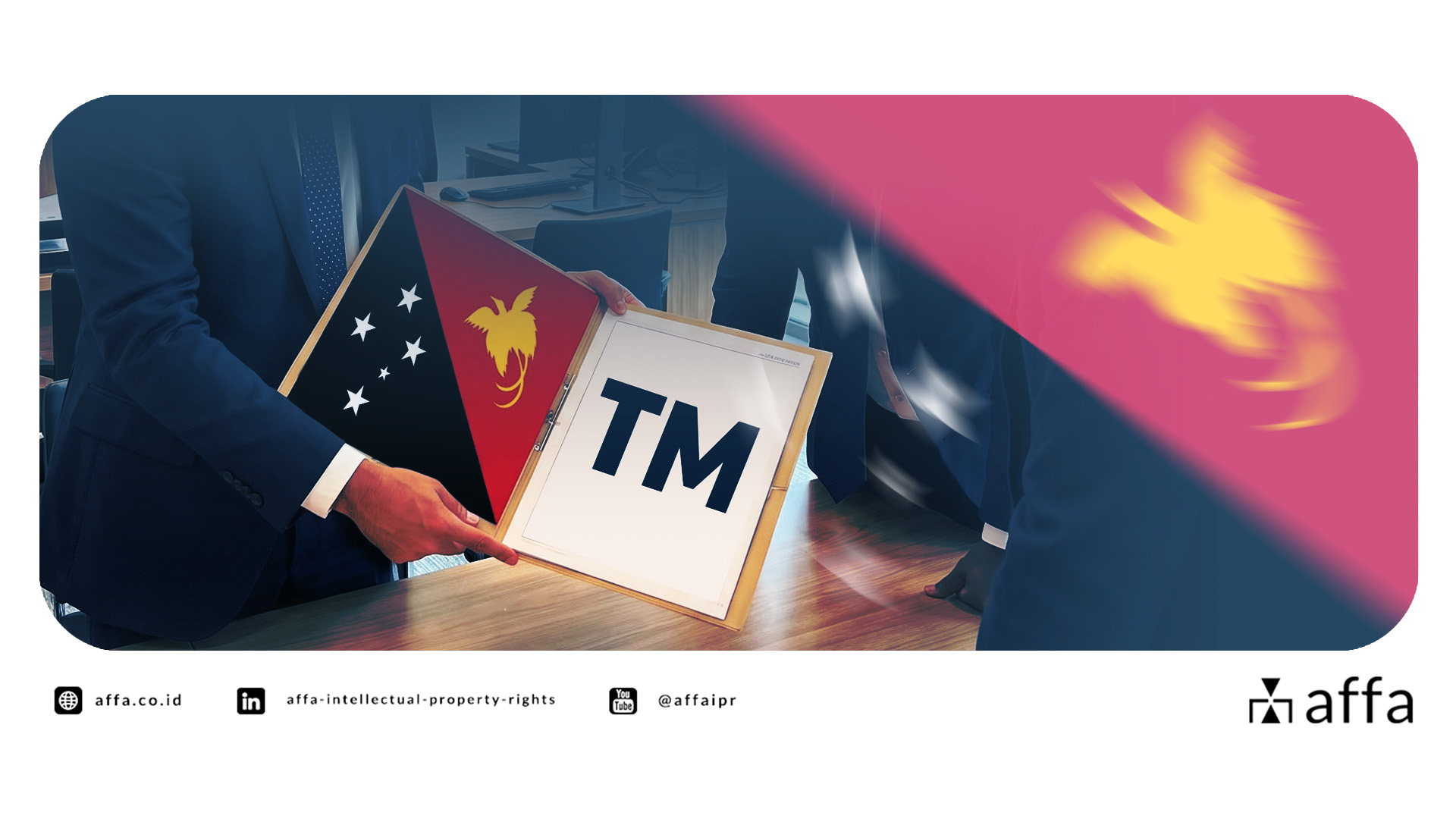
A Complete Guide to Trademark Registration in Papua New Guinea
Papua New Guinea (PNG) holds a unique position for Indonesia: geographically, the two countries are extremely close, sharing a direct land border on the island of New Guinea, yet PNG’s market opportunities remain relatively underexplored by Indonesian businesses. In fact, trade relations between the two countries indicate increasingly promising potential. In 2025, Indonesia’s exports to Papua New Guinea reached approximately USD 249.47 million, covering a diverse range of products, including vegetable oils and fats, soaps and cleaning products, processed foods, vehicles, sugar and confectionery products, aluminum, cereal- and dairy-based products, iron and steel, fertilizers, plastics, as well as electrical and electronic equipment. These figures demonstrate that Papua New Guinea is not merely a neighboring country, but also a promising export market for a wide range of industries. Its geographical proximity presents particular opportunities for Indonesian or global manufacturers, distributors, and service providers seeking to expand their businesses into the Pacific region. However, entering a new market also means bringing your business identity into a different jurisdiction. Trademark protection obtained in your country does not automatically extend to Papua New Guinea. The more serious you plan to expand and market your products there, the more important it becomes to ensure that your Trademark is properly protected in the country. The following sections provide an overview of the Trademark registration process in Papua New Guinea, including the requirements, procedures, and estimated timeline. Legal Basis for Trademark Protection in PNG In PNG, the legal protection of Trademarks is regulated in the “Trade Marks Act, 1980 (Ch.385)” where the administration of registration and legislation is managed by the Intellectual Property Office of Papua New Guinea (IPOPNG), which is under the auspices of the Papua New Guinea Investment and Promotion Authority (IPA). However, IPOPNG has been part of the World Intellectual Property Organization (WIPO) since 1996, the World Trade Organization (WTO), and the Paris Convention since 1999, so you don’t need to worry about the legal standards used. Registering your Trademark in PNG will protect it, especially if it conflicts with an identical or similar Trademark. The registered status also gives you exclusive rights to the goods and/or services you own, so your Trademark is protected from other parties who use it without permission and from prosecution if violations occur. Types of Trademark That Can be Registered The definition of a Trademark in PNG is a sign used or proposed to be used in relation to goods or services to differentiate these goods or services of one entity/ business from those of other entities in the course of trade. Generally, a sign can be anything from a visible distinctive word or words, letter (s), numeral (number), drawing, picture, shape, color, logotype, label, or a combination of one or all of these things. While Trademarks that cannot be registered are marks contrary to moral standards or public order, generic terms, non-distinctive marks, surnames, geographic location names, marks that are contrary to law, and marks that may deceive the public or cause confusion. Trademark Registration Application Process in PNG The average timeframe for the registration approval is 10 months if no objections or oppositions arise. However, because PNG has not yet joined the Madrid Agreement, you cannot make PNG the destination country for international Trademark registration via the Madrid Protocol. So, if you want to apply there, you must appoint an experienced Trademark Consultant who can be trusted to submit the application to IPOPNG. However, just like Trademark registration in any country, the first step that is highly recommended is carrying out the search process. This process is essential to check whether the Trademark you want to register is already registered or is being applied for by another party. For this reason, you can visit the WIPO site sorted into the IPOPNG database or the IPOPNG search page for this search process. After going through the search process and getting an idea of how successful your Trademark registration is, you can continue by paying the application fee to IPOPNG through the Trademark Consultant you have appointed. The following process for Trademark registration in PNG can be seen in the following flowchart: Validity Period for Trademark Protection in PNG Once your Trademark is registered in PNG, the protection period is ten years from the date of application, and it can be extended for a further ten years by paying a renewal fee. If you want to extend your Trademark, you can apply 1 (one) year before the protection period ends. However, if, for one reason or another, you are late in renewing, you still have a maximum of 1 (one) year after the protection period ends to pay the renewal fee, plus a late payment. You need to pay attention to the fact that every Trademark registered in PNG must be used. If it is not used for 3 (three) consecutive years, other parties can apply to cancel your Mark. However, if you really don’t want to continue using it, you can request cancellation or transfer ownership to another party. Should you require further information regarding Trademark searches, registration, and protection in Papua New Guinea, please feel free to contact us through the channels below to receive a complimentary 15-minute consultation: 📩 E-Mail : [email protected] 📳 Book a Call : +62 21 83793812 💬 WhatsApp : +62 812 87000 889 About AFFA: Established in 1999, AFFA Intellectual Property Rights is an Indonesia-based boutique IP law firm serving international brands and innovators, offering full-service support—from prosecution and licensing to enforcement and commercialization—in Indonesia’s dynamic IP landscape. Our firm is widely recognized for its excellence, with accolades including “Best Boutique Law Firm in Indonesia” and “IP Enforcement Firm” at the Indonesia Law Firm Awards 2025 by Asia Business Law Journal, as well as being listed as a “Recommended Firm 2024 — Indonesia” by WTR 1000: The World’s Leading Trademark Professionals. Source:– Intellectual Property Office of Papua New Guinea

Top U.S. Patent Applicants – Signal Growing Confidence in Indonesia’s Innovation Market
Indonesia continues to strengthen its position as one of Asia’s most important destinations for technology, manufacturing, and investment. This trend is also reflected in the latest Patent filing statistics, where many of America’s most innovative companies are actively seeking Patent protection in Indonesia. Data for January–June 2026 shows that several globally recognized U.S. corporations have filed a significant number of Patent applications in Indonesia, demonstrating that protecting Intellectual Property has become an essential part of their long-term business strategy in Southeast Asia. Top 10 U.S. Companies Filing Patents in Indonesia (January–June 2026) Rank Company Patent Applications 1 QUALCOMM INCORPORATED 195 2 INTERDIGITAL PATENT HOLDINGS, INC. 72 3 DOLBY LABORATORIES LICENSING CORPORATION 53 4 REGENERON PHARMACEUTICALS, INC. 20 5 CATERPILLAR INC. 20 6 DOW GLOBAL TECHNOLOGIES LLC 20 7 PANASONIC INTELLECTUAL PROPERTY CORPORATION OF AMERICA 19 8 LUMMUS TECHNOLOGY LLC 9 9 AIR PRODUCTS AND CHEMICALS, INC. 9 10 APPLE INC. 7 Technology Companies Continue to Lead The ranking is dominated by global technology leaders such as Qualcomm, InterDigital, and Dolby Laboratories. This reflects Indonesia’s growing importance as a market for: As Indonesia’s digital economy continues to expand rapidly, protecting core technologies through Patent registration has become increasingly important for companies operating in these sectors. Innovation Comes from Many Industries Interestingly, the list is not limited to electronics companies. Several Patent filings also come from industries including: This diversity demonstrates that Indonesia is becoming an attractive market for a broad range of technology-intensive industries. Why Are Global Companies Filing Patents in Indonesia? Patent protection is no longer viewed solely as a legal formality. For multinational companies, it has become a strategic business tool that supports long-term commercial growth. Registering Patents in Indonesia allows innovators to: For companies considering expansion into Southeast Asia, Indonesia represents one of the region’s largest economies, with a growing manufacturing base and a rapidly developing innovation ecosystem. Indonesia Is Becoming an Increasingly Important Patent Jurisdiction Indonesia’s role within global supply chains has expanded significantly over the past decade. International companies are increasingly establishing manufacturing facilities, research collaborations, distribution networks, and technology partnerships throughout the country. As commercial activities grow, so does the importance of securing Patent protection before technologies enter the Indonesian market. Filing early provides greater legal certainty and helps companies build stronger IP portfolios that support future commercialization, licensing, and enforcement activities. A Strategic Time for U.S. Innovators The strong Patent filing activity by leading American companies sends a clear message: Indonesia is no longer viewed as merely a consumer market; it is increasingly recognized as an important jurisdiction for protecting valuable innovations. Businesses planning to manufacture, license technology, collaborate with Indonesian partners, or expand sales into Southeast Asia should consider Indonesia as an integral part of their global Patent filing strategy. How AFFA Can Help Navigating Indonesia’s Patent system requires careful planning and compliance with local legal procedures. Working with an experienced local Patent consultant can help applicants avoid unnecessary delays while ensuring that valuable inventions receive the broadest protection available under Indonesian law. As one of Indonesia’s leading Intellectual Property law firms, AFFA Intellectual Property Rights has extensive experience assisting international companies, including many foreign Patent owners, in securing and managing their Patent portfolios in Indonesia. Whether you are filing your first Indonesian Patent application or expanding an existing global portfolio, our team is ready to support every stage of the process, from filing strategy and prosecution to maintenance and enforcement. Protect your innovation before entering one of Asia’s fastest-growing markets. Indonesia’s innovation landscape continues to evolve, and securing Patent protection today can become a valuable investment for tomorrow’s business growth. Should you require further information, please feel free to contact us through the channels below to receive a complimentary 15-minute consultation: 📩 E-Mail : [email protected] 📳 Book a Call : +62 21 83793812 💬 WhatsApp : +62 812 87000 889 About AFFA: Established in 1999, AFFA Intellectual Property Rights is an Indonesia-based boutique IP law firm serving international brands and innovators, offering full-service support—from prosecution and licensing to enforcement and commercialization—in Indonesia’s dynamic IP landscape. Our firm is widely recognized for its excellence, with accolades including “Best Boutique Law Firm in Indonesia” and “IP Enforcement Firm” at the Indonesia Law Firm Awards 2025 by Asia Business Law Journal, as well as being listed as a “Recommended Firm 2024 — Indonesia” by WTR 1000: The World’s Leading Trademark Professionals.

[Important Update] Trademark Certificate Required for Textile, Bag, & Footwear Imports in Indonesia
Effective March 10, 2024, in order to increase Trademark protection and control product quality on the market, Indonesian Ministry of Industry (MOI) has implemented a new regulation significantly impacting importers of textiles, textile products, bags, and footwear. This revision to MOI Regulation No. 5 of 2024 Article 23(3) concerns the procedures for issuing technical considerations for these imports. Significant changes have occurred, including the addition of the following documents, which are mandatory when an importer submits a General Import Permit for Consumption (API-U). Trademark Certificates issued by DGIP under the Ministry of Law and Human Rights of the Republic of Indonesia; Proof of recordation the License Agreement, Sublicense, and/or Letter of Appointment from the Trademark Owner to the Authorized Representative; and Letter of Appointment to Import from the Trademark Owner or Authorized Representative. Affected Products Textiles: Fibers, threads, and fabrics; Textile Products: Carpets, other textile floor coverings, clothing, ready-made clothing accessories, and other finished textile goods; Bags: Suitcases, wallets, school bags, sports bags, handbags, and other bags; Footwear: Shoes, sandals, and moccasins. The general import permit process remains in place, where the General Import Permit for Consumption (API-U) applies to businesses importing for trading purposes. The application process involves a General Importer Verification (VIU) followed by the MOI’s Technical Consideration (Pertek). Obtaining the API-U permit requires submitting the VIU report and Pertek results to the MOT. Impact on Importers This new requirement poses a challenge for importers who haven’t secured Trademark registration in Indonesia. The lengthy Trademark registration process, typically taking 1-2 years, necessitates immediate discussions with Trademark owners to obtain the necessary certificates and avoid delays in obtaining import permits. Should you need further information regarding this regulation, including how to register a trademark in Indonesia, please contact us via email [email protected].

See You At The Upcoming INTA 2024 Annual Meeting In Atlanta, May 18-22 | 2024
AFFA Intellectual Property Rights—Indonesia & Timor Leste are delighted to announce that our Managing Partner, Emirsyah Dinar, will attend the highly anticipated International Trademark Association (INTA)’s 146th Annual Meeting in Atlanta, USA, this May. As a leading global association of Trademark owners and professionals, INTA’s annual meeting is a must-attend event for IP practitioners worldwide. We look forward to meeting you during the course of the Annual Meeting. For meeting inquiries, please email [email protected].
7 Reasons to Not Use Pirated Software – the Indonesian Context
Knowing that the original price of “Windows 11 Home” on the Microsoft website is sold for IDR 2,999,999, but on the well-known e-commerce in Indonesia, it can be found for only IDR 20,000, complete with the promise of an activation key that is valid forever. What’s even crazier is that this high price disparity opens up opportunities for other fraudsters to sell pirated software at various prices, from hundreds of thousands of rupiah to millions, which, of course, can deceive buyers who intend to buy genuine products but are constrained by a limited budget. However, if you are used to buying original or branded products with a large price difference from the original, you will understand that something is wrong. Yes, of course, it can be suspected that the product being sold cheaper is not genuine, used, or even stolen. Just like using pirated or stolen products, there are several big risks if we continue to use pirated software. Want to know more? Here are 7 disadvantages of using pirated software: Fostering Illegal Activities Software piracy is a violation of Copyright Law and can lead to hefty fines or even jail time, primarily if you use it for commercial purposes without permission or reproduce and distribute it unlawfully. There have been many instances where software companies go after those who use the software illegally for commercial purposes. Security Risks Pirated software often comes from untrusted sources and may contain malware or viruses that can harm your computer and steal your data. Lack of Updates You won’t receive security updates or bug fixes for pirated software, leaving your system vulnerable to attacks. No Technical Support If you encounter problems with pirated software, you won’t have access to customer support from the software developer. Harms Software Development Software piracy reduces software developers’ revenue, making investing harder in research and development of new and improved software. This condition will undoubtedly worsen the growth of innovation in our country. Damaging Your Image Imagine if you are in the middle of an important presentation and, while sharing the screen, a notification appears that your laptop’s operating system needs to be revised. Of course, this would create a wrong impression for you and your company. Clients would also judge that you do not uphold Intellectual Property. Inhibiting Foreign Investment It is common knowledge that Indonesia is still on the list of world countries with serious Intellectual Property violations (along with Argentina, Chile, China, India, Indonesia, Russia, and Venezuela), as released by the United States Trade Representative (USTR) in the 2023 Priority Watch List Special 301 Report. Overall, the bads of software piracy far outweigh the goods. There are many affordable and legal software options available, and the risks associated with piracy are simply not worth it. If you require further information regarding the software protection, Copyright recordation or Patent registration in Indonesia and abroad, please do not hesitate to contact us via email at [email protected].
Are You Breaking the Law? The Truth About Region Lock
Region lock is a Digital Rights Management (DRM) restriction placed on content or devices. It restricts their use to a specific geographical region. You might know that Netflix Japan has a different movie catalog than Netflix Indonesia. That’s the basic idea, but why? Before we delve into discussion about the “why,” let’s first learn about the two types of region locking: Content Locking This restricts access to digital content, like movies, games, or even streaming services, based on your location. For instance, a movie available on a streaming service in the US might be blocked for viewers in Indonesia due to licensing agreements. Device Locking This restricts the functionality of a physical device, like a phone or game console, depending on the region it’s purchased in. For example, a phone bought from abroad might not be able to be used in Indonesia. There are 5 (five) reasons why region locking exists: Content Regulation Copyright laws and regulations that rule contents can vary worldwide. Region locking allows companies to control what content is available in each region, comply with local laws, and avoid any issues.A simple example is that content considered normal in one country will be sensitive if seen in another. Plus, the age limit of 13+ in one country may be 18+ in another. Therefore, creators tend to apply region lock to their work to limit responsibility to the public outside their jurisdiction. Licensing Agreements Sometimes, companies sell the rights to distribute their products (like movies or games) to different companies in different regions. Region locking ensures that people use the product only in the region it’s licensed for.Because Licensing Agreements are a form of IP utilization, a leak from the distribution channel will cause losses for both parties. The licensor will lose potential buyers from other countries/regions, while the licensee will lose exclusivity in their region. Price Discrimination This is another big problem. Because not all countries have the same purchasing power and Licensees are given the authority to determine prices according to the market, differences in selling prices are very likely to occur. For example, an iPhone might be much cheaper in one country compared to another. Region locking stops people from buying the cheaper version and using it or even selling it in the more expensive region. Staged Releases Sometimes, companies might want to release a product in one region before another. Region locking can help them control when and where the product is available.This strategy is usually taken to determine the response from a specific market in a region so any improvements can be made before being released to the wider market. If there is a leak in this stagging release, the research data received will be biased, and the product may be disappointing when it is actually released to the wider market. Technical Reasons In some cases, region locking might be used for technical reasons, like ensuring compatibility with local infrastructure or preventing lag in online games.A clear example is if an application requires a very fast connection, it will not be possible to release it in a country where the internet connection is far below average. If it is forced to be released or accessed outside the region, it will not give a good impression; it will actually bring a lot of complaints, which will make the product look bad in the eyes of the public. That’s why the region locking can be frustrating for consumers, but it does serve some purposes for companies. So it would be best if you did not force yourself to break it because you might suffer losses such as the following: For You Warranty Voiding Tampering with region locks might be considered a violation of the device’s warranty terms, potentially voiding your warranty and leaving you without coverage for repairs. Technical Issues Bypassing region locks often involves unofficial methods or software. These can be unstable and lead to unexpected glitches or malfunctions with your device or content. Legal Issues Region locking often hinges on copyright or licensing agreements. Breaking these locks might be illegal depending on your location and the specific content or device. For Your Device/Content Limited Functionality Bypassing a lock might disable certain features intended for the original region. For example, a console game might lack online functionality if the region lock is broken. Content Incompatibility Region locking can sometimes be tied to format or encoding differences. Bypassing the lock might lead to compatibility issues, such as the content not playing properly on your device. Other Factors Safety and Security Using unofficial methods to break region locks such as using a Virtual Private Network (VPN) can introduce security risks. Malicious software might be bundled with these tools, putting your device and data at risk. In the end, it’s important to weigh the potential benefits against the risks before attempting to bypass region locking. Sometimes, waiting for a regional release from the official licensee in the region or considering alternatives like region-free versions might be a safer option. If you require further information regarding the region lock issue, licensing problem, or want to protect your Intellectual Property in a broader market, please do not hesitate to contact us via email at [email protected].

ASEAN IPA 2024: Addressing Intellectual Property Issues by AI by Maximizing the Use of AI
This article is a continuation of the previous article, which discussed the Challenges of Intellectual Property Protection in the Digital Era for countries in Southeast Asia, as presented at the 2024 ASEAN Intellectual Property Association (IPA) Annual General Meeting & Conference, which took place on March 1-2 ago in Jakarta, Indonesia. As previously explained, the Digital Economy presents challenges in protecting Intellectual Property (IP) in the ASEAN region. However, what has not been revealed in the article is the contribution of Artificial Intelligence (AI) to the growth of the digital economy and its impact on IP law enforcement, even though AI’s contribution to regional GDP in 2030 will reach USD 1 trillion. The growth of the Digital Economy in the ASEAN region cannot be denied, generated by many start-up companies in various fields, such as Techinasia in the media sector, Grab in the transportation sector, and Traveloka in the tourism sector. Of the USD 100 billion growth in the region in 2023, around 13% will be supported by investment in the AI sectors, with 6 (six) main uses as follows: Computer Vision This market focuses on technology that helps computers make sense of digital images and videos. Machine Learning Algorithms teach computer systems to learn from data. Natural Language Processing Deals with technology enabling computers to understand and generate human language. AI Robotics Combining AI, machine learning, and engineering, to create intelligent machines capable of independent tasks. Autonomous & Sensor Technology Machines and systems equipped with sensors and AI operate independently, responding to changes in their environment. Generative AI Involving the creation of models that produce new content like images and text, often indistinguishable from human-created content. With those various implementations, IP stakeholders must anticipate AI developments because they impact administration, practice, protection, and law enforcement. In particular, AI will confuse IP owners, consultants, and government officials if the laws on Copyright, Trade Secrets, Industrial Designs, Patents, and Trademarks are not changed. Because AI, on the one hand, is very promising but also dangerous, depending on who uses it. In the UK and the US, there have been more than 10 cases of lawsuits against Generative AI-based companies. For example, OpenAI, the company that created ChatGPT, was deemed to have violated Copyright because it used many well-known works and media news as learning material for its AI system without permission. Utilization of AI for IP Violations If ChatGPT argues that the use of the work is for learning and can be settled with royalty payments, in practice, many other uses of AI can be categorized as legal violations, namely: Fabricate, forge, falsify images, certificates, documents, and create deepfakes videos; Create/manufacture realistic counterfeit labels and packaging; Clean up language, grammar, misspellings, and awkward phrasing on labels, packaging, advertising, websites; spam/phishing emails, which were often dead giveaways of counterfeit goods made in a foreign country; and Allow hackers to break into networks through emails that trick recipients into sharing personal info or accessing them illegally. Benefits of AI in the IP Landscape However, AI is of great benefit to IP law enforcement. Starting from maximizing IP Consultants’ work and the border enforcement process to law enforcement officers. Maximizing the Work of IP Consultants: Conducting searches and analysis of prior art and IP registration databases more efficiently and accurately; Streamlining contract analysis by extracting and categorizing relevant information, saving time and allowing attorneys to focus on negotiating and drafting contracts; Enabling faster identification of potential conflicts, enhancing due diligence, assisting in determining protection or infringement issues; and application drafting to improve productivity/reduce costs. Benefits of AI for IP Law Enforcement: Monitor online platforms, websites, and social media for unauthorized use of IP, enabling proactive enforcement by owners; Identify instances of infringement on digital platforms by comparing content or marks against databases of brands, designs, or works; and Assist IP research and litigation by analyzing legal texts, court decisions and precedents, case strategy development, and outcome predictions from historical data. AI is being integrated into the criminal justice process, from crime prevention to evidence analysis. It can assist courts in making sentencing decisions and assess the likelihood of future criminal behavior, thereby informing parole, probation, or release decisions. It can enhance efficiency, accuracy and fairness, but bias, transparency, and ethics concerns have been raised and will continue to be raised as AI technologies become more pervasive and invasive. Benefits of AI for Border Enforcement: Drawing insights and patterns from customs databases, market reports, trade statistics, and IP owner-provided product identification materials; Automatically identifying objects in streaming video and imagery; and Providing real-time alerts to operators when an anomaly is detected, enhances the ability to stop illicit and illegal goods from entering the country. In the end, new regulations are needed to adapt to AI developments. These regulations should start with rules related to ownership of rights involving AI, rules governing coordination between stakeholders, competition, and privacy, and rules governing resolution and legal enforcement of any disputes that may occur. Only with clear rules can conducive growth be created before the next technological wave finally emerges. If you require further information regarding the impact of AI on Intellectual Property, please do not hesitate to contact us via email at [email protected].

The Benefits of IP Customs Recordation for Your IPs in Indonesia
Recently, the Directorate General of Customs and Excise of the Republic of Indonesia (DGCE) has taken widespread action against tons of illegal food to protect consumers and the food industry in Indonesia. Because the ingredients of food imported illegally are unknown, it can endanger residents and disrupt the distribution of local food producers. But did you know that Customs and Excise can also deter illegal goods that violate Intellectual Property abroad or within the country? Because DGCE is part of the Task Force together with the Criminal Investigation Agency of the Republic of Indonesia Police (Bareskrim Polri), the Indonesian Food and Drug Authority (BPOM), and the Directorate General of Informatics Applications (Ditjen Aptika), which supports the performance of the Directorate General of Intellectual Property (DGIP) in enforcing Intellectual Property Law in Indonesia. Enforcing this law is a collective homework because Indonesia is still on the list of world countries with serious Intellectual Property violations (along with Argentina, Chile, China, India, Indonesia, Russia, and Venezuela), as released by the United States Trade Representative (USTR) in the 2023 Priority Watch List Special 301 Report. A few weeks ago, DGCE conducted outreach to the public so that the wider community, especially Intellectual Property (IP) owners, could take advantage of this service. So, if illegal products are found crossing state borders, IP owners, especially copyright and trademark owners, will be assisted in the deterrence process. But before that, you must first carry out the recordation process on the DGCE website. For those of you who are still unfamiliar with the term “deterrence”, this word has 2 (two) meanings, namely: The Benefits of IP Customs Recordation in DGCE The recordation process is an activity to enter your IP information into the DGCE customs database, with the following benefits: The Authority of DGCE DGCE has two schemes for the enforcement of Intellectual Property Law: Conditions for IP Customs Recordation at DGCE As the owner or right holder, you must submit a written application accompanied by the required documents by Minister of Finance Regulation (MFR) Number 40/pmk.04/2018 concerning Recording, Deterrence, Guarantee, Temporary Suspension, Monitoring and Evaluation in the Context of Controlling the Import or Export of Suspected Goods Constituting or Originating from the results of Violations of Intellectual Property Rights, to the Director of Action and Investigation at the DGCE Head Office and submitted electronically via the CEISA IPR application which can be accessed on the user portal. Then you are required to prepare the following documents as attachments: Involve Internal or External Examinator Apart from that, you must appoint one or more examiners who are experts on the product, who can come from within or outside the company, and who understand the Trademark or Copyright of the item to be recorded. If the goods recorded are related to the Trademark, the appointed Examiner(s) must understand the characteristics of product authenticity, such as the mark, goods, logo, product appearance, packaging, distribution, and marketing routes, as well as the number of products marketed in that area. However, suppose the item being recorded is related to Copyright. In that case, the examiner must understand the characteristics or specifications of the copyrighted work in the fields of science, art, literature, or related rights being created. DGCE Research Procedure Approximately 30 Days All requirements will then undergo formal and material research by DGCE, including validating the data with DGIP. If this recordation is approved, it will be valid for 1 (one) year and can be extended. The entire recordation process is free of charge and only takes approximately 30 days. However, if you are a Trademark Owner or Copyright Holder who is a foreign company and domiciled abroad, you must have a business entity domiciled in Indonesia. DGCE has successfully disposed of more than one million pens, three million razors, 72 thousand more cosmetics, up to 160 rolls, and 890 cartons of sandpaper in the last four years. This number is not much because not many Trademark Owners and Copyright Holders take advantage of this feature. Therefore, if you own a product with a high cross-border risk, we recommend immediately recording it at DGCE. If you still have questions or need further information regarding Intellectual Property Customs Recordation at the Directorate General of Customs and Excise, do not hesitate to contact us via [email protected].
ASEAN IPA 2024: Challenges of IP Protection in the Digital Era
The 2024 ASEAN Intellectual Property Association (IPA) Annual General Meeting & Conference took place successfully on March 1-2 in Jakarta, Indonesia. Held at the Mandarin Oriental – Hotel, this event provided new insight to Intellectual Property (IP) Southeast Asian stakeholders regarding the challenges faced in the digital era. There was plenty of knowledge shared by competent speakers presented, including Bambang Brodjonegoro (Former Minister of Finance of the Republic of Indonesia), Thang Van Luong (Assistant Director of IPR Division of ASEAN), Kozo Takeuchi (President-Elect of APAA Headquarters, Japan), Peter Fowler (Senior Counsel for Enforcement, Office of Policy and International Affairs of USPTO – USA), Peter Sungjin Chun (Senior Vice President of APAA Korean Group – ROK), Jesse Zhang (AIPPI China Group), and Kukuh TW (Lecturer, Entrepreneur and IT Consultant ). For this reason, we will divide it into several articles, from the conditions and challenges facing ASEAN in the digital era to specific obstacles related to Artificial Intelligence (AI). Below is the summary: The Growth of Intellectual Property in ASEAN In 2022, the ASEAN economy grew 5.7% compared to the previous year, achieving a Gross Domestic Product (GDP) of USD 3.6 trillion and placing this region in the 3rd most prominent position in Asia or the 5th largest globally. With this performance, ASEAN succeeded in attracting Foreign Direct Investment (FDI) of USD 224.2 billion, most of which came from the United States (16.3%), Japan (11.9%), the European Union (10.7%), and China (6.9%). This investment is mainly aimed at the service sector at 68.3% and manufacturing at 27.5%. ASEAN’s population is dominated by people under 30, making this region dynamic and challenging in the digital era. There were 460 million internet users in 2022, of which 80% were actively shopping online. The Gross Merchandise Value (GMV) contribution will reach USD 200 billion and is predicted to exceed USD 330 billion in 2025. This change in lifestyle in the digital era makes the ASEAN region seem to have entered the Digital Decade, where the potential for the digital economy will reach USD 1 trillion GMV in 2030. However, this great potential will only be achieved with the right strategy and collaboration. This aligned strategy is essential, considering that ASEAN countries have quite a significant gap in the Global Innovation Index (GII) ranking released by the World Intellectual Property Organization (WIPO) in 2023. Of the top 50 in the GII ranking, only Singapore (rank 5), Malaysia (30), Vietnam (40), Thailand (43), and the Philippines (50) are in the top 50. Meanwhile, half of the other ASEAN countries, such as Indonesia, Brunei, Cambodia, Myanmar, and Laos, still need to be higher. For this reason, a blueprint for the “ASEAN Economic Community 2025” has been created, prioritizing Intellectual Property cooperation with several strategic goals and indicators. Cooperation on Strengthening Intellectual Property in the ASEAN Region To strengthen this collaboration, the following Strategic Objectives have been prepared: Provide a firm basis for economic progress, support economic development, and produce wealth & prosperity. Promote trade & flow of investment; stimulate tech transfer & technological innovation; competitiveness. Expedite the realization of ASEA FTAs, and contribute to the growth of regional and global trade liberation. Contribute to regional dynamism, synergy & the enhancement of ASEAN solidarity. Meanwhile, the Strategic Indicators are as follows: Strengthening IP offices and building IP infrastructure. Enhancing regional mechanisms to promote asset creation & commercialization. Developing regional IP platforms and infrastructure. Expanding the ASEAN IP ecosystem. This strategic indicator has been planned since 2016 but is still being pursued to realize everything by 2025. ASEAN Filing Trends 2016-2022 Source: WIPO Source: WIPO Source: WIPO Even though it is quite volatile, especially after the Covid-19 pandemic, overall, whether for Patents, Trademarks or Industrial Design, achievements in 2022 are among the highest in the last 6 (six) years. Intellectual Property Opportunities in the Digital Economy ASEAN has mapped several IP opportunities in the Digital Economy because it plays a role as a catalyst and empowerer with 5 (five) main roles as follows: IP Service Delivery Quality Digitalization of IP service delivery processes improves efficiency and accessibility. DE facilitates remote access to expertise and can improve the quality and reach of IP services in the region. IP Enforcement With the rise of digital transactions & online activities, IP protection will be more prioritized. DE provides tools for data analytics and monitoring and promotes info sharing, and cross-border cooperation among authorities in strengthening regional combat against IP violation, infringement, and piracy. IP Commercialization DE speeds up the innovation process leading to the creation of new tech and IP assets, and fast IP commercialization, hence fostering TT and Tech innovation. Global market extension, digital technologies, and digital marketplaces/platforms empower ASEAN creators, innovators, IP owners, and SMEs to capitalize on IP assets. IP Education & Culture DE provides opportunities to create and disseminate IP education (documents, virtual simulations, open educational resources). DE offers powerful tools for conducting digital outreach and awareness campaigns. IP for Inclusive & Sustainable Growth IP be more beneficial to inclusive and sustainable growth since DE could help unlock local creativity, inclusive innovation, and financial inclusion. Local communities GRTKCE can be protected and commercialized through IP mechanisms. DE can improve digital accessibility & inclusion for all. Intellectual Property Challenges in the Digital Economy On the other hand, the same 5 (five) factors also have inhibiting elements that cause the growth of the IP climate in the ASEAN region to remain stagnant. The following is the explanation: IP Service Delivery Quality Digital Divide & Cybersecurity Risks hinder. Disparities in access to technology and online services across ASEAN member states may hinder the delivery of high-quality IP services. Whereas data breaches, cyberattacks, and IP theft disrupt IP delivery. IP Enforcement DE blurs traditional jurisdictional boundaries and complicates cross-border IP enforcement. Enforcement agencies are disrupted in coordinating investigations, collecting evidence, and prosecuting offenders across different legal jurisdictions, let alone anonymous & pseudonymous actors in