

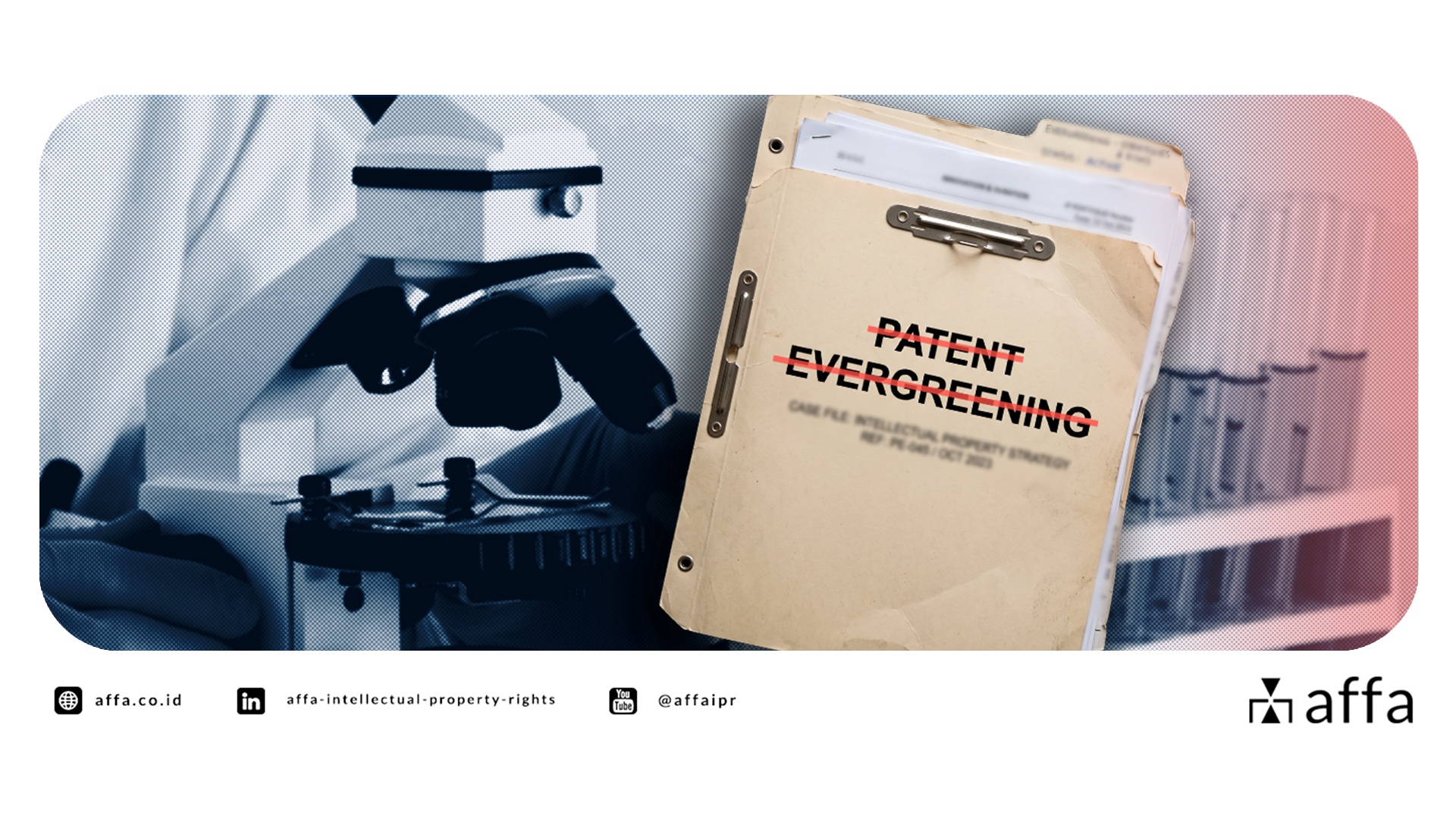
On 28 August 2026, Indonesia’s Constitutional Court issued Decision No. 255/PUU-XXIII/2025, reinstating Article 4(f) of the Patent Law and its explanatory provisions, which Law No. 65 of 2024 had previously omitted. The decision restores the exclusion from patentability of new uses of existing or known products, including new medical indications (second medical use). It also reinstates restrictions on new forms of existing compounds that do not significantly enhance efficacy. As a practical implication, pending applications should be assessed in light of the reinstated Article 4(f), including those filed since Law No. 65 of 2024 took effect on 28 October 2024. Patents granted before the decision was pronounced are not automatically revoked. Their validity may still be challenged through the legal procedures available under the Patent Law, subject to the applicable grounds, requirements, and deadlines. We urge patent applicants who are impacted by this Constitutional Court decision to review their portfolio and assess the viability of protection in Indonesia. Should you need further information on this new Patent regulation, contact us through any of the channels below and get a FREE 15-minute consultation: 📩 E-Mail : [email protected] 📳 Book a Call : +62 21 83793812 💬 WhatsApp : +62 812 87000 889 About AFFA: Established in 1999, AFFA Intellectual Property Rights is an Indonesia-based boutique IP law firm serving international brands and innovators, offering full-service support—from prosecution and licensing to enforcement and commercialization—in Indonesia’s dynamic IP landscape. Our firm is widely recognized for its excellence, with accolades including “Best Boutique Law Firm in Indonesia” and “IP Enforcement Firm” at the Indonesia Law Firm Awards 2025 by Asia Business Law Journal, as well as being listed as a “Recommended Firm 2024 — Indonesia” by WTR 1000: The World’s Leading Trademark Professionals.

商标注册证还是清真认证?应该先申请哪一个?
商标已经准备好,产品也即将上市,但企业应该先办理哪一项:商标注册、印度尼西亚食品药品监督管理局(BPOM)许可,还是清真认证(Halal Certification)? 三者具有不同的功能,并适用不同的法律法规和要求。但从企业品牌保护的角度来看,商标注册应当优先进行,之后再根据产品类别办理印度尼西亚**食品药品监督管理局(Badan Pengawas Obat dan Makanan,简称 BPOM)**的相关许可及清真认证。 为什么应当优先注册商标? 印度尼西亚实行商标**“申请在先”(first-to-file)原则。根据印度尼西亚《2016年第20号商标和地理标志法》第3条**,商标权在商标获得注册后取得。 这意味着,仅仅在产品上使用某个名称、取得产品上市许可,甚至已经取得清真认证,都不会自动赋予企业对该商标的专用权。 如果商标尚未注册,企业可能面临相当大的风险。 例如,一家公司已经在产品生产、包装、市场推广、BPOM 许可及清真认证方面投入了大量资金,之后却发现其正在使用的商标已经由其他主体注册。 在这种情况下,公司可能面临法律纠纷,甚至可能不得不更改产品名称、包装、宣传材料,以及其他使用该品牌标识的商业文件。 因此,企业最好在产品开发的早期阶段就进行商标检索并提交商标注册申请。 什么时候需要办理 BPOM 许可? BPOM 许可与商标注册属于不同的法律和监管体系。 商标主要用于保护产品的品牌标识,而 BPOM 则负责监管特定产品的安全性、质量、功效、标签以及市场流通。 一般而言,受 BPOM 监管的产品包括: 但这并不意味着所有食品都必须取得 BPOM 注册编号。 部分食品可以免于 BPOM 注册要求,例如保质期少于七天的食品、即食食品、作为原材料使用且不直接销售给最终消费者的食品,以及符合**家庭工业加工食品生产承诺履行认证(SPP-IRT)**制度的特定产品。 与商标有关的要求也可能因产品类别而有所不同。因此,商标注册证并非在所有情况下都是申请 BPOM 注册的前提条件。 不过,产品名称或商标仍然是产品注册以及产品标签上的重要识别信息。 那么清真认证呢? 清真认证义务并不适用于所有在印度尼西亚市场销售的商品。 根据印度尼西亚**《2024年第42号政府条例——清真产品保障领域实施条例》**,强制性清真认证将按照不同产品类别分阶段实施。 自 2026年10月18日 起进入**强制清真认证(Mandatory Halal)**阶段的产品包括: 对于使用伊斯兰教法所禁止(haram)材料制成的产品,则适用不同规定。 此类产品可以免于取得清真认证,但必须按照适用法规的要求,明确标示其非清真(Non-Halal)信息。 商标、BPOM 与清真认证:不要混淆 简单来说,三者可以这样区分: 同一种产品可能同时需要三者。 例如,化妆品使用的商标需要获得法律保护;产品上市前需要取得 BPOM 相关许可;同时,该产品也可能属于强制清真认证范围。 反之,有些商品虽然并不属于必须办理 BPOM 许可或清真认证的类别,但其商标仍然非常有必要获得法律保护。 归根结底,商标注册应当优先进行。 这并不是因为商标注册证可以取代 BPOM 许可或清真认证,而是因为商标是产品的核心商业标识,并将在之后的产品销售及各种商业活动中持续使用。 因此,企业较为理想的顺序是: 进行商标检索 → 提交商标注册申请 → 根据产品类别办理 BPOM 和/或清真认证相关手续。 随着印度尼西亚即将在 2026年10月 进入下一阶段的强制清真认证制度,这一点对于从事食品和饮料、化妆品、保健品、天然药物及天然健康产品、准药品、化学产品、转基因产品、屠宰产品及屠宰服务,以及特定消费用品的企业而言尤其重要。 不要等到产品已经准备上市、各项监管许可也已经办理完成之后,才发现作为产品核心身份的商标却仍未受到法律保护。 如需进一步了解印度尼西亚及其他国家/地区的商标注册、BPOM 许可及清真认证相关服务,欢迎通过以下渠道联系我们,并获得免费的15分钟咨询: 📩 电子邮件:[email protected] 📳 电话预约:+62 21 83793812 💬 WeChat:@AFFAIPR 关于 AFFA: AFFA 知识产权事务所成立于1999年,是一家总部位于印度尼西亚的精品知识产权律师事务所,专注为国际品牌与创新者提供全方位服务,包括申请注册、许可授权、执法维权及商业化支持,助力客户在印尼不断发展的知识产权环境中稳健发展。 本所因卓越表现广受认可,荣获 Asia Business Law Journal 颁发的“2025年度印度尼西亚最佳精品律师事务所”及“知识产权执法事务所”称号,并入选 WTR 1000 “2024年度推荐事务所(印度尼西亚)”。
Trademark Certificate or Halal Certificate? Which One Should You Apply for First?
Your brand is ready, and your product is about to launch, but which should you handle first: Trademark registration, BPOM approval, or Halal Certification? Each serves a different purpose and follows different requirements. However, from a business protection perspective, Trademark registration should ideally come first, followed by compliance with the requirements of Indonesia’s Food and Drug Authority (Badan Pengawas Obat dan Makanan – BPOM) and Halal Certification, where applicable to the product. Why Should Trademark Registration Come First? Indonesia applies the first-to-file principle. Under Article 3 of Law No. 20 of 2016 on Trademarks and Geographical Indications, rights to a Trademark are acquired after the Trademark has been registered. This means that using a name on a product, obtaining marketing authorization, or even securing a Halal Certificate does not automatically grant you rights to that Trademark. Without a registered Trademark, the risks can be significant. Imagine a company that has already invested in production, packaging, marketing, BPOM approval, and Halal Certification, only to discover that the Trademark it uses is already owned by another party. The company could face legal action and may ultimately have to change its product name, packaging, promotional materials, and other business documents bearing that identity. For this reason, Trademark searches and registration should ideally be carried out at an early stage of product development. When Is BPOM Approval Required? BPOM approval and Trademark registration fall under different regulatory regimes. A Trademark protects a product’s brand identity, while BPOM regulates the safety, quality, benefits, labeling, and distribution of certain products. In general, products regulated by BPOM include: However, this does not mean that every food product must obtain a BPOM registration number. Certain foods may be exempt from BPOM registration requirements, such as products with a shelf life of less than seven days, ready-to-eat foods, foods used as raw materials and not sold directly to end consumers, and certain products eligible for the Home Industry Processed Food Production Commitment Fulfillment Certificate (SPP-IRT) scheme. Trademark-related requirements may also differ depending on the product category. Therefore, a Trademark Certificate is not always a prerequisite for BPOM registration. Nevertheless, the product name or Trademark remains an important part of the product identity submitted for registration and displayed on its label. What About Halal Certification? Halal Certification requirements do not apply to every product traded in Indonesia. Under Government Regulation No. 42 of 2024 on the Implementation of Halal Product Assurance, mandatory Halal Certification is being implemented in stages according to product category. Products covered by the Mandatory Halal phase effective October 18, 2026 include: Different rules apply to products made from prohibited (haram) materials. Such products are exempt from the requirement to obtain a Halal Certificate but must carry non-halal information or labeling in accordance with the applicable regulations. Trademark, BPOM, and Halal: Know the Difference Put simply: A single product may require all three. For example, a cosmetic product may use a Trademark that needs legal protection, require BPOM authorization before it can be marketed, and fall within a category subject to mandatory Halal Certification. Conversely, a product may still require Trademark protection even though it is not subject to either BPOM authorization or Halal Certification. Ultimately, Trademark registration should come first. This is not because a Trademark Certificate replaces BPOM approval or a Halal Certificate, but because the Trademark is the identity that will be attached to the product and used throughout its subsequent commercial activities. Ideally, businesses should conduct a Trademark search, file the Trademark application, and then proceed with the applicable BPOM and/or halal requirements according to the product category. This is becoming increasingly important as Indonesia approaches the next phase of mandatory Halal Certification in October 2026, particularly for businesses operating in food and beverages, cosmetics, health supplements, traditional medicines and natural health products, quasi-drugs, chemical and genetically engineered products, slaughtered products and slaughtering services, and certain consumer goods. Do not wait until your product is ready for the market and all regulatory approvals have been secured, only to discover that the Trademark at the heart of your product identity remains unprotected. Should you need further information on Trademark registration, BPOM approval, and Halal Certification in Indonesia and overseas, contact us through any of the channels below and get a FREE 15-minute consultation: 📩 E-Mail : [email protected] 📳 Book a Call : +62 21 83793812 💬 WhatsApp : +62 812 87000 889 About AFFA: Established in 1999, AFFA Intellectual Property Rights is an Indonesia-based boutique IP law firm serving international brands and innovators, offering full-service support—from prosecution and licensing to enforcement and commercialization—in Indonesia’s dynamic IP landscape. Our firm is widely recognized for its excellence, with accolades including “Best Boutique Law Firm in Indonesia” and “IP Enforcement Firm” at the Indonesia Law Firm Awards 2025 by Asia Business Law Journal, as well as being listed as a “Recommended Firm 2024 — Indonesia” by WTR 1000: The World’s Leading Trademark Professionals.

印度尼西亚商标权转让程序
尽管商标权可以每10年续展一次,但商标的所有权并不一定始终属于同一主体。在企业经营过程中,商标权可能因公司或资产买卖、赠与、继承、企业重组等原因,从一方转让给另一方。 然而,仅有买卖协议或转让协议并不足够。商标所有权的转让需要特定的法律文件,该文件不仅应明确原商标权利人与新商标权利人之间的权利转移,而且相关转让证明还需要向印度尼西亚知识产权总局(Directorate General of Intellectual Property,DGIP)办理备案。 那么,为了使商标所有权的变更正式记录在印度尼西亚的商标数据库中,需要准备哪些材料?具体程序又是怎样的?本文将为您提供完整指南。 什么是商标权转让? 商标权转让,是指商标的所有权从原权利人转移至另一方。商标权转让需要与商标许可(Trademark License)加以区分。 在商标许可的情况下,商标所有权原则上仍属于商标权利人,仅根据许可协议授予另一方使用该商标的权利。而在商标权转让中,商标的所有权本身将转移至受让方(Assignee)。 因此,对于从其他主体取得商标的企业而言,办理商标所有权变更备案,是确保商标行政记录及权利人信息与实际权属情况保持一致的重要环节。 办理商标权转让所需文件 申请商标权转让备案时,需要准备以下文件: 上述文件准备完成后,将由知识产权顾问通过印度尼西亚知识产权总局(DGIP)的商标系统办理商标权转让备案申请。 尚处于申请阶段的商标也可以转让吗? 可以。即使商标仍处于申请审查阶段,尚未取得商标注册证书,也可以进行权利转让。办理转让备案时,可以提供相关的 “商标申请号(Application Number)” 以及商标申请证明。 这一点对于正在进行公司收购、企业集团重组或知识产权组合(IP Portfolio)转让的企业尤其重要,因为相关交易可能同时涉及大量处于不同注册阶段的商标。 为什么商标权转让必须办理备案? 一个可能带来较大风险的错误认识是:只要买卖协议或商标权转让文件已经签署,商标所有权的转移在行政层面就自动完成。实际上,企业还需要确保商标所有权的变更向印度尼西亚知识产权总局(DGIP)办理正式备案。 当商标属于公司收购、资产转让、企业集团重组、投资或其他商业交易的一部分时,这一点尤其重要。例如,一家公司收购另一项业务及其全部知识产权资产时,应确保交易涉及的每一件商标均已被正确识别,并妥善完成相应的商标权转让备案程序。 不要让类似 Rolls-Royce(劳斯莱斯)商标的案例再次发生——大众汽车(VW)虽然完成了相关公司的收购,却未能因此取得 Rolls-Royce 商标的所有权。 进行商业交易时,务必审查商标组合 商标权转让表面上看似简单,但在实际操作中,可能涉及对多个商标注册号、申请状态、权利人身份、转让文件,以及交易文件与印度尼西亚知识产权总局(DGIP)数据库之间的信息一致性进行全面核查。尤其当一项交易涉及数十件甚至数百件商标时,在办理转让备案之前对整个 商标组合(Trademark Portfolio) 进行审查就显得更加重要。 作为专业的知识产权顾问,AFFA可以协助商标权利人、企业、投资者以及商标受让方审查商标组合、准备所需文件,并向印度尼西亚知识产权总局(DGIP)提交商标权转让备案申请,同时提供高度透明的服务收费方案。 通过正确办理备案,商标所有权的变更不仅体现在相关交易文件中,也能够正式、准确地反映在印度尼西亚知识产权行政管理系统中。 如需进一步了解印度尼西亚及其他国家和地区的商标权转让备案事宜,请通过以下渠道直接联系我们,即可获得15分钟免费咨询: 📩 电子邮件:[email protected] 📳 电话预约:+62 21 83793812 💬 WeChat:@AFFAIPR 关于 AFFA: AFFA 知识产权事务所成立于1999年,是一家总部位于印度尼西亚的精品知识产权律师事务所,专注为国际品牌与创新者提供全方位服务,包括申请注册、许可授权、执法维权及商业化支持,助力客户在印尼不断发展的知识产权环境中稳健发展。 本所因卓越表现广受认可,荣获 Asia Business Law Journal 颁发的“2025年度印度尼西亚最佳精品律师事务所”及“知识产权执法事务所”称号,并入选 WTR 1000 “2024年度推荐事务所(印度尼西亚)”。
Trademark Assignment Procedures in Indonesia
Although Trademark rights can be renewed every 10 years, ownership does not necessarily remain with the same party indefinitely. In the course of business, Trademark rights may be transferred from one party to another, for example through the sale of a company or its assets, a gift, inheritance, or corporate restructuring. However, a sale and purchase agreement alone is not sufficient. Trademark ownership requires specific documentation that not only confirms the transfer between the previous owner and the new owner, but also serves as evidence of the assignment that must be recorded with the Directorate General of Intellectual Property (DGIP). So, what needs to be prepared to ensure that a change of ownership is officially recorded in Indonesia’s Trademark database, and what is the procedure? Read on for a complete guide. What Is a Trademark Assignment? A Trademark assignment is the transfer of ownership rights in a Trademark from its previous owner to another party. This should be distinguished from a Trademark license. Under a license, ownership of the Trademark generally remains with the Trademark owner, while another party is granted the right to use the Trademark pursuant to a licensing agreement. In an assignment, however, ownership of the Trademark itself is transferred to the assignee. Therefore, when a company acquires a Trademark from another party, recording the change of ownership is an important step to ensure that the administrative records and Trademark ownership data accurately reflect the actual ownership. Documents Required for a Trademark Assignment To apply for the recordal of a Trademark assignment, you will need to prepare the following documents: Once these documents have been prepared, the IP Consultant will handle the application for recordal of the assignment through the DGIP Trademark system. Can a Pending Trademark Application Also Be Assigned? Yes. A Trademark that is still pending and has not yet obtained a registration certificate can also be assigned. The recordal application can be filed by providing the relevant “Application Number” and evidence of the Trademark application. This is particularly important for companies undergoing acquisitions, corporate group restructuring, or intellectual property portfolio transfers involving multiple Trademarks with different registration statuses. Why Does a Trademark Assignment Need to Be Recorded? One potentially costly mistake is assuming that once a sale and purchase agreement or assignment document has been signed, the transfer of Trademark ownership is automatically complete from an administrative perspective. Companies must also ensure that the change of ownership is properly recorded with the DGIP. This is particularly important when Trademarks form part of business transactions such as corporate acquisitions, asset transfers, corporate group restructurings, investments, and other commercial transactions. For example, when a company acquires a business together with all of its intellectual property assets, it must ensure that every Trademark included in the transaction has been properly identified and that the recordal of each assignment is correctly handled. Do not let history repeat itself, as in the case of Rolls-Royce, where VW failed to acquire ownership of the Rolls-Royce Trademark despite acquiring the company. Make Sure the Trademark Portfolio Is Reviewed as Part of a Business Transaction A Trademark assignment may appear straightforward, but in practice it can involve reviewing numerous registration numbers, application statuses, owner identities, assignment documents, and the consistency of information between transaction documents and the DGIP database. This becomes even more important when a transaction involves dozens or even hundreds of Trademarks, making a comprehensive portfolio review prior to recording the assignments essential. As an Intellectual Property Consultant, AFFA can assist Trademark owners, companies, investors, and assignees in reviewing Trademark portfolios, preparing the necessary documents, and filing applications for the recordal of Trademark assignments with the DGIP, under a highly transparent fee structure. With proper recordal, a change in Trademark ownership is not merely documented in the underlying transaction documents—it is also properly reflected in Indonesia’s intellectual property administration system. Should you need further information regarding the recordal of Trademark assignments in Indonesia and other jurisdictions, contact us directly through the channels below and receive a FREE 15-minute consultation: 📩 E-Mail : [email protected] 📳 Book a Call : +62 21 83793812 💬 WhatsApp : +62 812 87000 889 About AFFA: Established in 1999, AFFA Intellectual Property Rights is an Indonesia-based boutique IP law firm serving international brands and innovators, offering full-service support—from prosecution and licensing to enforcement and commercialization—in Indonesia’s dynamic IP landscape. Our firm is widely recognized for its excellence, with accolades including “Best Boutique Law Firm in Indonesia” and “IP Enforcement Firm” at the Indonesia Law Firm Awards 2025 by Asia Business Law Journal, as well as being listed as a “Recommended Firm 2024 — Indonesia” by WTR 1000: The World’s Leading Trademark Professionals.

印度尼西亚—中国专利审查高速路(PPH):加快印度尼西亚专利审查的新途径
希望同时在中国和印度尼西亚获得专利保护的申请人,现在可以利用印度尼西亚知识产权总局(Directorate General of Intellectual Property,DGIP)与中国国家知识产权局(China National Intellectual Property Administration,CNIPA)之间实施的专利审查高速路(Patent Prosecution Highway,PPH)试点项目。 根据该项目,符合条件的申请人可以利用CNIPA作出的审查结果,请求DGIP对相应的印度尼西亚专利申请进行加快审查。 什么是DGIP–CNIPA专利审查高速路(PPH)? PPH机制允许参与合作的专利局利用另一专利局已经完成的审查工作。 在DGIP–CNIPA PPH框架下,如果与印度尼西亚专利申请相对应的CNIPA申请中,已有权利要求被CNIPA认定为具有可专利性或可授权性(patentable or allowable),申请人即可向DGIP提出加快审查请求。 值得注意的是,相关中国专利申请并不一定需要先获得授权。如果CNIPA审查员在最新的相关审查意见中明确认定某项权利要求具有可专利性或可授权性,该权利要求即可被视为符合相关条件。 因此,对于希望在印度尼西亚获得专利保护的中国企业而言,该机制具有重要的实际意义。 主要申请条件是什么? 申请DGIP–CNIPA PPH需要满足若干条件。 其中,用于提出PPH请求的DGIP申请与CNIPA申请通常必须具有相同的最早日期,该日期可以是优先权日或申请日。相关指南涵盖多种申请路径,包括《巴黎公约》途径和PCT途径。 至少一件对应的CNIPA申请必须包含一项或多项被CNIPA认定为具有可专利性或可授权性的权利要求。 此外,在印度尼西亚接受审查的权利要求必须与CNIPA认定可授权的权利要求**“充分对应”(sufficiently correspond)**。一般而言,这意味着印度尼西亚申请中的权利要求应与相应中国申请中的权利要求具有相同或相似的保护范围,或者其保护范围更窄。如果加入完全不同类别的权利要求,则可能无法满足该项要求。 提出请求的时间也非常关键。 PPH请求必须在DGIP开始审查该申请之前提出。印度尼西亚专利申请还必须已经进入实质审查阶段,但相关指南允许申请人在提出实质审查请求的同时提交PPH请求。 需要提交哪些文件? 申请人通常需要提交: CNIPA审查意见及可授权权利要求的译文可以使用印度尼西亚语或英语提交。如果DGIP能够通过CNIPA的案卷访问系统获取某些文件,则申请人无需重复提交这些文件。 其中,权利要求对应表尤其重要。如果印度尼西亚申请中的权利要求是中国申请相应权利要求的直接翻译,申请人可以简单说明两者相同。否则,则必须逐项说明各项权利要求之间的对应关系。 PCT申请也可以利用PPH机制 DGIP与CNIPA之间的合作还包括利用CNIPA出具的PCT国际阶段工作成果提出的PCT-PPH请求。 在此路径下,最新的相关国际阶段工作成果,例如国际检索单位书面意见(WO/ISA)、国际初步审查单位书面意见(WO/IPEA)或国际初步审查报告(IPER),必须表明至少一项权利要求在新颖性、创造性和工业实用性方面具有可专利性或可授权性。 仅凭**国际检索报告(International Search Report,ISR)**本身,不能作为提出PCT-PPH请求的依据。 为什么这对中国专利申请人很重要? 对于正在拓展印度尼西亚市场的中国创新企业而言,DGIP–CNIPA PPH提供了一项具有战略价值的途径,使申请人能够利用在中国取得的有利审查结果,进一步申请加快其印度尼西亚专利的审查程序。 但是,符合PPH条件并非自动获得。申请人在提交请求前,需要仔细审查优先权关系、权利要求的对应性、程序时间要求以及相关支持文件。 对于在中国拥有重要技术和专利组合的企业而言,如果能够在早期阶段将印度尼西亚专利申请策略与PPH策略进行统筹规划,将有助于建立一条更加高效的专利保护路径,从而在东南亚最大的市场之一——印度尼西亚更快地推进专利权的取得。 如果您希望进一步了解印度尼西亚—中国专利审查高速路(PPH),欢迎通过以下渠道联系我们,并获得免费的15分钟咨询服务: 📩 电子邮件:[email protected] 📳 电话预约:+62 21 83793812 💬 WeChat:@AFFAIPR 关于 AFFA: AFFA 知识产权事务所成立于1999年,是一家总部位于印度尼西亚的精品知识产权律师事务所,专注为国际品牌与创新者提供全方位服务,包括申请注册、许可授权、执法维权及商业化支持,助力客户在印尼不断发展的知识产权环境中稳健发展。 本所因卓越表现广受认可,荣获 Asia Business Law Journal 颁发的“2025年度印度尼西亚最佳精品律师事务所”及“知识产权执法事务所”称号,并入选 WTR 1000 “2024年度推荐事务所(印度尼西亚)”。
Indonesia–China Patent Prosecution Highway: A Faster Route for Patent Examination in Indonesia
Patent applicants seeking protection in both China and Indonesia may now benefit from the Patent Prosecution Highway (PPH) Pilot Program between Indonesia’s Directorate General of Intellectual Property (DGIP) and the China National Intellectual Property Administration (CNIPA). Under the program, eligible applicants can request accelerated examination of an Indonesian Patent application by relying on examination results produced by CNIPA. What Is the DGIP–CNIPA PPH? The PPH allows participating patent offices to make use of examination work already performed by another office. In the DGIP–CNIPA framework, an applicant may request accelerated examination before DGIP where a corresponding CNIPA application has claims that CNIPA has determined to be patentable or allowable. Importantly, the Chinese patent does not necessarily have to be granted first. A claim is regarded as patentable or allowable when the CNIPA examiner has clearly identified it as such in the latest relevant office action. This mechanism can therefore be particularly relevant to Chinese companies seeking patent protection in Indonesia. What Are the Main Requirements? Several conditions must be satisfied. Among others, the DGIP application and the CNIPA application serving as the basis for the PPH request must generally share the same earliest date, whether through a priority date or filing date. The guidelines accommodate several filing structures, including Paris Convention and PCT routes. At least one corresponding CNIPA application must contain one or more claims determined by CNIPA to be patentable or allowable. Furthermore, the claims submitted for examination in Indonesia must “sufficiently correspond” to the allowable CNIPA claims. This generally means that the Indonesian claims have the same or similar scope, or are narrower than the corresponding Chinese claims. Introducing an entirely different claim category may not satisfy this requirement. Timing is also critical. The PPH request must be filed before DGIP has begun examination of the application. The Indonesian application must also have entered the substantive examination stage, although the guidelines allow a PPH request to be filed simultaneously with the request for substantive examination. What Documents Are Required? Applicants generally need to submit: Translations of CNIPA office actions and allowable claims may be submitted in Indonesian or English. Certain documents do not need to be resubmitted where they are accessible to DGIP through CNIPA’s dossier access system. The claim correspondence table is particularly important. Where the Indonesian claims are literal translations, the applicant may simply state that they are the same. Otherwise, the correspondence of each claim must be explained. PCT Applications Can Also Benefit The cooperation also covers a PCT-PPH route using PCT international work products produced by CNIPA. For this route, the latest relevant international work product—such as a WO/ISA, WO/IPEA or IPER—must indicate at least one claim as patentable or allowable in terms of novelty, inventive step and industrial applicability. An International Search Report (ISR) alone cannot serve as the basis for a PCT-PPH request. Why Does This Matter for Chinese Patent Applicants? For Chinese innovators expanding into Indonesia, the DGIP–CNIPA PPH provides a strategic opportunity to leverage favorable examination results obtained in China to pursue accelerated examination in Indonesia. However, PPH eligibility is not automatic. Priority relationships, claim correspondence, procedural timing and supporting documents must be carefully reviewed before filing. For companies with valuable technologies and patent portfolios in China, planning the Indonesian filing and PPH strategy together can help create a more efficient route toward patent protection in one of Southeast Asia’s largest markets. Should you need further information regarding the PPH Indonesia-China, please contact us through the following channels and receive a FREE 15-minute consultation: 📩 E-Mail : [email protected] 📳 Book a Call : +62 21 83793812 💬 WhatsApp : +62 812 87000 889 About AFFA: Established in 1999, AFFA Intellectual Property Rights is an Indonesia-based boutique IP law firm serving international brands and innovators, offering full-service support—from prosecution and licensing to enforcement and commercialization—in Indonesia’s dynamic IP landscape. Our firm is widely recognized for its excellence, with accolades including “Best Boutique Law Firm in Indonesia” and “IP Enforcement Firm” at the Indonesia Law Firm Awards 2025 by Asia Business Law Journal, as well as being listed as a “Recommended Firm 2024 — Indonesia” by WTR 1000: The World’s Leading Trademark Professionals.

从3项增至42项海关备案:印度尼西亚海关在商标保护中的作用日益增强
在**印度尼西亚知识产权总局(Directorate General of Intellectual Property,DGIP)注册商标,是在印度尼西亚获得法律保护的重要基础。然而,对于面临假冒商品通过进出口渠道进入或离开印度尼西亚风险的商标权利人而言,还可以通过向印度尼西亚海关与消费税总局(Directorate General of Customs and Excise,DGCE)**进行知识产权海关备案,进一步加强商标保护。 通过海关备案,知识产权相关信息以及正品的识别特征将被录入海关数据库。对于已经完成备案的商标和著作权,DGCE可以启动依职权(ex-officio)执法机制,使海关能够主动对涉嫌侵犯知识产权的货物采取扣留、暂时中止放行以及实物查验等措施。 这一机制的重要性正日益凸显。特别是印度尼西亚海关已明确表示,自2025年起,只有相关商标已在DGCE系统完成备案,海关才能主动对涉嫌侵犯知识产权的货物采取扣留措施。该备案程序不收取费用,有效期为一年。 那么,是否有越来越多的商标权利人开始利用这一机制? 根据DGCE通过其**海关备案数据仪表板(Customs Recordation Dashboard)**公布的2022年至2026年*数据,可以观察到一个非常值得关注的趋势…… 仅三年时间,备案数量从3项跃升至42项 2022年,数据显示仅有2家公司完成了3项备案,分别为 3M Indonesia Importama 和 Standardpen Industries。 仅一年后,2023年的备案数量便跃升至12项,涉及4家公司,分别为 PT Glaxo Wellcome Indonesia、Paragon Technology and Innovation、Procter & Gamble Home Products Indonesia 和 Berkah Bersama Alkindo。 这一增长趋势在2024年继续延续,当年共有6家公司完成21项备案;到了2025年,备案数量进一步翻倍,达到42项,涉及12家公司。 年份 备案数量 公司数量 类别数量 执法行动数量 2022 3 2 3 4 2003 12 4 5 3 2024 21 6 4 5 2025 42 12 10 15 2026* 30 9 10 27 *) 2026年的数据仅统计至2026年8月。 执法行动的增长速度更快 如果将海关备案数量的增长与同一数据仪表板中的知识产权执法数据进行比较,这一趋势就更加值得关注。 数据显示,执法行动数量分别为: 2022年至2024年期间,执法行动数量仍维持在每年 3至5起的范围内。然而,2025年这一数字跃升至 15起,截至2026年8月更已达到 27起。 换言之,仅2026年前八个月的执法行动数量,就已经比2025年全年的总数高出80%。 如果与2022年相比,截至2026年8月的执法行动数量已经接近其 7倍。 当然,这些数据并不能直接证明海关备案数量的增加是执法行动增长的唯一原因。执法活动还可能受到多种其他因素影响。 然而,两者之间存在一个重要的实际联系:备案的商标越多,海关所掌握的正品信息越完整,海关人员在监管涉嫌侵犯知识产权的货物时,就拥有越充分的信息基础。 DGCE也曾表示,增加商标备案有助于海关人员开展监管,并在假冒商品进入市场之前采取预防性措施。 第3类已成为备案最活跃的类别之一 数据还显示,进行海关备案的商品类别正在发生值得关注的变化。 2022年,备案分别分布于第9类、第17类和第16类,每类各有1项备案。2023年,第5类以4项备案位居第一,其次是第8类和第3类*,各有3项备案。 然而,自2024年以来,第3类的表现尤为突出: *) 根据《尼斯分类》,第3类涵盖化妆品、盥洗用品、香水以及清洁制剂等多种产品。 从**边境保护(border protection)**的角度来看,第3类商品占据较高比例并不令人意外。化妆品和个人护理用品等消费品具有广泛的跨境贸易需求和庞大的消费市场,而产品真伪也直接关系到品牌声誉和消费者信任。 另一个值得关注的趋势是,进行备案的商品类别正在日益多元化。2022年仅涉及 3个商品类别,而到了2025年以及2026年1月至8月,均已增加至 10个类别。 这表明,来自更多不同行业的商标权利人正在开始利用海关备案机制。 大型企业正更加重视海关备案 拥有较多备案数量的企业名单也表明,海关备案正在逐渐超越单纯的行政程序,成为企业知识产权保护体系的一部分。 2022年,3M Indonesia Importama共有2项备案。2023年,PT Glaxo Wellcome Indonesia和Paragon Technology and Innovation分别拥有4项备案。随后,Paragon在2024年以 10项备案位居首位,并于2025年再次完成5项备案。 2025年,备案数量较多的企业还包括 PT Rajapet Pasti Sukses、Unilever Indonesia、PT Shimano Batam以及Schneider Electric SE。 截至2026年8月,PT Beiersdorf Indonesia以 11项备案位居第一,其次是拥有4项备案的 Cipta Sinergi Asia,此外还有其他多家企业进行了备案。 这些企业的参与传递出一个重要信号:海关备案正在越来越多地被视为商标组合管理和主动防伪战略的一部分,而不再只是侵权发生之后才采取的应对措施。 为什么商标权利人应考虑进行海关备案? 对于来自境外的假冒商品而言,一个主要问题是:一旦这些商品已经通过边境并进入印度尼西亚国内的流通渠道,后续执法往往会变得更加复杂。 商标权利人可能需要寻找侵权商品、识别经销商或销售商、收集证据,并进一步确定适当的法律行动。 海关备案提供了另一种思路:在涉嫌侵权的商品进入市场并广泛流通之前,尽可能早地在边境采取干预措施。 通过备案机制,权利人可以向海关提供有助于识别其产品的信息,包括商标、产品外观及包装、正品识别特征、销售及流通渠道,以及获得授权进出口相关商品的主体等。 这正是海关备案在**防伪战略(anti-counterfeiting strategy)**中的实际价值所在:将原本只有商标权利人掌握的产品知识,转化为海关人员能够在实际监管和执法中使用的信息。 仅仅完成商标注册,可能还不足以构成完整的防伪战略 过去五年的数据展现出了一个相当清晰的趋势。 海关备案数量从2022年的仅 3项增长至2025年的 42项,而截至2026年8月,又已有 30项备案。与此同时,过去每年仅有3至5起的执法行动,在2025年跃升至 15起,并在2026年截至8月达到 27起。 这些趋势进一步凸显了**边境执法(border enforcement)**在有效的知识产权保护战略中日益重要的作用。 因此,对于商标权利人而言,需要考虑的问题不应再仅仅是: “我的商标是否已经在印度尼西亚注册?” 还应该进一步考虑: “如果带有我方商标的假冒商品通过印度尼西亚边境进入市场,海关是否已经掌握识别这些商品所需要的信息?” 对于进口量较大、拥有广泛销售网络、面临较高假冒风险,或者此前已经发现来自境外假冒商品的企业而言,应认真考虑将印度尼西亚海关知识产权备案纳入更全面的商标保护战略之中。 如您需要进一步了解在印度尼西亚海关与消费税总局进行商标备案的相关信息,欢迎通过以下渠道联系我们,并可获得15分钟免费咨询: 📩 电子邮件:[email protected] 📳 电话预约:+62 21 83793812 💬 WeChat:@AFFAIPR 关于 AFFA: AFFA 知识产权事务所成立于1999年,是一家总部位于印度尼西亚的精品知识产权律师事务所,专注为国际品牌与创新者提供全方位服务,包括申请注册、许可授权、执法维权及商业化支持,助力客户在印尼不断发展的知识产权环境中稳健发展。 本所因卓越表现广受认可,荣获 Asia Business Law Journal 颁发的“2025年度印度尼西亚最佳精品律师事务所”及“知识产权执法事务所”称号,并入选 WTR 1000 “2024年度推荐事务所(印度尼西亚)”。 来源:DGCE Recordation Dashboard
From 3 to 42 Recordations: The Growing Role of Indonesian Customs in Trademark Protection
Registering a Trademark with the Directorate General of Intellectual Property (DGIP) provides an important legal foundation for protection in Indonesia. However, for Trademark owners facing the risk of counterfeit goods entering or leaving the country through import or export channels, that protection can be further strengthened through Intellectual Property recordation with the Directorate General of Customs and Excise (DGCE). Through Customs recordation, information on Intellectual Property Rights and the identifying characteristics of genuine products is entered into the Customs database. For recorded Trademarks and Copyrights, the DGCE can implement an ex-officio mechanism, enabling Customs authorities to proactively take measures such as detention, temporary suspension, and physical inspection of goods suspected of infringing Intellectual Property Rights. This mechanism has become increasingly relevant, particularly following Customs’ clarification that, since 2025, proactive detention of goods suspected of infringing Intellectual Property Rights can only be carried out if the Trademark has been recorded in the DGCE system. The recordation process is free of charge and is valid for one year. For further information on the procedures and requirements for Customs recordation, read our previous article, “The Benefits of IP Customs Recordation for Your IPs in Indonesia”. So, are more Trademark owners actually making use of this mechanism? Data published by the DGCE through its Customs Recordation Dashboard for the period from 2022 to 2026* reveals a particularly interesting trend… Recordations Jumped from 3 to 42 in Just Three Years In 2022, the dashboard recorded only 3 recordations from 2 companies, namely 3M Indonesia Importama and Standardpen Industries. Just one year later, the figure jumped to 12 recordations from 4 companies: PT Glaxo Wellcome Indonesia, Paragon Technology and Innovation, Procter & Gamble Home Products Indonesia, and Berkah Bersama Alkindo. The upward trend continued in 2024, with 21 recordations from 6 companies, before doubling to 42 recordations from 12 companies in 2025. Year Recordation Company Class Enforcement Act 2022 3 2 3 4 2003 12 4 5 3 2024 21 6 4 5 2025 42 12 10 15 2026* 30 9 10 27 *) 2026 data is available only through August 2026. Enforcement Actions Are Rising Even Faster The growth in Customs recordations becomes even more significant when compared with the IPR enforcement data presented on the same dashboard. The number of enforcement actions recorded was: While the number of enforcement actions remained within the range of 3–5 cases per year between 2022 and 2024, it jumped to 15 in 2025, before reaching 27 enforcement actions by August 2026. In other words, the number of enforcement actions recorded during the first eight months of 2026 was already 80% higher than the total for the entire year of 2025. Compared with 2022, the number of enforcement actions recorded through August 2026 was already nearly seven times higher. These figures do not necessarily prove that the increase in Customs recordations is the sole cause of the rise in enforcement actions. Various other factors may influence enforcement activities. However, there is an important practical connection: the more Trademarks are recorded, and the more comprehensive the information on genuine products available to Customs, the greater the information base Customs officers can use to monitor goods suspected of infringing IPRs. The DGCE itself has stated that increased Trademark recordation helps Customs officers conduct monitoring and take preventive action before counterfeit goods enter the market. Class 3 Has Become One of the Most Actively Recorded Classes The data also reveals an interesting shift in the types of goods being recorded. In 2022, recordations were distributed across Classes 9, 17, and 16, with one recordation each. In 2023, Class 5 ranked first with four recordations, followed by Class 8 and Class 3* with three recordations each. Since 2024, however, Class 3 has become particularly prominent: *) Under the Nice Classification, Class 3 includes various products such as cosmetics, toiletries, perfumes, and cleaning preparations. The prominence of this class makes sense from a border protection perspective. Consumer products such as cosmetics and personal care products are widely traded across borders, serve mass markets, and rely heavily on product authenticity to maintain brand reputation and consumer trust. Another interesting development is the increasing diversification of recorded classes. In 2022, recordations covered only 3 classes of goods, while in 2025 and January–August 2026, the number had increased to 10 classes. This suggests that Customs recordation is increasingly being utilized by Trademark owners across a broader range of industries. Major Companies Are Taking Customs Recordation More Seriously The list of companies with the highest number of recordations also indicates that this mechanism is becoming more than just an administrative facility. In 2022, 3M Indonesia Importama recorded two recordations. In 2023, PT Glaxo Wellcome Indonesia and Paragon Technology and Innovation each recorded four. Paragon subsequently ranked first in 2024 with 10 recordations, while recording another five in 2025. In 2025, other companies among the leading recordation holders included PT Rajapet Pasti Sukses, Unilever Indonesia, PT Shimano Batam, and Schneider Electric SE. As of August 2026, PT Beiersdorf Indonesia ranked first with 11 recordations, followed by Cipta Sinergi Asia with four, alongside several other companies. The presence of these companies conveys an important message: Customs recordation is increasingly being treated as part of Trademark portfolio management and a proactive anti-counterfeiting strategy, rather than merely as a response after infringement has already occurred. Why Should Trademark Owners Consider Customs Recordation? One of the main challenges with counterfeit goods originating overseas arises once those goods have already passed through the border and entered domestic distribution channels. At that stage, enforcement becomes more complex. Trademark owners may need to locate the infringing goods, identify distributors or sellers, collect evidence, and determine the appropriate legal action. Customs recordation offers a different approach: intervention can take place as early as possible at the border, before suspected infringing goods are distributed in the market. Through the recordation mechanism, rights holders provide information that helps Customs officers identify their products, including the Trademark, product appearance and packaging, authenticity features, distribution routes, and parties authorized to

Patent Working Statement: 5 Key Matters to Consider After a Patent Is Granted in Indonesia
Even after a Patent has been granted in Indonesia and the annual fees have been paid, there is still one additional obligation that Patent Holders in Indonesia must not overlook. Under Article 20A of Law No. 65 of 2024 concerning the Third Amendment to Law No. 13 of 2016 on Patents, Patent Holders are now required to prepare a Patent Working Statement regarding the implementation of their Patents in Indonesia and notify the Minister thereof no later than the end of each year. Article 20A provides as follows: “Patent Holders as referred to in Article 20 shall prepare a statement on the implementation of their Patents in Indonesia and notify the Minister thereof no later than the end of each year.” So, what should Patent Holders do? Should you need further information regarding the Patent Working Statement in Indonesia, please contact us through the following channels and receive a FREE 15-minute consultation: 📩 E-Mail : [email protected] 📳 Book a Call : +62 21 83793812 💬 WhatsApp : +62 812 87000 889 About AFFA: Established in 1999, AFFA Intellectual Property Rights is an Indonesia-based boutique IP law firm serving international brands and innovators, offering full-service support—from prosecution and licensing to enforcement and commercialization—in Indonesia’s dynamic IP landscape. Our firm is widely recognized for its excellence, with accolades including “Best Boutique Law Firm in Indonesia” and “IP Enforcement Firm” at the Indonesia Law Firm Awards 2025 by Asia Business Law Journal, as well as being listed as a “Recommended Firm 2024 — Indonesia” by WTR 1000: The World’s Leading Trademark Professionals.