In recent years, the global market has witnessed something remarkable: collectible cards have evolved from simple entertainment into high-value assets. In many countries, certain collectible cards are no longer treated merely as hobby items—they are traded like investment products, sometimes reaching the value of luxury goods.
This trend is easy to spot online. Viral content frequently showcases collectible cards based on a globally iconic Japanese-origin IP being sold at extraordinary prices, used as prestige collectibles, and even exchanged as high-value items in private transactions.
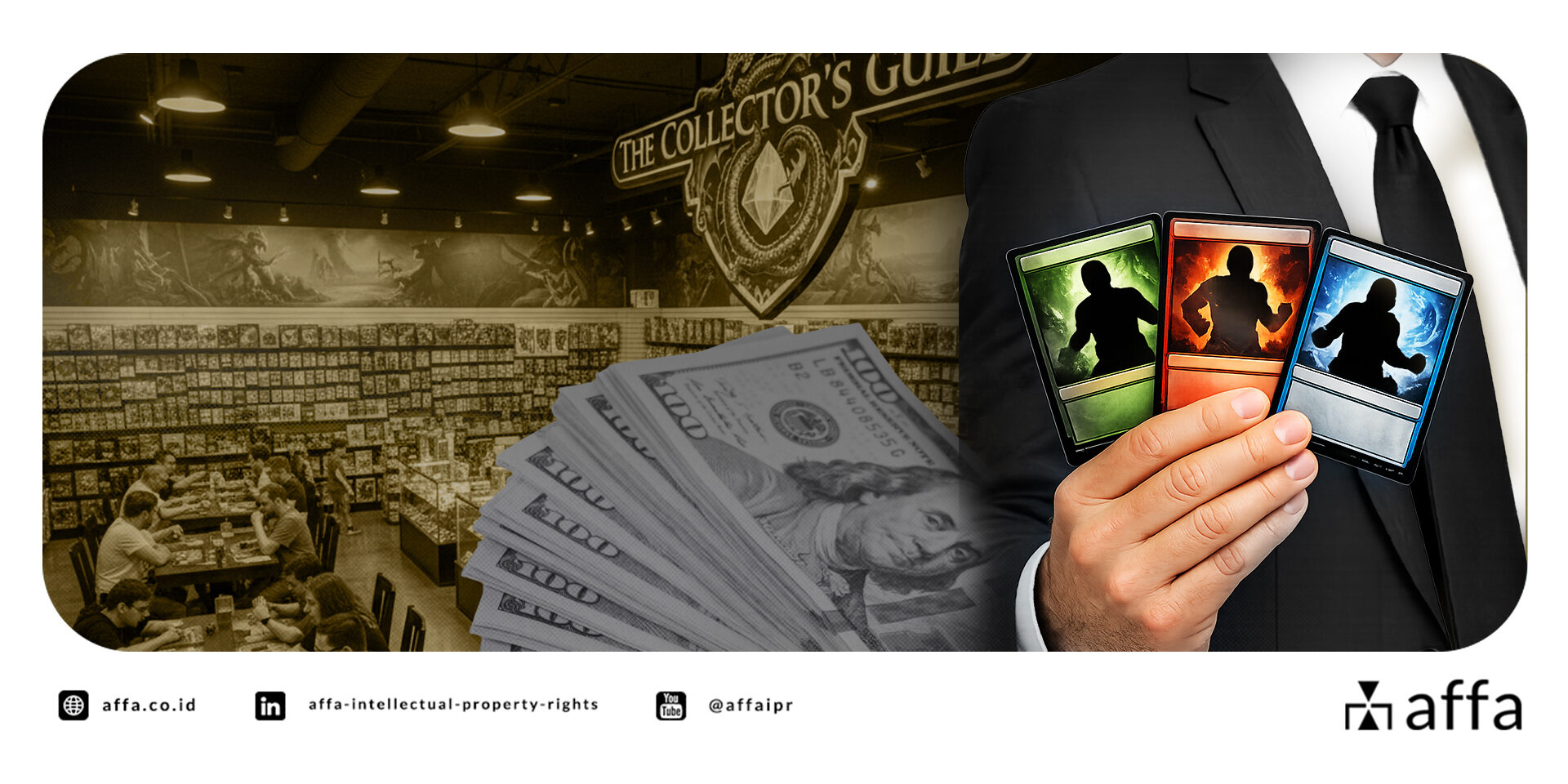
But the strongest signal that this industry has entered a new economic category comes from a real-world extreme case: a collectible card store in Manhattan was reportedly robbed, with perpetrators escaping with rare graded cards worth approximately USD 100,000.
When something becomes valuable enough to be targeted by armed criminals, it has clearly crossed a threshold—it is no longer “just a game.”
And this is where the most important question emerges for global creators and IP owners: If a card can become an asset worth thousands—or even millions—what is the real source of that value?
The answer is simple: Intellectual Property.
What Makes a Trading Card Game (TCG) Different from Regular Card Games?
Many people think all card-based products are basically the same. From an IP and commercial perspective, this is a critical misconception.
A Trading Card Game (TCG) is fundamentally different from ordinary playing cards or board-game cards because it is designed with a built-in “economic engine.”
A TCG typically has these characteristics:
- High collectability value
- Structured rarity levels (common, rare, ultra rare, limited edition)
- Cards are actively traded among collectors and players
- A competitive strategy environment (“meta”)
- Cards are released in packs/boosters, meaning the contents are not fixed
This “non-fixed content” model is exactly why the word “trading” exists in TCG in the first place: people are expected to interact, trade, and buy to complete their collection and strengthen their competitive decks.
Meanwhile, traditional playing cards or typical board-game cards generally:
- Are standardized products
- Are mass-produced without rarity tiers
- Rarely appreciate in value
- Do not create global collector ecosystems
In other words, regular cards are tools for playing, while TCG products are ecosystems combining game + collectible culture + market demand + community + commerce.
Why Can TCG Cards Become Extremely Expensive?
The TCG boom is not accidental. Card values can multiply dramatically due to the combination of several powerful market factors:
- The Strength of the IP Behind the Card
A card is not just an illustration—it carries the identity of an IP:
- Characters
- universe/lore
- fandom history
- cultural relevance
- emotional attachment
Once an IP becomes iconic, its card products become symbols of popular culture, which pushes demand well beyond the original “game audience.”
- Measurable Scarcity (Rarity System)
In TCG, rarity is not a side feature—it is part of the business design:
- limited prints
- first editions
- event promos
- discontinued series
- even misprints (which can become rarer than intended)
Scarcity creates competition, and competition raises prices.
- Condition and International Grading Standards
The collectible market is heavily influenced by grading systems, where professional institutions authenticate and score the condition of cards.
A card in near-perfect condition can be worth exponentially more than the same card in average condition.
This is also why valuable cards are often stored in protective slabs—signaling that they are treated like premium assets.
- Global Community and Cross-Border Demand
TCG demand is not limited to a single country. Buyers may include:
- Collectors
- competitive players
- Investors
- content creators
- resellers
When global demand rises, prices rise with it.
- Emotion: Nostalgia and Prestige
Collectibles operate on emotion. For some, TCG is childhood nostalgia.
For others, rare cards are status symbols—similar to luxury watches or art.
This emotional layer explains why certain collectibles become “cultural trophies” rather than just products.
- A Mature Secondary Market
Card values rise because a highly active trading ecosystem exists:
- Marketplaces
- Auctions
- collector conventions
- specialty stores
- private premium transactions
When a secondary market becomes mature, collectible cards become liquid and tradeable assets.
When Collectibles Get Robbed: A Strong Market Signal
The Manhattan robbery is not only a crime story—it is a commercial signal.
Not every hobby product attracts armed robbery. This incident demonstrates an uncomfortable truth: Even criminals now view graded collectible cards as high-value targets.
This reinforces that the collectible card industry has entered the same category as:
- investment commodities
- premium collectible assets
- luxury goods
- And when that happens, the card itself is no longer the most important thing.
The real value lies in the ecosystem that created demand for the card.
That ecosystem is built on:
- Characters
- story worlds
- visual identity
- Trademarks
- artwork and copyrights
- product designs
- licensing strategy
In one phrase: IP ownership!
The Key Lesson for Global Creators: Your IP Is the Real Asset
The rise of TCG proves one major principle: If your IP is strong, its derivatives can become high-value commercial assets—often beyond your initial expectations.
A card product may look like a small item today. But behind it is an IP foundation capable of generating:
- game products
- Collectibles
- Merchandise
- digital content
- Events
- Collaborations
- licensing and franchising
- long-term brand equity
Why This Matters for Indonesia: A Growing Market Where IP Risks Are Real
Indonesia is one of Southeast Asia’s most active consumer markets for:
- pop culture merchandise
- games and esports communities
- character-driven brands
- anime-inspired creative content
- collectible ecosystems
This means Indonesia is not just a distribution destination—it is a market where:
- products can scale rapidly
- communities can grow quickly
- imitators can appear early
And here is the most crucial point for international creators: If you do not secure your IP in Indonesia early, your market entry may become legally risky later—right when your IP becomes popular.
Why You Should Register IP Early (Before the Hype Peaks)
When an IP becomes famous, four major risks typically emerge:
- Imitation and “brand hijacking”
Third parties may use similar names, logos, or characters. - Ownership disputes once money is involved
Once monetization begins, disputes become expensive and disruptive. - Licensing becomes difficult without clear ownership
No serious partner wants to license an IP without legal certainty. - Investors and distributors demand legal protection
In commercial negotiations, IP registration is often treated as proof of legitimacy.
The most painful scenario is also the most common: Your IP goes viral, but you are no longer in control of it in the market you are entering.
Strategic IP Protection for TCG-Like Creative Assets in Indonesia
For creators, studios, and brand owners, the healthiest approach is to treat IP as a business asset from day one.
The key protection tools commonly include:
- Trademark Registration
Protects IP name/title, logos, character names (in many cases), product brand names. This is crucial for merchandise, licensing, and commercial expansion.
- Copyright
Protects illustrations, character designs, card artworks, story elements, and packaging artwork.
- Industrial Design Protection (when applicable)
Protects unique visual shape/appearance of physical products, premium packaging, collectible boxes
- Licensing Agreements
Protect monetization structure, royalty models, territory rights, production control, and quality standards.
Final Note: Don’t Wait Until Your IP Becomes Valuable to Protect It
TCG hype teaches the world a clear message: creative products can become premium assets in the future. But that future value does not appear randomly.
It is built on strong IP, protected early, managed strategically, and commercialized correctly.
So if you are a creator, publisher, studio, or brand owner planning to enter Indonesia: Protect your IP in Indonesia early—before demand, competition, and imitation grow.
If you need further information regarding IP registration, protection, management, and developing your IP into a commercially valuable asset, please contact us through the channels below and receive a FREE 15-minute consultation:
📩 E-Mail : [email protected]
📞 Book a Call : +62 21 83793812
💬 WhatsApp : +62 812 87000 889
About AFFA:
Established in 1999, AFFA Intellectual Property Rights is an Indonesia-based boutique IP law firm serving international brands and innovators, offering full-service support—from prosecution and licensing to enforcement and commercialization—in Indonesia’s dynamic IP landscape. Our firm is widely recognized for its excellence, with accolades including “Best Boutique Law Firm in Indonesia” and “IP Enforcement Firm” at the Indonesia Law Firm Awards 2025 by Asia Business Law Journal, as well as being listed as a “Recommended Firm 2024 — Indonesia” by WTR 1000: The World’s Leading Trademark Professionals. For more information, please visit: www.affa.co.id.