
Fighting IP Crimes: Indonesia's IP Office Task Force Destroys IDR 5.35 Billion Worth of Counterfeit Goods! - AFFA IPR

Fighting IP Crimes: Indonesia’s IP Office Task Force Destroys IDR 5.35 Billion Worth of Counterfeit Goods!

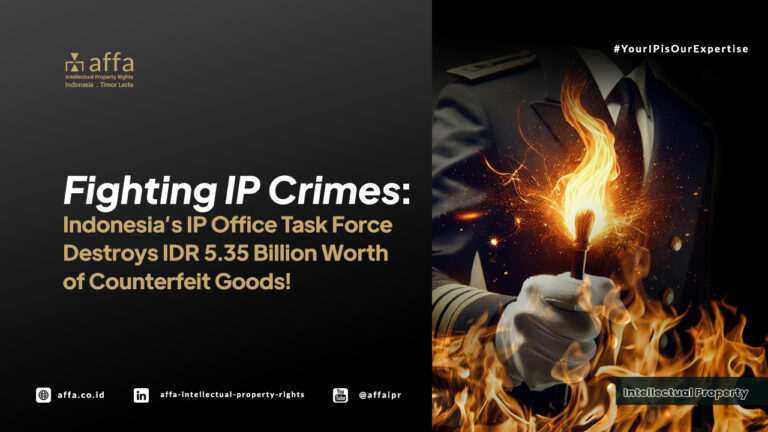
The Indonesian Intellectual Property (IP) Task Force, a cross-ministerial special task force of the Republic of Indonesia, consists of the Directorate General of Intellectual Property (DGIP), the Directorate General of Customs and Excise (DGCE), the National Agency of Drug and Food Control (BPOM), the Ministry of Communication and Digital (Komdigi), the Criminal Investigation Department (Bareskrim) of the National Police, and the National Cyber and Crypto Agency (BSSN). On December 12, 2024, the task force symbolically destroyed a number of products associated with violations of 12 Trademarks and Industrial Designs.   During a press conference, the Director General of Intellectual Property, Razilu, stated: “This destruction serves as a strong message from the DGIP that there is no room for Intellectual Property violations in Indonesia.”   At least three key messages were conveyed through the destruction of these products: Deterrence: To provide a deterrent effect on offenders, ensuring they refrain from committing further violations. Both civil and criminal legal actions can be enforced against them. Creator and Owner Protection: To assure creators and IP owners that their works are protected, fostering an environment where they can continue innovating. Public Awareness: To urge the public never to buy counterfeit or fake goods at low prices, as these products can adversely affect health, employment, and the environment.   The destroyed products, valued at IDR 5.35 billion, included the following: LEGO (toys): Worth over IDR 1 billion, from 110 items. Comotomo (baby bottles): Worth over IDR 500 million, from 888 items. Mimi White (hand and body lotion): 216 items. MT NG Shan (drill bits): 2,000 pieces. Louis Vuitton (women’s bags, wallets, and belts): 10 items. Christian Louboutin (women’s shoes): 2 pairs. Tokai (lighters): 5 boxes. Orion Choco Pie (snack/biscuits): 50 boxes. Honda (spare parts): 30 boxes. Honda (generators): 30 units. Harley Davidson (apparel accessories, umbrellas, and wallets): 600 items. Food Packaging (Industrial Design): 30 boxes.   It is important to note that the products classified as IP violations are not limited to counterfeit goods but also include goods illegally entering the Indonesian market. Under the law, smuggled goods that bypass official channels, fail to adhere to applicable import procedures, and are subject to objections by the official license holders of the relevant trademarks are subject to enforcement actions.   Given the complex and extensive scope of IP  violations, cross-sector enforcement is required. The specific roles of the involved institutions are as follows: DGIP: Monitoring, supervision, preventive measures, mitigation strategies, and enforcement of IP laws. DGCE: Addressing the importation of goods suspected of infringing IP rights. BPOM: Managing the distribution of food and pharmaceutical products that are suspected of infringing IP rights and endangering public health and the environment. Komdigi: Handling complaints and requests for blocking websites related to goods and/or services deemed to violate IP rights. Bareskrim Polri: Coordinating communication and collaboration for law enforcement from the central office to its units across Indonesia. BSSN: Monitoring IP violations in cyberspace and assisting in handling IP infringements that occur in the digital realm.   You might also want to read: Unraveling the Global Complexity of IP Crime: Money Laundering and More!   Each year, the average number of reports on IP violations is around 50 cases, with the majority involving Trademark, Industrial Design, and Copyright infringements. The active role of Komdigi has also significantly contributed to blocking 414 websites infringing Copyrights based on 16 requests. However, considering that the IDR 5 billion in damages mentioned earlier came from only 12 cases, this can be seen as just the beginning or the tip of the iceberg in the enforcement of IP laws in Indonesia.   Therefore, the participation of the five key components of the nation—Government, Academics, Private Sector, Society, and Media—is expected to continue supporting efforts to create a better Intellectual Property climate in Indonesia.   With increasing public awareness of the importance of Intellectual Property, there will also be positive impacts on the national economy and Indonesia’s investment climate in the global arena.   Should you need more information regarding Trademark protection and other Intellectual Property matters in Indonesia and abroad, feel free to contact us via email at [email protected].

IP Character Collaborations with Airlines - Which One is Your Favorite? AFFA IPR

IP Character Collaborations with Airlines – Which One is Your Favorite?

Collaborations involving Intellectual Property (IP) or well-known characters aren’t limited to clothing or merchandise; they extend to restaurants, theme parks, and even airlines. Thanks to the immense popularity of these characters, fans are willing to travel, buy tickets, and spend more to enjoy a unique experience connected to their favorite icons. As the holiday season approaches, traveling with a trusted airline featuring your favorite IP characters can be an exciting option for you and your family. These collaborations often offer in-flight branding, including themed headrests, paper cups, meal boxes, in-flight entertainment, and exclusive merchandise to take home. Does your favorite character make the list? Etihad Airways x Warner Bros Boeing 787-10 Dreamliner  Since: July 2024 Characters: Batman, Superman, Wonder Woman, Looney Tunes, etc. Routes: Abu Dhabi, London, Dublin, Amsterdam, Vienna, Bangkok, and Manila AirAsia x Sonic the Hedgehog Airbus A330 Since: October 2024 Characters: Sonic, Tails, & Shadow Routes: Kuala Lumpur – Bangkok All Nippon Airways (ANA) x Demon Slayer: Kimetsu no Yaiba Bombardier DHC 8-400 Since: July 2023 Characters: Tanjiro, Nezuko, Zenitsu, Inosuke, Kyojuro, etc. Routes: Osaka – Fukuoka Southwest Airlines x Walt Disney World Boeing 737-700 Since: September 2021 Characters: Mickey, Minnie, etc. Routes: United States Domestic Garuda Indonesia x Pokemon Boeing B737-800 NG (Pikachu Jet GA-1), since February 2024 Airbus A330-300 (Pikachu Jet GA-2), from March 2025 Characters: Pikachu, Squirtle, Aipom, Oddish, etc. Routes: Jakarta, Denpasar, Jogja, Lombok, Batam, Surabaya, Malang, Semarang, Makassar, Tokyo, Sydney, Melbourne, Hong Kong, China, Jeddah, Bangkok, etc. With this collaboration, Garuda Indonesia has joined the elites of the “Pikachu Jets” fleet, alongside other airlines that collaborated earlier, such as ANA and Skymark Airlines (Japan), China Airlines, Scoot (Singapore), and T’way Air (South Korea). For Garuda Indonesia, IP collaborations are not new, as the airline previously partnered with Star Wars and Marvel Studios from The Walt Disney Company in 2022.   Should you need further information about IP collaborations, licensing agreements, or the protection of Trademarks and other IPs domestically or internationally, contact us at [email protected].

TKDN-Related Sales Restrictions: How Can IP Play a Role in Enhancing its Composition - AFFA IPR

TKDN-Related Sales Restrictions: How Can IP Play a Role in Enhancing Its Composition

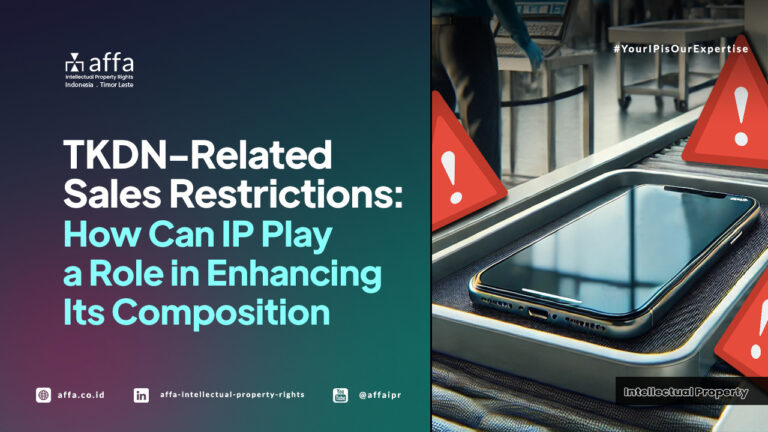
The Indonesian government recently banned the distribution of the iPhone 16 due to its failure to meet the required Domestic Component Level (TKDN) threshold of 35%. This policy serves as a stern reminder to all local and international manufacturers of the importance of contributing to the development of domestic industries.   However, the iPhone 16 is not the only TKDN-related issue in the spotlight. Previously, the tactical vehicle Maung Pindad, used by “RI 1” (the President), became a success story in fulfilling TKDN requirements. According to Chief of Presidential Staff Anto Mukti Putranto, while 30% of Maung’s components were sourced from Korean and German manufacturers, namely SsangYong and Mercedes-Benz, the remainder was developed locally.   So, who is obligated to comply with TKDN regulations? How can Intellectual Property (IP) certificates help meet these requirements? Let’s dive into the details.   Legal Basis of TKDN   TKDN refers to the percentage of goods or services derived from domestic components in a product, service, or combination of both. This policy is governed by Minister of Industry Regulation No. 16 of 2011, which outlines the rules and methods for calculating TKDN. At least three parties are required to comply with TKDN regulations:   Electronics and Telecommunications Manufacturers: Products like smartphones with 4G/5G technology must have a minimum TKDN value of 35%, as stated in Minister of Industry Regulation No. 22 of 2020 on Electronics and Telematics TKDN Calculation Guidelines. Goods/Services Providers for Government Projects: Under Presidential Regulation No. 16 of 2018 on Government Procurement, all government-procured goods/services must prioritize products with high TKDN values. Strategic Industries: For example, battery electric vehicles (BEVs) are regulated under Minister of Industry Regulation No. 6 of 2022, which specifies development roadmaps, specifications, and TKDN calculation requirements.   Intellectual Property & TKDN Calculation Framework   Factors influencing a product’s TKDN value include:   Type of Product and/or Service: Different products have unique parameters and calculation weights, such as manufactured goods, technology, or services. Local Components Used: The greater the proportion of raw materials or services sourced domestically, the higher the TKDN value.  Contribution of Certification and Local Innovation: Intellectual Property certificates, SNI (Indonesian National Standard), and Halal certification can increase the domestic component value.   It can be concluded that owning IP Certificates, such as Patents, Trademarks, and Industrial Designs, allows businesses to count these as part of the Domestic Component (KDN).   The varying needs of industries and technical specifications result in differing TKDN standards. For instance, electronic products like smartphones require a minimum TKDN value of 35%, whereas strategic industrial products like electric vehicles involve more complex parameters, including design and testing.    Specifically for the iPhone, Apple previously held a TKDN certificate, but its validity period has expired. To renew it, the government still deems the latest investment made in educational facilities insufficient. Apple would need to establish larger manufacturing plants and research development centers to meet the requirement.   Requirements for Meeting TKDN Standards   To obtain TKDN certification, businesses must fulfill the following requirements: Company Legal Documents: Articles of incorporation and business licenses. Intellectual Property Certificates: Relevant patents, trademarks, or industrial designs. Quality Management System: Certification such as ISO 9001:2015. Proof of Local Components: Cooperation contracts with local suppliers or invoices for locally sourced raw materials. Verification Body Appointment Letter: Only independent bodies designated by the Ministry of Industry can conduct TKDN verification.   TKDN as a Strategic National Policy   From its requirements and objectives, TKDN is not just a regulation but a strategic national policy to strengthen domestic industries. Similar policies exist in other countries, such as: Buy American Act in the United States; Industrial and Regional Benefits in Canada; Local Content Policy in Brazil; Local Content Requirement in the European Union; Make in India in India; and China’s Indigenous Innovation Policy in China.   This long-term policy to enhance Indonesian products’ competitiveness in local and global markets deserves our full support.   Does your product meet the required TKDN standards? Don’t hesitate to consult us about registering your Intellectual Property as part of TKDN compliance. Contact us via email at [email protected].

Protecting a Giant: Why Godzilla Needs Both 3D Mark and Industrial Design Status

This November, one of Japan’s oldest Intellectual Property (IP) assets celebrates its 70th anniversary. First introduced as a movie in 1954, Godzilla has since starred in over 40 films and animated series, and its Trademark is protected in more than 30 countries worldwide.   As a giant mutant lizard with many variations, its likeness has also been immortalized in various toys and merchandise, often registered as Industrial Designs to protect them from counterfeiting. However, since Industrial Design protection has a limited duration, Toho, the owner of Godzilla’s IP, has also registered it as a 3D Mark.   What’s the difference? What are the advantages compared to Industrial Designs? Here’s the answer…   Aesthetic Value vs. Distinctiveness   Based on its definition, Industrial Design protects the aesthetic aspects or appearance of a product, such as its shape, pattern, or configuration, which give it a distinctive impression. The focus is on visually appealing elements rather than brand identity. Therefore, Industrial Designs protect the unique design of vehicles, household appliances, and, of course, toys.   On the other hand, a 3D Mark is a mark that protects the three-dimensional shape of a product used to distinguish the goods or services of one party from another. Examples include the Coca-Cola bottle, Lego bricks, Ferrari’s prancing horse, and the PS5 console.   The differences, as well as the advantages and disadvantages of Industrial Designs and 3D Marks, can be summarized in the following table:   Industrial Design 3D Mark Focus of Protection Protects the aesthetics or visual appeal of a product. Protects the identity and function of a Trademark in commerce. Duration of Protection Limited duration, typically 10-15 years, depending on the regulations in a given country. Unlimited duration as long as it is renewed periodically every 10 years. Registration Process & Criteria Must be new and unique in its design. Requires evidence that the shape has a distinctive character and is recognized by consumers as a Trademark. A 3D Mark cannot be registered if the shape has functional value. Advantages The registration process is relatively simpler and quicker. Protection can last indefinitely with periodic renewals. Disadvantages Protection is limited to aesthetic aspects, and the duration cannot be extended. The registration process is more complex and requires significant evidence of use to demonstrate distinctiveness in the market.   Godzilla Needs Longer Protection   From the table above, we can understand why IP assets as old as Godzilla still seek longer protection. Especially considering the increasing hype surrounding Godzilla after winning the 2024 Academy Award/Oscar for Best Visual Effects. This success could lead to an increase in counterfeit products and toys by irresponsible parties.   According to Yahoo Japan and a decision by the Japanese court, Toho’s attempt to register one of Godzilla’s variants, Shin Godzilla, as a 3D Trademark began as early as October 2019. However, after a lengthy process, the Japan Patent Office (JPO) issued a final rejection in March 2024, stating that the registered Godzilla shape was too generic and lacked sufficient distinctiveness.   Toho subsequently filed an appeal in May, emphasizing that the Shin Godzilla design has a strong distinctive character and is widely recognized by the public. This was followed by a review of submitted evidence, including the popularity of Shin Godzilla as a character, its use in various products, and public recognition of the shape as a unique identity, by the court.   3D Mark Shin Godzilla – Application No.: 2020-120003   Finally, on October 30, 2024, the court overturned the JPO’s decision and declared that the 3D shape of Shin Godzilla possesses sufficient distinctiveness and is eligible to be registered as a 3D Mark. The court emphasized that the popularity and widespread recognition of the Shin Godzilla character added significant value to the assessment of its distinctiveness.   As a result, Shin Godzilla has successfully secured the opportunity to get unlimited protection.   This ruling sets an important precedent for 3D Mark protection in Japan, particularly for the entertainment industry and consumer products that rely on unique characters or designs as their brand identity. Previously, iconic characters were typically protected through copyright for creative works, and their names or logos as Trademarks. Now, these characters can also be protected as 3D Marks if proven to have distinctiveness and public recognition as a source identifier.   This strengthens Intellectual Property protection for iconic characters through a layered and complementary approach, depending on the context of their use. Should you need further information regarding trademark registration and protection in Indonesia or worldwide, please contact us via email: [email protected].

WIPO's 2024 Report: Indonesia Ranks Among Global Leaders in Trademarks and Design Growth - AFFA IPR

WIPO’s 2024 Report: Indonesia Ranks Among Global Leaders in Trademarks and Design Growth

The World Intellectual Property Organization (WIPO) recently released the World Intellectual Property Indicators 2024 (WIPI) report, highlighting the growth performance of Intellectual Property (IP) in 2023. This report provides a comprehensive overview of global trends in IP, covering Patents, Trademarks, Geographical Indications, Industrial Designs, and Plant Variety Protection. It is a vital reference for governments, entrepreneurs, and innovators to understand their country’s position in the global IP landscape.   China, India, Russia, and Indonesia showcased remarkable growth in this report. China leads with 1.64 million Patent applications, accounting for 46% of all Patent applications worldwide. Regarding Trademark and industrial design applications, China also dominated with 7.4 million Trademark applications (approximately 49% of the total global market) and 58% of global industrial design filings. Similarly, China commanded a 54% share in plant variety protection applications.   How Did Indonesia Perform?   While the global average for Trademark applications declined by 2%, Indonesia bucked the trend with a 10% increase in 2023, trailing only Russia (30%) and Mexico (11%). For industrial designs, Indonesia recorded the highest global growth at 37.3%, far surpassing the global average of 2.8%. In absolute numbers, Trademark applications in Indonesia rose from 122,458 to 152,447, and industrial design filings increased from 4,795 to 6,326. These achievements place Indonesia as a Southeast Asian leader, far ahead of Singapore, Malaysia, and Thailand.   Global Rankings: Where Does Indonesia Stand?   Trademark Applications Indonesia ranks 15th globally, behind: China (7,184,831) United States (739,395) Russia (546,455) India (520,862) EUIPO (436,720) Brazil (427,327) Turkey (398,763) United Kingdom (345,205) Japan (328,559) Iran (327,384) South Korea (314,284) France (263,550) Germany (229,793) Mexico (205,867)   Industrial Design Applications Indonesia ranks 19th globally, trailing: China (826,086) EUIPO (116,884) United Kingdom (81,543) United States (60,022) South Korea (59,454) Turkey (58,084) Italy (37,099) Japan (32,061) France (30,023) Germany (29,663) India (28,168) Spain (14,776) Switzerland (11,391) Russia (10,472) Canada (9,037) Australia (8,798) Iran (7,841) Brazil (7,679)   Creative Industries Drive Growth According to the WIPI 2024 report, Indonesia’s growth in Trademarks is largely fueled by MSMEs and the creative economy, while the textile, fashion, and handicraft sectors primarily drive the surge in industrial design filings The data further indicates that the primary purpose of registering Trademarks and industrial designs in Indonesia is to facilitate exports.   Future Potential and Opportunities As public awareness of IP registration continues to grow, Indonesia holds immense potential to become a hub for innovation and intellectual property in the ASEAN region. Strengthening regulations, increasing public education, and fostering collaboration with the private sector can help capitalize on this momentum.   Should you need more information about the registration and protection of Patents, Trademarks, or Industrial Designs, both domestically and internationally, please contact us via email: [email protected].

Indonesia - Adjustment to the IP Services Official Fees Under the Government Regulation No.24 Year 2024 - AFFA IPR

Indonesia – Adjustment to the Intellectual Property Services Official Fees Under the Government Regulation No. 45 Year 2024

The Government of the Republic of Indonesia has issued the latest update on the Non-Tax State Revenue for the Ministry of Law and Human Rights under the Government Regulation No. 45 Year 2024. The adjustments cover IP services pertaining Trademark, Geographical Indication Patent, Industrial Design, and Copyright. We herewith provide you the summary of the changes for your perusal and please bear in mind that anything not listed here is not affected.   Trademark and Geographical Indication The items that have been adjusted are as follows:   Type of Action Old Fees New Fees International Registration designating Indonesia CHF 144 CHF 125 International Registration renewal in Indonesia CHF 180 CHF 156 International Registration renewal in Indonesia (within 6-month grace period) CHF 360 CHF 313 Requesting substantive examination for a Geographical Indication application N/A IDR 1,000,000.00   Patent The items that have been adjusted are as follows:   Type of Action Old Fees New Fees Accelerated publication IDR 400,000.00 IDR 500,000.00 Patent substantive examination request IDR 3,000,000.00 IDR 3,500,000.00 Simple patent substantive examination request IDR 500,000.00 iDR 750,000.00 Priority rights document request IDR 300,000.00 IDR 500,000.00 Patent decision appeal request IDR 3,000,000.00 IDR 4,000,000.00 Post-grant correction of description, claim, and/or figures after the patent is granted IDR 3,000,000.00 IDR 4,000,000.00 Post-grant appeal against the decision to grant a patent IDR 3,000,000.00 IDR 4,000,000.00 Patent Board of Appeal decision request N/A IDR 20,000.00 per page   Industrial Design No changes or adjustments were introduced for Industrial Design matters.   Copyright The items that have been adjusted are as follows:   Type of Action Old Fees New Fees Application IDR 400,000.00 OR  IDR 600,000.00 (if software) per creation IDR 200,000.00   Should you have any further questions and queries about the adjustment of official fees, please do not hesitate to contact us at [email protected].  

Unraveling the Global Complexity of IP Crime: Money Laundering and More! AFFA IPR

Unraveling the Global Complexity of IP Crime: Money Laundering and More!

Intellectual Property (IP) Crime negatively impacts the economy and consumer safety and has become structurally more complex, posing a worldwide threat to economic and social security.   According to the recently released report “Uncovering the Ecosystem of Intellectual Property Crime,” published this October by the European Union Agency for Law Enforcement Cooperation (Europol) and the European Union Intellectual Property Office (EUIPO), it is revealed that 6% of imported products entering the European Union are counterfeit, with a value exceeding 2 billion euros) annually. This figure represents only the seized products, mainly packaging materials, toys, cigarettes, and CDs/DVDs. Imagine if we could account for the undetected counterfeit goods distributed worldwide.   So, why is tackling IP crime so challenging? The report highlights that this form of crime is highly networked and involves corrupt officials, money laundering, and even tax officers. EUIPO labels these facilitators as IP Crime Enablers!   How significant is their role, and how do they perpetuate Intellectual Property crime? Here are the details.   Intellectual Property Crime – The Definition   In the document, “IP Crime” refers to illegal activities involving the theft, infringement, or unauthorized use of Intellectual Property (IP) rights, which include Copyrights, Industrial Designs, Trademarks, Patents, Geographical Indications, and Trade Secrets. The document categorizes IP crime primarily as:   Counterfeiting Manufacturing, importing, distributing, storing, or selling goods that bear the Trademark of a genuine brand without permission. Examples: Counterfeit Pharmaceuticals: Production and distribution of fake pharmaceutical products that can pose severe health risks to consumers. For instance, counterfeit Semaglutide injection pens falsely labeled as containing the active ingredient were found to contain other substances, leading to serious health incidents​. Counterfeit Automotive Parts: The production and distribution of fake automotive parts, like brake pads and wheel rims, infringe Trademarks and pose serious safety risks. Piracy Unauthorized copying, use, reproduction, and distribution of materials protected by IP rights, such as digital media, software, and entertainment. Example: Digital Piracy: Illicit streaming services that distribute copyrighted content (like movies and sports events) without authorization. In one case, a streaming service was operating across multiple countries, generating significant revenue through illegal broadcasts​.   The Mechanics of IP Crime   IP criminals exploit weaknesses in the global supply chain, legal loopholes, and infrastructure to operate with resilience and evade law enforcement efforts. This structured approach allows them to profit significantly while remaining difficult to prosecute due to their operations’ multi-jurisdictional and often hidden nature. The structured process criminal networks use to conduct IP crimes ranges from obtaining infringing items to laundering the proceeds. Here are the key phases:   Infringing IP Rights (Acquisition Phase) This is the initial stage where IP rights are intentionally violated. Criminals produce counterfeit goods by replicating brand logos, labels, or pirated content. This phase may involve either manufacturing counterfeit products directly or diverting legitimate products from the supply chain. Common sources for counterfeit goods include China, Hong Kong, and Türkiye. Transportation and Distribution Phase After acquiring the counterfeit items, networks transport them globally, often abusing the legal logistical and shipping sectors to move goods across borders. Criminals use sophisticated smuggling techniques, including splitting shipments and hiding counterfeit items within legitimate products to avoid detection. Marketing and Retail Phase Criminals use both online and offline methods to market and sell counterfeit products. Online marketplaces, social media platforms, and even the dark web provide anonymity and access to large audiences. Offline, counterfeit goods may also be sold through physical retail outlets or open markets. Dealing with Profits and Risks (Money-Laundering Phase) The final stage involves managing the profits from these illegal sales. Criminal networks employ money laundering techniques to disguise the origins of their profits. This includes investing in legal businesses, conducting physical cash transfers, or using complex digital financial systems to reintegrate funds into the economy.   Parties Also Involved in Intellectual Property Crimes In addition to the 4 (four) phases of crime above, Europol and EUIPO mapped the parties involved in IP crimes, making these crimes complex and challenging to eradicate.   Criminal Enablers These are illegal activities or crimes that help facilitate IP crime: Corruption: Bribery or manipulation within organizations to ease illegal processes. Forced Labour: Exploitation of labor, often under inhumane conditions, to produce counterfeit goods. Cybercrime: Digital crimes that support IP crime, such as phishing, malware, or data theft. Money Laundering: Concealing the profits from IP crime by converting illegal earnings into legitimate assets. Document Fraud: Creating fake documents to disguise the origin or legitimacy of counterfeit goods. Environmental Crime (Envicrime): Illegal activities that harm the environment, often associated with the improper disposal of waste from counterfeit production. Non-Criminal Enablers These are lawful activities or structures that criminals misuse to facilitate IP crime: Professional Expertise: Use of skills from professionals (e.g., lawyers, technicians) to support illegal IP activities. Use of Legal Business Structures (LBS): Legal businesses that provide a front for illegal IP activities, such as follows: Trading Companies or Factories These legitimate businesses can be set up or inserted into the supply chain to disguise the production or distribution of counterfeit goods. Factories or production sites can be used to produce counterfeit goods under the guise of legitimate products. Warehouses or Logistics Service Providers Legitimate warehouses or logistics companies can be used to store or transport counterfeit goods without raising suspicion. For example, counterfeit goods can be hidden among legitimate products in international shipments. Physical Retail Stores Appearing legitimate stores can be used to sell counterfeit goods to consumers without their knowledge. Counterfeit goods can be sold alongside legitimate products, making it difficult for consumers to tell the difference. Online Stores or Marketplace Platforms Many IP criminals use e-commerce websites or accounts on platforms like Amazon, eBay, or social media to sell counterfeit products. These platforms often give the impression of a legitimate business, making it easier for criminals to reach consumers at a wide range. Front or Shell Companies These companies are technically legitimate but serve only as a front for illegal activity. They are often used to launder money…

Indonesia Climbs 7 Spots in Global Innovation Index 2024: What's Fueling the Rise? - AFFA IPR

Indonesia Climbs 7 Spots in Global Innovation Index 2024: What’s Fueling the Rise?

The Global Innovation Index (GII) is an annual report published by the World Intellectual Property Organization (WIPO), in collaboration with Cornell University, USA, and the Institut Européen d’Administration des Affaires (INSEAD), France. This index ranks countries based on innovation capacity and performance, using more than 80 indicators covering innovation inputs (such as institutions, human resources, and infrastructure) and outputs (such as research outcomes, technology, and creative products). This index is a crucial benchmark, as innovation is a primary driver of economic development, especially in knowledge-based economies. Intellectual Property (IP) is a critical component of this innovation ecosystem.   With effective IP protection and management, countries can create new technologies, enhance competitiveness in global markets, and provide incentives for inventors and creators to continue innovating. IP ensures that innovation results are protected from easy duplication or misuse while offering economic benefits to innovators through Copyright, Patents, Trademarks, and Industrial Designs.   Rising from Rank 61 to 54  This year (2024), Indonesia has experienced a significant improvement, climbing from rank 61 in 2023 to rank 54, closely trailing the Philippines at 53. Several key factors drove this rise:   Policy Stability for Doing Business Measures how the government ensures a stable policy environment for business activities. This indicator is based on perceptions of policy stability measured through surveys. Entrepreneurship Policies and Culture Assesses policies that support entrepreneurship and a culture that encourages domestic entrepreneurial activity. This indicator reflects support for the establishment and growth of new ventures. Finance for Startups and Scaleups Measures the availability of financial capital for startups and business development, including access to venture capital and other financial instruments that support startup growth and business expansion. Domestic Market Scale Measures the domestic market size based on Gross Domestic Product (GDP) and National Income. This indicator highlights the domestic market’s potential for innovative products and services. University-Industry R&D Collaboration Assesses the level of research and development collaboration between universities and industries, reflecting the integration of academic and industrial sectors in generating innovation. State of Cluster Development Measures the level of development of industrial and technology clusters, including coordination between companies and institutions within clusters to enhance innovation and growth. Software Spending Measures total corporate spending on software, indicating investments in IT solutions that support operations and innovation.   However, Indonesia still lags in several indicators, including: Expenditure on Education Reflects government spending on education per student, indicating the priority of education in the national budget allocation. Government Funding per Pupil Measures government funds allocated per student, reflecting the nation’s investment in human capital development through education. Tertiary Inbound Mobility Measures the number of international students enrolled in domestic higher education institutions, indicating the global attractiveness of the nation’s universities. Firms Offering Formal Training Reflects the percentage of companies providing formal employee training, indicating corporate investment in employee skill development. Scientific and Technical Articles Measures the number of scientific and technical publications, reflecting a country’s research output and innovation capacity.   These factors still place Indonesia behind other ASEAN countries like Singapore (rank 4), Malaysia (33), Thailand (41), Vietnam (44), and the Philippines (53).   A significant difference between Indonesia and the Philippines lies in the strength of innovation output. The Philippines excels in High-Tech Manufacturing, Production and Export Complexity, High-Tech Exports, ICT Services Exports, and Creative Goods Exports. Compared to Malaysia, they outperform Indonesia in the number of Graduates in Science and Engineering, University Rankings, and Domestic Credit to the Private Sector.   Indonesia still needs to work on competing with these nations, mainly when its weaknesses lie in fundamental categories such as government spending and educational budgets, particularly at the primary level. However, Indonesia’s improved investment climate, marked by the growth of startups and solid indicators for stable government policies, reflects its commitment to creating a better business environment. Should you need further information related to innovation, Patents, or other Intellectual Property protection in Indonesia, feel free to contact us via email: [email protected].

Legal Implications of Couterfeit Drugs in Indonesia - AFFA IPR

Legal Implications of Counterfeit Drugs in Indonesia

According to the World Health Organization (WHO), more than 890 million people worldwide suffer from obesity, driving high demand for weight-loss medications. One of the most popular drugs is Ozempic, produced by Novo Nordisk (NOVOb.CO), which generated nearly $19 billion in net sales last year. Ozempic’s active ingredient, semaglutide, leads to an average weight loss of 15% by reducing food cravings and slowing stomach emptying. However, this success comes with a steep price—over $1,000 for a month’s supply in the U.S.   Despite its effectiveness, the high price of Ozempic has opened the door to counterfeit versions. A fake Ozempic batch number MP5B060 has surfaced in at least 10 countries, from Azerbaijan to North Macedonia. The WHO issued a warning in July 2023 about products carrying this batch number, and Interpol also raised concerns about insulin pens being relabeled and repackaged to resemble Ozempic.   While some countries have banned the affected batch, others have not, leading to dangerous consequences. In at least four countries, fake Ozempic pens have resulted in hospitalizations. For instance, in Iraq, a man fell into a coma after using a counterfeit pen that caused his blood sugar to drop to dangerously low levels.   The Global Impact of Counterfeit Drugs   Since early last year, at least 18 different batch numbers have been found on fake Ozempic pens in 14 countries. Despite warnings, the issue persists because the solution is far from simple. Each legitimate batch of Ozempic contains 280,000 pens, and some countries are reluctant to withdraw entire batches due to the risk of exacerbating drug shortages.   Novo Nordisk has blamed international counterfeit drug syndicates, stating that they easily buy genuine products and replicate the codes to create fake ones. Rather than manufacturing packaging from scratch, these syndicates buy cheaper drugs with similar packaging and relabel them as Ozempic, making it difficult for consumers to identify the difference. This has led to severe health consequences, as unsuspecting buyers end up with insulin rather than semaglutide, leading to severe hypoglycemia.   No Packaging Change: The Ongoing Risk   Novo Nordisk has no immediate plans to change Ozempic’s packaging or register it as a new Industrial Design, stating that counterfeiters would simply find new ways to replicate the new design. This leaves consumers at risk and underscores the importance of being vigilant.   Finally, we must increase our vigilance by implementing the following steps: Only buy from authorized distributors. Always check the batch code to ensure you have a legitimate product. Don’t be tempted by low prices, especially for imported drugs.   If This Happens in Indonesia, What Are the Legal Sanctions?   This situation can be overcome with more decisive action from the supervisory authorities. In Indonesia, for example, there is Indonesia’s National Agency of Drug and Food Control (BPOM), which is proactive in conducting raids and monitoring updates related to counterfeit drug products from abroad; these drugs can be withdrawn from circulation before they harm consumers and damage the reputation of the original product.   BPOM has also been equipped with BPOM Regulation Number 16 of 2023 concerning Supervision of the Distribution of Traditional Medicines, Quasi Drugs, and Health Supplements, which gives them the authority to impose administrative sanctions in the form of cancellation/revocation of distribution permit numbers, Importer recommendations; and/or recommendations of business entities in the marketing sector if the business is proven to receive, store, and/or distribute illegal drugs including counterfeit drugs (Article 23b).   Meanwhile, if viewed from the perspective of the Trademark as regulated in Article 100 Paragraph (2) of Law Number 20 of 2016 concerning Brands and Geographical Indications, anyone who violates another person’s registered Trademark, whose type of goods causes health problems, environmental problems, and/or human death, shall be punished with a maximum imprisonment of 10 (ten) years and/or a maximum fine of IDR 5,000,000,000.00 (five billion rupiah).   Viewed from the perspective of Law Number 8 of 1999 concerning Consumer Protection as regulated in Article 8, where this article expressly prohibits business actors from producing or trading goods that do not meet or violate the required standards, including the sale of counterfeit drugs. Violation of this article can be subject to a maximum imprisonment of 5 years or a maximum fine of IDR 2 billion. Article 19 also states that the seller is responsible for all losses experienced by consumers due to the use of counterfeit products. Consumers have the right to claim compensation, which can be filed through a civil lawsuit.   No less critical, Law Number 17 of 2023 concerning Health, specifically Article 435 states that anyone who produces or distributes Pharmaceutical Preparations and/or Medical Devices that do not meet the standards and/or requirements for safety, efficacy/benefit, and quality as referred to in Article 138 paragraph (2) and paragraph (3) shall be punished with imprisonment for a maximum of 12 (twelve) years or a maximum fine of IDR 5,000,000,000.00 (five billion rupiah).   You might also want to read: Anti-Counterfeiting Methods: Choose the Right Strategy to Get Additional Protection for Your Intellectual Property   Should you need more information on protecting Intellectual Property both domestically and internationally, feel free to contact us at [email protected]. Source: Reuters  

Recommended Representation of FIgures for Industrial Deisgn Applications in Indonesia - AFFA IPR

Recommended Representation of Figures for Industrial Design Applications in Indonesia

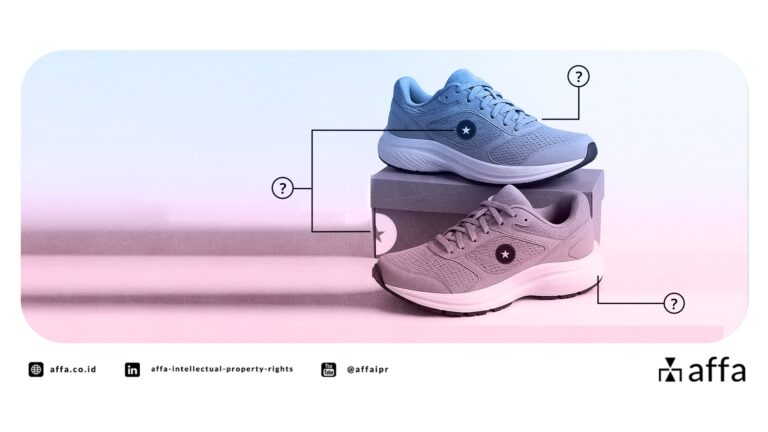
Indonesian awareness of the importance of protecting Industrial Design has continued to increase in the last five years. This can be seen from the significantly increasing number of Industrial Design registrations. From 2,319 applications in 2017, it grew to 2,835 in 2019, jumped again to 2,957 in 2021, and peaked in 2022 with 3,533 applications.   The Directorate General of Intellectual Property (DGIP), the Industrial Design Office in Indonesia, has also proposed changes to the Industrial Design Law to remain relevant to the latest creations and innovations. However, when submitting an Industrial Design application, at least 8 (eight) recommended representations of figures for Industrial stay the same, and you must follow them. Those recommendations are:   Do not combine different features or colors in the same design. The design must be represented on a neutral background. Do not include extra elements that are not part of the design. Each image must have only one view of the design, namely front, back, top, bottom, left, right and perspective view. Magnified views must be uploaded as separate images. To exclude unregistered elements, disclaim them identically in all views. Disassembled product views require a corresponding assembled view. To protect a 2D ornament/pattern, submit it alone, not on a product. Should you have further questions about registering for Industrial Design in Indonesia or abroad, do not hesitate to email us at [email protected].