

When Private Tech Goes Public: The Opening Chapter of SEP Litigation in Indonesia - AFFA IPR

When Private Tech Goes Public: The Opening Chapter of SEP Litigation in Indonesia

In recent years, the global conversation about Patents has shifted from who invented first to who controls the standard. Behind the arrival of 5G on our phones, Wi-Fi in every public space, and USB-C as a universal port, lies a term that increasingly dominates Intellectual Property discussions: Standard Essential Patents (SEP). This is no longer merely about exclusive rights, but about access to technology and the governance of the global digital industry. Indonesia may not yet be the main arena for SEP disputes, but several cases—such as Nokia’s Patent disputes in the Commercial Court—signal that this issue is no longer confined to Europe or the United States. When a company’s Patent has been adopted as part of a global technical standard, the question becomes more complex: how should its license be opened? Should there be a “public interest” limitation under FRAND (Fair, Reasonable, and Non-Discriminatory) terms? Unlike disputes in the pharmaceutical or life sciences sectors that often revolve around novelty, indication, or public domain, SEP issues introduce new dimensions: standardization, access, and interoperability. A Patent does not only protect technology—it can determine who may enter the market, and under what conditions.   Indonesia’s First SEP-Related Case The first SEP-related case in Indonesia emerged in 2015 between PT Polarchem, PT Garuda Tasco International, PT Star Metal Ware Industry, and PT Golden Agin against the holder of Patent IDS0001281. Patent IDS0001281 was registered as a Utility Model, describing the technical specifications of a sprayer, filed on 31 May 2012. The Utility Model closely resembled an Indonesian National Standard (SNI) established in 2018, which governed the criteria and testing methods for electric backpack sprayers. The Patent Holder objected to the enactment of SNI 8485:2018, arguing that it infringed on the Patent and refused to license the technology—an action that clearly violated the FRAND principle for inventions adopted as national standards. Initially, the Patent Holder won before the Central Jakarta Commercial Court (Decision No. 75/Pdt.Sus-Paten/2015/PN.Niaga.Jkt.Pst, 30 June 2016). However, upon judicial review, the Supreme Court (Decision No. 147 PK/Pdt.Sus-HKI/2018) determined that Patent IDS0001281 lacked technical novelty, ruling that the Utility Model was not new, and subject to cancellation.   The Nokia SEP Cases Another major development involved four cases between Nokia Technologies Oy and mobile phone assemblers or distributors in Indonesia. These cases demonstrated consistent SEP argumentation patterns. Nokia mapped its telecommunications Patent claims to specific 3GPP Technical Specifications adopted under Indonesia’s standardization framework. The first group involved 3G/UMTS Patents related to HSDPA 64QAM, covering efficient data packaging methods for faster transmission. Nokia referred to 3GPP TS 25.212, which defines UMTS multiplexing and channel coding, arguing that any 3G-compliant phone inherently implements the patented features. The second group concerned 4G Patents, referencing 3GPP TS 36.212 (v8.8.0) on multiplexing, channel coding, and mapping to physical channels in LTE. The claims covered methods for transmitting antenna configuration information using a bit mask—allowing synchronization between the user equipment (UE) and base stations (WTS), thereby improving data transmission. Since this specification forms part of global LTE standards (including in Indonesia), Nokia argued that any LTE device compliant with TS 36.212 necessarily performs the patented steps and thus requires a valid FRAND license. All groups referred to the ETSI definition of “essential”, which states that an IPR is considered essential if, on a technical (not commercial) basis, and given the state of the art during standardization, it is impossible to make, sell, or operate compliant equipment without infringing that IPR. Patent Holders must therefore submit an Intellectual Property Rights (IPR) Information Statement and irrevocable Licensing Declaration, agreeing to license under FRAND terms—preserving exclusivity, but balancing it with fair and non-discriminatory access.   Contractual and Institutional Dimensions The contractual dimension was reinforced through Nokia’s global and local licensing history, used to demonstrate its FRAND commitment and non-discriminatory practices. Disputes typically arose when existing licenses expired and renewal negotiations failed, leaving subsequent product distributions outside the licensing scope. At this stage, familiar SEP debates emerged: Was the FRAND offer economically fair and reasonable? Was there any discrimination? Who acted in good faith—the willing or unwilling licensee? And what remedies were proportionate—monetary compensation or injunctions? Expert testimony regarding the necessity of TS 36.212 for LTE devices supported the “implementation of standard = implementation of claim” reasoning typical in cross-border SEP disputes. Institutionally, 3GPP itself is a collaborative project among global standards organizations (ETSI in Europe, ATIS in the U.S., ARIB/TTC in Japan, TTA in Korea, CCSA in China, and others). Thus, 3G/4G/5G standards are collective products, not proprietary to a single developer. ETSI provides IPR policies and declaration procedures, not a license pool. Consequently, the prevailing commercialization model is bilateral FRAND licensing, though optional license pools exist in certain sectors. All four cases referred explicitly to the ETSI IPR Policy and 3GPP Working Procedures (particularly Article 55 on early IPR disclosure), emphasizing that: Technical contributions may contain essential IPR; Such IPR must be disclosed as early as possible; and Licenses must be available on FRAND terms to any willing implementer to ensure public interoperability.   Lessons and Legal Implications Together, these four cases represent Indonesia’s first publicly visible chapter in SEP litigation. The plaintiffs explicitly linked Patent claims to 3GPP Technical Specifications, affirmed ETSI declarations and FRAND commitments, and connected them to domestic device certifications as inferential proof of implementation. For industry players, the lesson is clear: When private technology “graduates” into a public standard, Patent rights remain—but they are burdened with access obligations under FRAND. Conversely, implementers gain access to standards but must negotiate in good faith for valid licenses. In the 5G/IoT horizon, similar disputes will likely intersect with competition law and cross-jurisdictional coordination (including anti-suit injunction issues). Thus, compliance playbooks—covering standard-to-claim mapping, negotiation documentation, and economic reasonableness assessments—should be prepared from the outset.   Reassessing Essentiality In evaluating such cases, it is critical to resist the assumption of “automatic essentiality.” As noted by Yi Yu et al. (2024), an effective defense begins by testing whether the disputed Patent is truly essential to the relevant standard or merely directed…

Manufacturing Without Trademark Ownership - Is It Safe? - AFFA IPR

Manufacturing Without Trademark Ownership – Is It Safe?

This question often arises amid the growing investment climate in Indonesia’s manufacturing industry. But what if the answer is: “not entirely safe”? What should you do to address all the risks?   Risk of Infringement   Even if you are the one manufacturing the product, the Trademark being used may already have been registered by another party beforehand. This could lead to claims of Trademark Infringement, resulting in lawsuits and/or legal actions against your activities deemed to be violating the rights of others.   Production = Commercial Activity   It is important to note that production or manufacturing is considered a commercial activity, even if the products are not sold in the Indonesian market. This means that potential disputes still exist, even if the distribution is solely intended for export.   Risk of Customs Seizure   If a Trademark owner has recorded their Trademark with Customs, your products may be at risk of being blocked or seized during import or export. As a result, the goods may never reach the buyer, causing significant financial losses.   What Is the Solution?   Ensure that the products you manufacture are already protected by a registered Trademark in Indonesia. If you are not the owner of the Trademark, make sure you have obtained an official license from the rightful Trademark owner, duly recorded with the Indonesian Trademark Office (DGIP), to carry out the production. Without Trademark registration, your business will always remain vulnerable.   With ownership of a registered Trademark, your production, distribution, and export processes will be protected and safeguarded from disputes or legal barriers in the future.   For more information regarding Trademark registration in Indonesia, contact us directly through these channels and get a FREE 15-minute consultation!   ? E-Mail : [email protected] ? Book a Call : +62 21 83793812 ? WhatsApp : +62 812 87000 889

AFFA Wins Two Categories at the Indonesia Law Firm Awards 2025 - AFFA IPR

AFFA Wins Two Categories at the Indonesia Law Firm Awards 2025

Jakarta, 18 September 2025 – We are pleased to share that AFFA has been recognized with two awards at the Indonesia Law Firm Awards 2025, organised by Asia Business Law Journal.   We received recognition as: Best Boutique Law Firm in Indonesia IP Enforcement Firm   About the Awards   The Indonesia Law Firm Awards 2025 highlight outstanding law firms across various practice areas. The winners were selected based on votes and feedback from in-house counsel and industry professionals, combined with editorial research by Asia Business Law Journal.   Our Recognition   Being named Best Boutique Law Firm reflects our focus and dedication as a specialized firm in Intellectual Property law. From Trademarks and Patents to Industrial Designs, Copyrights, and Geographical Indications, we have consistently worked to support both Indonesian and international clients in securing and managing their IP rights.   Our recognition in IP Enforcement further underlines our role in protecting clients’ rights in practice — ensuring that Intellectual Property is not only registered but also effectively defended.    Moving Forward   These acknowledgments encourage us to continue strengthening our services and staying committed to delivering clear, practical, and reliable IP solutions. While we are grateful for this recognition, our focus remains on supporting businesses, innovators, and creators in protecting and growing your Intellectual assets in Indonesia, globally, and beyond.   Need help protecting your IP in Indonesia? Book a free 15-minute call with a registered IP consultant and ensure your IP meets all local requirements:   ? E-Mail : [email protected] ? Book a Call : +62 21 83793812 ? WhatsApp : +62 812 87000 889

Client’s Victory: The Court of Commerce Invalidates "Deli Waffle" Trademark Registration - AFFA IPR

Client’s Victory: The Court of Commerce Invalidates “Deli Waffle” Trademark Registration

In a significant development for Intellectual Property rights protection in Indonesia, AFFA Intellectual Property Rights has officially submitted a request to the Directorate General of Intellectual Property (DGIP) on 11 September 2025 to implement a landmark court decision by recording the invalidation of the “Deli Waffle + Logo” Trademark (No. IDM001120480) owned by ICEN LESTARI.   This follows a ruling issued on 10 July 2025 by the Commercial Court at the Central Jakarta District Court (Case No. 22/Pdt.Sus-Merek/2025/PN.NIAGA.JKT.PST), which fully granted a Trademark bad-faithi invalidation filed by Singapore-based PRIMA LIMITED—represented by AFFA—against ICEN LESTARI. The decision, which attained permanent legal force on 8 September 2025, affirms the principle of good faith in Trademark registration and reinforces Indonesia’s commitment to international brand protection.   Background of the Dispute   PRIMA LIMITED, a company established under Singaporean law, has actively developed and promoted its “Deli Waffle” products globally. The company has secured Trademark registrations for “Deli Waffle” in various jurisdictions, including Singapore (registered in 2020), Australia (registered in 2022), and China (registered in 2023). In Indonesia, PRIMA LIMITED had also initiated Trademark applications for “Deli Waffle + Logo” in 2022 and 2025.   The core of the dispute arose when PRIMA LIMITED discovered that ICEN LESTARI had registered a highly similar “Deli Waffle + Logo” Trademark (No. IDM001120480) in Indonesia, with a filing date of November 2022. This action prompted PRIMA LIMITED to file a Trademark invalidation lawsuit on 5 March 2025.   Key Arguments and Court’s Findings   PRIMA LIMITED contended that ICEN LESTARI’s Trademark registration exhibited fundamental similarities in its principal and overall elements, including visual appearance, phonetics, and the type of goods/services protected, with PRIMA LIMITED’s existing “Deli Waffle” mark. More critically, PRIMA LIMITED argued that ICEN LESTARI’s registration was undertaken in bad faith, with the intention to imitate or plagiarize a well-known mark. The plaintiff presented evidence of its extensive marketing efforts, including brochures and online presence, indicating its prior and widespread use of the “Deli Waffle” mark, including in Indonesia.   The Commercial Court’s deliberations extensively covered these points. Applying provisions from Law No. 20 of 2016 concerning Trademarks and Geographical Indications (Trademark Law), the Court concluded that there was indeed a fundamental similarity between the two marks. The Court highlighted that the similarity was evident in the word “Deli Waffle,” its spelling, and the accompanying logo, leading to potential consumer confusion and unfair competition.   Crucially, the Court found conclusive evidence of bad faith on the part of ICEN LESTARI. The ruling explicitly stated that the defendant’s actions were intended to mimic or plagiarize the plaintiff’s mark, thereby exploiting the reputation and market presence built by PRIMA LIMITED. The Court referenced Article 21 (3) of the UU Merek, which stipulates that Trademark applications filed in bad faith shall be rejected. The Court also upheld the principles of Article 21 (1) (a), which dictates that a Trademark should be rejected if it bears fundamental or overall similarity to an earlier-registered mark owned by another party for similar goods or services.   The Court’s Verdict   Based on these findings, the Commercial Court at the Central Jakarta District Court issued the following decisive orders on 10 July 2025: Granting the Plaintiff’s lawsuit in its entirety. Declaring PRIMA LIMITED as the legitimate owner of the “Deli Waffle + Logo” Trademark. Declaring the Defendant’s “Deli Waffle + Logo” Trademark (No. IDM001120480) to be fundamentally similar to the Plaintiff’s mark. Declaring that the Defendant’s Trademark registration (No. IDM001120480) was conducted in bad faith. Invalidating the registration of the Defendant’s “Deli Waffle + Logo” Trademark (No. IDM001120480) from the General Register of Trademarks, along with all its legal consequences. Ordering the Directorate General of Intellectual Property (DGIP) to record this invalidation and publicize it in the Official Trademark Gazette. Ordering the Defendant to pay the court costs amounting to IDR 1,120,000.00.   Significance for IP Protection in Indonesia   This ruling serves as a powerful deterrent against Trademark squatting and bad-faith registrations in Indonesia. It underscores the importance of conducting proper due diligence and registering Trademarks in good faith. For international companies like PRIMA LIMITED, this decision provides significant assurance that their intellectual property rights will be recognized and protected under Indonesian law, even against attempts to exploit their brand’s reputation.   AFFA Intellectual Property Rights is proud to have represented PRIMA LIMITED in securing this vital victory, reaffirming our commitment to defending our clients’ innovations and brands in the complex landscape of intellectual property law.   For more information regarding IP protection in Indonesia, please contact us through the following channels:   ? E-Mail : [email protected] ? Book a Call : +62 21 83793812 ? WhatsApp : +62 812 87000 889

Guide to Apply for Accelerated Patent Publication in Indonesia - AFFA IPR

Guide to Apply for Accelerated Patent Publication in Indonesia

Under normal circumstances, the publication of a Patent application is carried out no later than 18 months after the application’s filing date. However, Applicants may request accelerated publication, allowing the application to be announced earlier, namely, 6 months from the filing date. How can this be done?   Requirements for Accelerated Publication   To utilize the accelerated publication procedure, the Applicant must complete the following steps. Please note, this procedure does not apply to Utility Model applications:   Submit a Request Letter for Accelerated Publication to the Directorate General of Intellectual Property (DGIP). Provide the reasons why the publication needs to be accelerated. Pay the official fee for acceleration in accordance with the applicable tariff.   Official Fee (Latest Tariff)   According to the latest Non-Tax State Revenue (PNBP) tariff from DGIP, the fee for filing an accelerated publication request is IDR 500,000 per application.   This fee does not include consultant service fees for handling the Patent application.   Procedure   File the Patent application as usual and ensure that a filing date has been obtained. Prepare a Request Letter for Accelerated Publication containing the application details, reasons for acceleration, and the Applicant’s/Attorney’s signature. Pay the acceleration fee of IDR 500,000. Upload the request documents and proof of payment through the DGIP system (Post-Application Patent Services). DGIP will process and publish the application six months after the filing date.   For more information regarding applying for Accelerated Patent Publication in Indonesia, please contact us through the following channels:   ? E-Mail : [email protected] ? Book a Call : +62 21 83793812 ? WhatsApp : +62 812 87000 889

Why You Should File Your Trademark in Bahasa Indonesia? - AFFA IPR

为什么要在印度尼西亚以印尼语提交商标申请?

当您在像印度尼西亚这样的外国提交商标时,风险并不总是来自直接抄袭。当地的“抢注者”往往会将您的商标翻译、音译或改造为印尼语(Bahasa Indonesia),从而制造出一个混淆性相似的版本,依然能够吸引您的市场,但在概念上却与您的商标相似甚至相同。 印尼《商标法》不仅承认相同商标,也承认混淆性相似商标可能构成侵权。然而,如果您仅以原始外文提交商标申请,就可能给他人留下机会,去抢先注册其印尼语对应版本。 例如,您已经在第3类(化妆品)中申请了“ROSE”商标。但如果审查员在审查过程中未能充分注意到概念上的相似性,其他人依然有机会在相同类别中注册“MAWAR”(“ROSE”的印尼语翻译)。 通过在一开始就同时申请印尼语版本的商标,您就能够锁定品牌身份的两个版本,大大增加了当地“山寨者”利用翻译漏洞的难度。 ? 邮箱 : [email protected] ? 电话预约 : +62 21 83793812 ? 微信 : AFFAIPR

A Strong Signal to Proceed Confidently with Your IP Registrations - AFFA IPR

DGIP Resolves 92.99% of IP Applications in Q2 2025 — A Strong Signal to Proceed Confidently with Your IP Registrations

In an encouraging update from Indonesia’s Directorate General of Intellectual Property (DGIP), the second quarter of 2025 recorded a total of 82,661 IP applications, with an impressive 92.99% of them already resolved—an increase of 7.45% compared to the same period last year.   Here’s a quick breakdown: Copyrights: 41,855 applications, 100% resolved Trademarks: 33,613 applications, 30,630 resolved Patents: 2,876 applications, 2,336 resolved Industrial Designs: 1,856 applications, 2,030 resolved (some carried over from previous periods) Geographical Indications, Trade Secrets, and DTLST: minimal but all handled Others (post-application matters): 2,447 recorded What does this mean for IP owners and applicants?   DGIP continues to demonstrate improved efficiency—particularly in Copyright and Trademark matters, which make up the majority of total submissions. For businesses and creators, this is a strong signal to proceed confidently with their IP registrations.   At AFFA Intellectual Property Rights, we are proud to serve as your trusted partner in working with DGIP. As a registered and authorized IP consultant in Indonesia, we assist clients at every stage of the process: from filing and responding to office actions, to license recordals and post-registration services.   Let us take care of the complexities, so you can stay focused on what you do best—growing your business and innovating.   Need help protecting your IP in Indonesia? Book a free 15-minute consultation with one of our professional IP consultants:   ? E-Mail : [email protected] ? Book a Call : +62 21 83793812 ? WhatsApp : +62 812 87000 889   Source:  Ministry of Law of the Republic of Indonesia

[Policy Insight] Free from Tariffs for U.S. Brands to Indonesia — Why Trademark Protection Is Your First Move - AFFA IPR

[Policy Insight] Free from Tariffs for U.S. Brands to Indonesia — Why Trademark Protection Is Your First Move

A new trade agreement between the United States and Indonesia, announced by President Donald J. Trump, marks a turning point for U.S. businesses eyeing Southeast Asia. The key highlights:   Full market access for U.S. goods—no tariffs, no non-tariff barriers. Indonesia commits to purchasing $15 billion in U.S. energy, $4.5 billion in agricultural goods, and 50 Boeing jets. A 19% tariff remains on Indonesian goods entering the U.S.   What Does This Mean for U.S. Brand Owners?   Indonesia, with over 280 million consumers, is now one of the most accessible emerging markets for U.S. companies. But while opportunity is ripe, first-mover advantage goes only to those who protect their brands early.   Seamless Market Entry, But Not Without Risk Lower costs and fewer trade barriers mean U.S. brands in fashion, beauty, tech, F&B, automotive and lifestyle can expand into Indonesia faster than ever. However, this also means faster exposure to copycats. Register Your Trademark Before Someone Else Does Indonesia follows a first-to-file Trademark system. That means anyone can register your brand name if you haven’t already—and legally block your business. Early registration isn’t just a legal formality; it’s your strongest business shield. Expect Counterfeits & Trademark Squatters With increased visibility comes increased risk. Unauthorized sellers, counterfeiters, and opportunistic squatters often rush to register well-known foreign brands locally. Once they do, legal recovery becomes costly and time-consuming.   Secure Your Brand Now—Not After the Damage Is Done This trade deal opens the floodgates—but only for brands that are protected. Don’t let your U.S. success be undermined overseas. Register your Trademark in Indonesia before launching your products or entering into distributor agreements.   Need help protecting your Trademark in Indonesia? Book a free 15-minute call with our professional consultant:   ? E-Mail : [email protected] ? Book a Call : +62 21 83793812 ? WhatsApp : +62 812 87000 889

Indonesia Joins the Riyadh Design Law Treaty - AFFA IPR

Indonesia Joins the Riyadh Design Law Treaty

On July 8, 2025, Indonesia officially signed the Riyadh Design Law Treaty (RDLT), joining a growing number of countries committed to modernizing global design protection. This historic treaty was adopted earlier on November 22, 2024, at a WIPO Diplomatic Conference in Riyadh, following nearly two decades of negotiations.    With over 190 participating countries and 18 signatories on day one, the RDLT represents a significant milestone in international IP harmonization, aiming to streamline and simplify the procedural aspects of Industrial Design registration worldwide. The active participation of countries like India (which ratified the treaty in November 2024) and now Indonesia, underscores a strong regional commitment to future-ready IP infrastructure.   What the Treaty Introduces: Streamlined & Smart   With Indonesia’s accession reinforcing the treaty’s growing global significance, the RDLT introduces a unified, flexible framework for Industrial Design registration. It eliminates unnecessary bureaucracy and offers practical tools for navigating the digital era. Key features include: Standardized filing requirements, capped to a reasonable and predictable list. 12-month grace period for disclosures prior to filing—beneficial for creators who share designs publicly before formal registration. Multiple-design applications, allowing several designs to be filed in one submission. Flexible representation formats such as drawings, photographs, and digital media. Deferred publication of up to six months, helping manage confidentiality. Procedural safeguards like relief for missed deadlines and simplified renewals. Support for electronic filing systems and cross-border data exchange.   These measures aim to empower not only large corporations, but also SMEs, startups, and individual designers navigating the increasingly interconnected global market.   A Global Movement Backed by Regional Leaders As of the adoption date, the following 18 countries signed the RDLT: Bosnia and Herzegovina, Central African Republic, Congo, Costa Rica, Côte d’Ivoire, Democratic People’s Republic of Korea, Gambia, Ghana, Lebanon, Morocco, Paraguay, Philippines, Republic of Moldova, São Tomé and Príncipe, Saudi Arabia, Sudan, Uzbekistan, and Zimbabwe.   India followed shortly thereafter, signing and ratifying the treaty on November 26, 2024. With Indonesia joining on July 8, 2025, ASEAN’s largest economy signals its readiness to align domestic regulations with global standards—an important step for attracting design-driven investment and protecting creative industries across Southeast Asia.   Why the RDLT Matters for IP Stakeholders   The treaty’s adoption is more than a procedural update—it’s a strategic response to the evolving needs of the design economy: Greater consistency in design registration processes worldwide. Enhanced access for smaller players through reduced red tape. Recognition of digital realities, including electronic filing and digital design formats. Flexibility for national values, such as optional disclosures on traditional cultural expressions or traditional knowledge. Improved legal certainty, with clear deadlines and grace provisions that support creators in fast-moving industries.   For businesses operating across multiple jurisdictions, the RDLT brings long-overdue clarity and efficiency—crucial for accelerating go-to-market strategies and safeguarding innovation.   The Road Ahead   The RDLT will enter into force three months after 15 contracting parties deposit their instruments of ratification. Given the pace of recent accessions—including major economies like India and emerging creative markets like Indonesia—that threshold may be reached within the next 12 to 24 months.   Now is the time for designers, legal professionals, and IP-focused businesses to prepare. Understanding and adapting to the RDLT’s framework will be critical to staying competitive in a global design economy.   At AFFA Intellectual Property Rights, we’re tracking this landmark treaty rollout closely. Our team helps international clients assess their readiness, align procedures with the Riyadh standards, and embrace new IP filing strategies. If you’re a designer, brand owner, or business innovator looking to secure your design rights globally, reach out to explore how AFFA can support your international IP roadmap.   Need help protecting your Industrial Design in Indonesia? Book a free 15-minute call with our professional consultant:   ? E-Mail : [email protected] ? Book a Call : +62 21 83793812 ? WhatsApp : +62 812 87000 889   Source: World Intellectual Property Organization

Indonesia and China Forge Strategic Copyright Alliance to Strengthen Global IP Protection - AFFA IPR

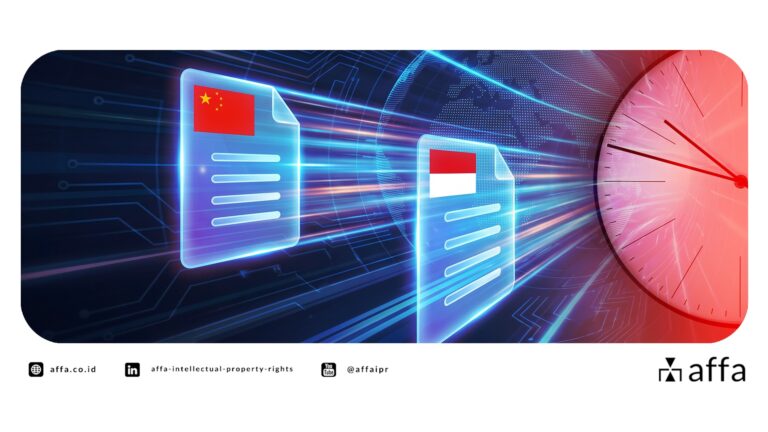
Indonesia and China Forge Strategic Copyright Alliance to Strengthen Global IP Protection

In a major step toward deeper international IP collaboration, the Government of Indonesia and the People’s Republic of China have signed a Memorandum of Understanding (MoU) to enhance cooperation in the field of Copyright and related rights. The agreement was formalized during the sidelines of the World Intellectual Property Organization (WIPO) General Assembly in Geneva, Switzerland, on July 8, 2025.   This landmark MoU, signed between Indonesia’s Ministry of Law and Human Rights and China’s National Copyright Administration, marks a pivotal moment in the bilateral IP relationship between two of Asia’s largest creative economies.   Responding to the Challenges of a Digital World   “This MoU represents a new chapter in our countries’ commitment to protect creativity in an increasingly borderless digital era,” said Minister of Law Supratman Andi Agtas. “It is more than an agreement—it’s a framework for resilience, cooperation, and innovation.”   At its core, the agreement focuses on strengthening Copyright enforcement, building institutional capacity, and fostering mutual promotion of the creative and cultural industries. Both countries have recognized the need for joint responses to transnational Copyright infringement, especially amid the rise of digital piracy and the development of generative AI.   Key Areas of Cooperation   Under the MoU, Indonesia and China will collaborate in the following areas: Exchange of legal and technical information on Copyright and related rights. Joint training programs for staff and professionals. Promotion of cross-border creative and cultural exchange. Facilitation of relations between Collective Management Organizations (CMOs). Public awareness campaigns to elevate IP education   Crucially, both parties agreed to develop annual work plans, appoint official contact points, and organize practical engagements—ranging from seminars and workshops to policy dialogues on emerging Copyright issues.   A Strategic – Soft Power Approach   While the MoU is non-binding, its strategic impact is significant. It reinforces Indonesia’s broader vision of positioning Intellectual Property as a tool of cultural diplomacy, especially within the fast-evolving global IP landscape.   The MoU will remain in effect for five years, with an option to renew for another term. Both countries may revise the agreement through mutual written consent, ensuring flexibility in addressing future challenges and opportunities.   As global stakeholders watch with growing interest, this Indonesia-China partnership sends a clear message: International Copyright cooperation is no longer optional—it is essential!   At AFFA Intellectual Property Rights, we support stronger international IP cooperation like the Indonesia–China partnership. Whether you’re expanding into Indonesia or managing IP across Asia, our consultants are ready to guide you.   Need help protecting your Copyright in Indonesia? Book a free 15-minute call with our professional consultant:   ? E-Mail : [email protected] ? Book a Call : +62 21 83793812 ? WhatsApp : +62 812 87000 889   Source: Directorate General of Intellectual Property