
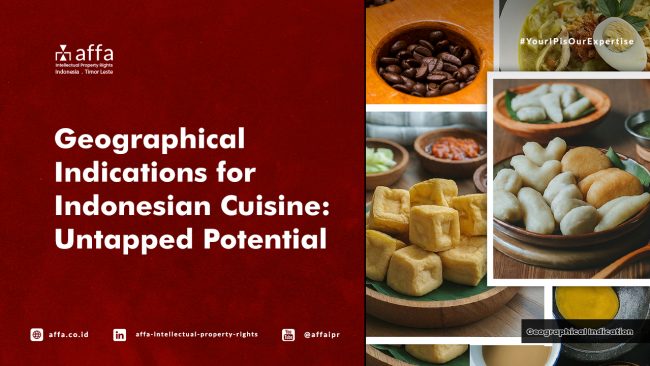
Geographical Indications for Indonesian Cuisine: Untapped Potential
According to data from the Ministry of Tourism and Creative Economy of the Republic of Indonesia, Culinary tourism accounts for about 30-40% of tourists’ total spending during their visit across the country. Names such as Kopi Gayo (Gayo Coffee), Kripik Sanjay (Sanjay Hot Chips), Sate Padang (Padang Satay), Pempek Palembang, Dodol Garut, Tahu Sumedang (Sumedang Tofu), Lumpia Semarang, Soto Madura, Bali Peanuts, and many more have become signature souvenirs that must be purchased when visiting these destinations. These popular culinary products also bolster the local economy, as most originate from Small and Medium Enterprises (SMEs) that play a vital role in job creation and increasing local income. However, one untapped potential for these regional-based culinary items is their registration as Intellectual Property, specifically as Geographical Indications. So, why have people yet to do this? What are the obstacles? And what’s the difference between a Trademark and a Geographical Indication in Indonesia? Here’s the explanation… Legal Basis for Geographical Indications in Indonesia Geographical Indications, along with Trademarks, are regulated by Indonesian Law No. 20 of 2016 on Trademarks and Geographical Indications (Trademark and GI Law). The law defines: “A Geographical Indication is a sign indicating the origin of goods and/or products from a certain area that, due to geographical factors such as natural elements, human factors, or a combination of both, gives the goods and/or products a specific reputation, quality, and characteristics.” Article 53 of the Trademark and GI Law: The applicant can be the provincial or district/city government or an organization representing the community in a specific geographical area involved in producing goods and/or products such as: natural resources; handicrafts; or industrial goods. Thus, if a natural product like coffee, cloves, nutmeg, shrimp, pearls, woven goods, batik, or traditional cuisine comes from a specific geographic area, as long as it doesn’t conflict with national ideology, laws, morality, religion, decency, and public order, isn’t misleading, and is not the name of a plant variety (unless paired with a geographic indication term), it can be registered as a Geographical Indication. Benefits of Geographical Indications Registering a product as a Geographical Indication (GI) offers many benefits, particularly for local producers and communities involved in the production. Here are some of the main benefits of GI registration: Legal Protection for Name Usage One of the most significant benefits of registering a product as a GI is legal protection over using the product’s name. GI registration ensures that only producers from the specified geographic area and those who meet specific production standards can use the name. This prevents others outside the area or those not adhering to the standards from using the GI name indiscriminately.For example, only producers from Garut who meet the standards can use the name “Dodol Garut.” This helps maintain the product’s reputation and quality in the market, ensuring it meets consumer expectations for taste. Increases Product Value and CompetitivenessProducts registered as GIs usually have higher market value due to their reputation associated with a particular area and recognized quality. Consumers are often willing to pay more for products known for their specific geographic origin, associating them with quality, uniqueness, and tradition. This enhances the product’s competitiveness in both domestic and international markets.For instance, Gayo Arabica Coffee, registered as a GI in 2018 by the Directorate General of Intellectual Property (DGIP), has a premium quality reputation in international markets, boosting demand and selling prices. Preserves Tradition and Local KnowledgeGI registration helps preserve traditional knowledge and production techniques passed down through generations. The standards set in GI registration often include conventional production methods, ensuring producers adhere to established practices, thereby preserving the tradition.For example, “Tenun Ikat Sikka” (Sikka Traditional Weaving) from East Nusa Tenggara, registered in 2018 by DGIP, guarantees that every weaving product is crafted by local communities who consistently maintain their unique production techniques and cultural identity. Boosts Local EconomyRegistering a product as a GI can drive the local economy, from increasing product demand to making it a tourist destination. With GI recognition, local producers can better market their products domestically and internationally. Ultimately, communities’ incomes dependent on the product can increase, especially if they manage the production center as a tourist destination that offers added value for visitors.For example, Kintamani Arabica Coffee from Bali registered as a GI, has significantly boosted the economic standing of coffee farmers in the area. Builds International Reputation and BrandingProducts registered as GIs are typically easier to promote in international markets due to their reputation linked to a specific geographic area. GIs help products gain global recognition and become stronger brands. Moreover, GI registration protects products from unauthorized use in international markets.Today, Indonesia is recognized as a high-quality coffee producer. Over 50 coffee-related Geographical Indications are registered with DGIP, making it the dominant GI category. Prevents Counterfeiting and FraudThe legal protection a Geographical Indication provides prevents the growth of counterfeit or lower-quality products using the same name to exploit the registered product’s reputation. This safeguards the original product’s quality and integrity in the eyes of consumers, protects the original producers from losses, and prevents consumers from being deceived.For example, if “Sumedang Tofu” were registered as a GI, it could prevent parties outside Sumedang from using the name without permission or failing to meet production standards. Strengthens Consumer RelationshipsConsumers tend to trust GI-registered products because they know the product is made to specific standards and has unique characteristics tied to its geographic origin. This helps build trust between producers and consumers, which is key for long-term success.Why Have Many Local Culinary Products Not Been Registered as GIs? There are several reasons why culinary delights like Padang Satay, Sumedang Tofu, and Madura Soto have not been registered as Geographical Indications (GI) despite their significant potential as distinct regional products: Lack of Awareness or Knowledge About Geographical IndicationsMany local producers, organizations, or even local governments may need to fully realize the potential benefits of Geographic Indication protection. Coordination Required for RegistrationGI registration requires…