지역별-상표법-비교:인도네시아

지역별 상표법 비교: 인도네시아

인도네시아에서는 상표 및 지리적 표시에 관한 법률인 상표법이 국가의 주요 법률로 적용되고 있다. 이 법률은 상표에 관련된 다양한 문제들을 규제하고 있으며, 구체적인 규정들이 몇 가지 조례를 통해 추가로 제정되고 있다. 이러한 조례들은 다음과 같은 문제들을 다루고 있다. 2019 년 정부 규정 제 28 호: 인도네시아 법무부 산하 지식재산권국(DGIP)에 제출할 수 있는 다양한 소송에 대한 공식 수수료에 대한 규정, 인권부에 적용되는 비과세 국가 수입의 유형 및 관세에 관한 정부 규정 관장 2018년 정부 규정 제 22호: 인도네시아 내에서 출원되거나 인도네시아로부터 출원된 국제 등록의 모든 측면을 다루며 국제 상표 등록에 관한 마드리드 협정과 관련된 프로토콜에 따라 상표의 국제 등록 관장 2019년 정부 규정 제90호, 1995년 8월 29일에 설립된 상표 항소 위원회의 항소 신청, 심사 및 해결 절차 관장 2016 년 법무부 인권 규정 제 67 호: 상표 분야의 지적 재산권 사무 총장의 상표 등록령에 관한 내용. 해당 규정은 무엇보다도 등록 요건, 상품 및 서비스 등급, 발행 된 인증서 및 기록 수정 관장   상표의 범위 상표법 제1조에 따르면, 상표는 상품 및/또는 서비스 거래에서 개인 또는 법인이 생산한 상품 및/또는 서비스를 구별하기 위해 그림, 로고, 이름, 단어, 문자, 숫자, 색상 배열, 2차원 및/또는 3차원 모양, 소리, 홀로그램 또는 이러한 요소 중 둘 이상의 조합의 형태로 그래픽으로 표현할 수 있는 모든 기호이다. 이 정의를 감안할 때 법은 전통적 상표와 비전통적 상표의 두 가지 유형의 상표를 인정한다.   등록 신청 상표법은 최초 출원 원칙을 채택하고 있기 때문에 일반적으로 개인, 조직 또는 회사는 상표 등록을 신청할 수 있다. 그러나 이 법은 악의적으로 제출된 상표 등록도 규제한다. 상표법 제21조는 출원인이 악의로 출원한 경우 거절한다고 규정하고 있다. 실제 심사 중에 이 조항을 이행하는 것은 이미 확립된 저명 상표와 유사한 일부 출원에서 필요하기도 하지만, 실제로는 출원이 악의로 제출되었는지 여부를 판단하는 것은 상당히 어렵다. 등록이 확정된 악의적 출원은 상표법 제 77 조에 따라 상업 법원에서 항상 무효화 될 수 있으며, 이는 “악의가 있거나 관련 상표가 국가 이데올로기, 법률 및 규정, 도덕, 종교, 품위 및 공공 질서를 위반하는 경우 무효 소송은 무제한 제기 가능하다.”라고 규정한다.   서류 제출 인도네시아에서 상표 출원을 하고자 하는 모든 사람에게 상표 검색을 강력히 권장한다. 검색 보고서는 성공적인 등록 절차에 대한 잠재적 위험과 걸림돌을 파악하는 데 도움을 준다. 검색 보고서가 신청 절차를 진행하기 위한 모든 명확성을 제공한다고 가정할 때 신청자는 다음을 제공해야 한다. 신청자 이름 주소 상품 및 서비스 목록 출원할 상표의 표현(목판, 로고 또는 비전통적 상표의 형태일 수 있음) 필요한 정보가 제공되면 변리사는 고객이 서명할 두 가지 문서, 즉 위임장과 상표 소유권 진술서를 준비한다. 2019년부터 전자 신고는 인도네시아에서 유일하게 허용되는 제출 방법이다.   타임라인 신청서에 이의 제기 및 잠정 거부가 없다고 가정하면 제출 후 등록 번호를 얻는 데 10~13개월이 소요될 수 있다. 이 간단한 등록에도 2~3년이 걸리던 예전보다 훨씬 빠르다.   반대와 무효화 신청서는 2개월 동안만 게시된다. 공표 기간 동안 이해관계자는 이의신청을 할 수 있으며, 실제 심사 단계에서 심의를 거친다. 공개 기간이 경과하면 연장 요청을 포함하여 이의를 제기할 수 있는 다른 공식적인 수단이 없다. 이의신청이 성공적으로 진행되려면 이의신청인이 유효한 법적 지위, 즉 인도네시아에서 이전에 상표를 출원하거나 등록한 적이 있는 것이 좋다. 그렇지 않으면 심사관이 최초 제출 원칙을 인용하여 이의신청을 기각할 가능성이 높다. 상업 법원에 제출해야 하는 제3자가 시작한 무효화 및 취소는 해당 상표가 등록된 후에만 가능하다.   유명한 외국 상표 상표는 명성에 관계없이 인도네시아에 등록된 경우에만 보호될 수 있다. 그러나 상표법은 다른 당사자의 악의적인 등록으로부터 유명한 외국 상표를 어느 정도 보호하는 메커니즘을 가지고 있다. 다른 당사자가 유명 외국 상표와 동일하거나 유사한 상표를 악의적으로 출원하려고 시도하는 경우, 그러한 출원은 상표법 제 21 조에 근거하여 거부된다. “상표가 유사한 상품 및/또는 서비스에 대한 다른 당사자의 저명 상표 또는 특정 요구 사항을 준수하는 다른 상품 및/또는 서비스에 대한 다른 당사자의 저명 상표와 실질적으로 유사하거나 동일한 경우 출원이 거부된다.” 그러면 문제는 유명한 상표의 구성 요소로 옮겨 간다. 2016 년 법무부 인권부 규정 제 67 호 제 18 조는 상표 부문에서 지적재산권 사무총장의 상표 등록령에 대한 것으로 상표의 저명성 기준을 제시했다. 저명 상표와 관련된 비즈니스 분야의 상표에 대한 지식 수준 또는 대중의 인지도 상품 및/또는 서비스의 판매량 및 소유자의 상표 사용에서 파생된 혜택 지역 사회에서 상품 및/또는 서비스의 유통과 관련하여 상표에 대한 시장 점유율 상표의 사용 영역 상표의 사용 기간 판촉에 사용된 투자 가치를 포함하는 상표의 판촉 강도 전 세계 상표 출원 및 등록 건수 법 이행률, 특히 공인된 기관에서 상표를 저명 상표로 인정하는 것과 관련된 성공률 상표로 보호되는 상품 및/또는 서비스의 명성과 품질 보증으로 인한 상표의 가치 평가. 그러나 해외에서 유명한 상표가 항상 인도네시아에서 같은 수준의 명성을 갖는 것은 아니다. 이는 상표권자가 다른 당사자에 대해 조치를 취하기 전에 인도네시아에서도 명성을 쌓아야 하는지 여부에 대한 문제를 제기한다.   사용 요구 사항 인도네시아는 최초 제출 원칙을 채택하고 있기 때문에 등록 전에 사전 사용을 주장할 필요가 없다. 사용 증빙 자료는 제출할 필요가 없다. 신청자가 다른 국가에서 더 일찍 다른 신청서를 제출한 경우, 신청자는 우선일로부터 6개월 이내에 인도네시아에서 우선권을 주장할 수 있다. 미사용과 관련하여, 등록상표가 등록일 또는 마지막 사용일로부터 3년 연속으로 사용되지 않은 경우 법률에 따라 상업법원에서 상표를 취소할 수 있다. 그러나 법은 최소 사용 기준을 규정하지 않으므로 일반적으로 미사용 취소는 매우 어렵다.   라이선스 등록된 상표는 인도네시아의 다른 당사자에게 라이선스를 부여할 수 있다. 계약이 구속력 있는 법적 효력을 가지려면 DGIP에 기록되어야 한다. 일반적으로 라이선스 계약에는 라이선스 제공자와 라이선스 사용자의 세부 정보, 라이선스의 성격(독점적 또는 비독점적), 서브 라이선스 부여 여부, 라이선스 계약 조건, 당사자의 권리 및 책임, 라이선스를 부여할 대상 또는 상표가 포함되어야 한다. 라이선스 계약에는 인도네시아 경제에 직간접적으로 피해를 주는 조항이나 인도네시아의 기술 획득 및 개발 능력을 방해하는 제한이 포함되어서는 안 된다.   AFFA Intellectual Property Rights 15/F Graha Pratama Building Jl. MT. Haryono Kav. 15 Jakarta – 12810, Indonesia 전화: +62 21 8379 3812 이메일:[email protected] www.affa.co.id

アジアの商標法の比較:インドネシア

アジアの商標法の比較:インドネシア

インドネシアでは、商標および地理的表示に関するインドネシア共和国法律2016年第20号(通称商標法)が、商標に関する基本法であるが、個別事項を規制する以下を含む規則がいくつか存在する。 法務・人権省で適用される非税国家収入の種類と率に関する政府規則2019年28号(法務・人権省知的財産総局(DGIP)に提起できる各種訴訟の正式な手数料が定められている) マドリッド協定議定書に基づく商標の国際登録に関する政府規則2018年22号(インドネシアにおける、または同国から行う国際登録のあらゆる事項を扱う) 1995年8月29日に設立された商標審判委員会の審理請求、審理および解決の手続きに関する政府規則2019年90号 商標分野の知的財産総局商標登録令に関する法務・人権省規則2016年67号(登録の条件、物品とサービスの分類、登録された商標証と記録の補正について定める)   商標の範囲 商標法の第1条によると、商標とは、個人または法人によって生産された商品/サービスを取引において識別させるためのマークで、グラフィックイメージ、ロゴタイプ、名称、単語、文字、数字、色の組合せといった平面や立体、音声、ホログラム、またはそれらの要素が二つ以上組合さった形で表示されるものである。 この定義に基づき、同法は伝統的商標と非伝統的商標という2種類の商標を認めている。   登録出願 商標法は基本的に先願主義を採用しているため、いかなる個人、団体または法人も商標登録の出願を行うことができる。だが同法は、悪意をもって提出された商標出願を規制しており、商標法第21条は、出願人が悪意をもって提出した商標出願は拒絶されると規定している。 すでに定着した周知商標と類似した出願に対しては、実体審査でこの条項を適用できるが、現実的には出願に悪意があるかどうかの判断は極めて困難である。 悪意ある出願がのちに登録された場合も、商標法第77条に基づき商事裁判所がいつでも登録を取り消すことができる。同条は「悪意ある要素が感じられる商標、国家のイデオロギー、法律の規定、モラル、宗教、公序良俗に反する商標についての取消訴訟の提訴期間は無期限である」と定めている。   出願書 インドネシアで商標登録を出願する場合、商標検索を強くお勧めする。検索レポートにより、円滑な登録手続きを阻む潜在的なリスクや障害を明らかにできる。 検索レポートで出願手続きを阻む障害がないと判明した場合、出願人は次の情報を提出しなければならない。 出願人の氏名 住所 商品とサービスのリスト 出願する商標の見本(文字標章、ロゴ、非伝統的商標の形をとることができる) 必要な情報が提出されたら、特許弁護士が委任状と所有宣言書を作成し、出願人がこれに署名する。 2019年以降、インドネシアでは電子出願のみが出願方法として認められている。   期間 出願に対し異議申し立てが提起されず暫定的拒絶もされない場合、出願後10~13カ月で登録番号を取得できる。以前と比べ大幅に迅速化されており、過去には単純な登録でさえ2~3年かかっていた。   異議申し立てと取消 登録出願は2カ月間のみ公告される。この公告期間中に、あらゆる利害関係者が異議を申し立てることができ、申立ては実体審査の中で検討される。 公告期間満了後、延長の要求を含め異議申し立ての手段は他に存在しない。. 異議申立の手続きを首尾よく進めるためには、申立人が正当な法的地位を有すること、すなわち過去にインドネシア国内で商標出願または登録を行っていることが望ましい。そうでない場合、審査官が先願主義に基づき申立を却下する可能性が高い。 第三者が商標登録の取消または抹消を求める場合、商事裁判所に提訴する必要があり、対象となる商標がいったん登録されて初めて、取消または抹消を求めることができる。   外国の周知商標 有名かどうかに関わらず、インドネシアで登録された商標に限って保護を受けることができる。だが商標法は、外国の周知商標を第三者による悪意ある登録から一定程度保護する仕組みを設けている。. 第三者が、外国の周知商標と同一または類似した商標を悪意をもって登録出願しようとした場合、商標法第21条に基づき拒絶される。同条は、次のように定めている。 「同類の商品/サービスに関して、他者の所有する周知商標、または 特定の条件を満たす、同じ種類ではない商品/サービスに関して他者の所有する周知商標と実質的に類似する場合、出願は拒絶される」 次に、何が周知商標に当たるかという問題に目を向ける。商標分野の知的財産総局商標登録令に関する法務・人権省規則2016年67号の第18条は、周知商標の基準を以下のように定めている。 周知商標としての、当該の事業分野におけるその商標に対する市民の知識あるいは認識 所有者がその商標を用いることによって得る物品および/またいはサービスの売上と利益の量 社会における物品および/またはサービスの流通に関連して、その商標が占める市場シェア 商標の使用地域 商標の使用期間 宣伝に使用された投資額を含む、商標の宣伝規模 他国での商標登録および商標出願の件数 特に、権限を持つ機関によるその商標の周知商標としての認識に関する、法令遵守の達成度合 その商標により保護された物品および/またはサービスの評判および品質保証により得られる、商標に付随する価値 とはいえ、外国で有名な商標がインドネシアでも同程度に有名とは限らない。これが、商標の保有者は第三者を提訴するに先立ち、インドネシアにおける周知性を立証する必要があるかという課題を生みだしている。   使用の要件 インドネシアは先願主義を採用しているため、登録前に先使用権を主張する必要はなく、使用の証拠を提出する必要もない。 出願人が他の国で先に出願している場合、最初の出願日から起算して6カ月間はインドネシアで優先権を主張できる。 不使用に関しては、法律に基づき、登録商標が登録日または最新の使用日から起算して継続して3年間使用されていない場合、商事裁判所はその商標を抹消することができる。だが最低限の使用期間に関しては、法に定めがないため、不使用を事由とする登録抹消は基本的に非常に困難である。   ライセンス供与 インドネシアでは、登録された商標のライセンスを他者に供与することができる。ライセンス契約が法的拘束力を持つためには、知的財産総局に登録する義務がある。 ライセンス契約には基本的に、実施許諾者と実施権者の詳細、ライセンス契約の性格(独占的か非独占的か)、サブライセンスの可否、契約期間、両当事者の権利と責任、ライセンス供与の対象物または商標を記載しなければならない。 ライセンス契約は、インドネシア経済に直接または間接に損害を与える規定、またはインドネシアによる技術を習得し開発する能力を妨げる制限を含んではならない。   AFFA Intellectual Property Rights 15/F Graha Pratama Building Jl. MT. Haryono Kav. 15 Jakarta – 12810, Indonesia 電話: +62 21 8379 3812 Eメール:[email protected] www.affa.co.id
A-Comparison-of-Trademark-Law-Indonesia-affa

A Comparison of Trademark Law: Indonesia

In Indonesia, Law No. 20, 2016, on Marks and Geographical Indications, known as the Trademark Law, is the country’s primary law concerning trademarks. However, there are several bylaws that regulate more specific matters, including: Government Regulation No. 28, 2019, concerning Types and Tariffs of Non-Tax State Revenues Applicable to the Ministry of Law and Human Rights, which sets the official fees for various actions that can be filed before the Directorate General of Intellectual Property (DGIP) under the Ministry of Law and Human Rights of Indonesia; Government Regulation No. 22, 2018, pertaining to the International Registration of Marks Under the Protocols Relevant to the Madrid Agreement Concerning the International Registration of Marks, which covers all aspects of international registration filed in or from Indonesia; Government Regulation No. 90, 2019, concerning the Trademark Appeal Commission, established on 29 August 1995, concerning Procedures for Application, Examination and Settlement of Appeals at the Mark Appeal Commission; and The Ministry of Law and Human Rights Regulation No. 67, 2016, concerning the Trademark Registration Decree of the Director General of Intellectual Property in the Field of Trademarks. The ministerial regulation prescribes, among other things, the requirements of registration, classes of goods and services, and the rectification of issued certificates and recordals.   Scope of Trademarks According to article 1 of the Trademark Law, a mark is any sign capable of being represented graphically in the form of drawings, logos, names, words, letters, numerals, colour arrangements, in two and/or three-dimensional shapes, sounds, holograms, or a combination of two or more of these elements to distinguish goods and/or services produced by a person or legal entity in trading goods and/or services. Given this definition, the law acknowledges two types of trademarks: traditional and non-traditional marks.   Applying for Registration Since the Trademark Law adopts the first-to-file principle, in general, any individual, organisation or company can file for trademark registration. However, the law also regulates trademark registrations that are filed in bad faith. Article 21 of the Trademark Law stipulates that an application is refused if it is submitted by an applicant in bad faith. While the implementation of this article during substantive examination holds true for some applications that have similarities with the already established and well-known marks, in practice, it is quite challenging to determine whether an application is filed in bad faith or not. A bad-faith application that later matured to registration can always be invalidated at the Court of Commerce, as regulated under article 77 of the Trademark Law, which stipulates the following: “The lawsuit for invalidation may be filed in unlimited time if there is bad faith and/or the relevant mark contravenes the state ideology, laws and regulations, morality, religions, decency and public order.”   Filing and Documentation A trademark search is strongly suggested for anyone who wishes to file a trademark application in Indonesia. The search report will identify potential hazards and stumbling blocks to an otherwise successful registration process. Assuming the search report gives an all-clear sign to further the application process, the applicant will then need to supply the following: Name of applicant Address List of goods and services Representation of the mark to be filed, which can be in the form of wordmark, logo, or non-traditional marks Once the necessary information has been provided, the patent lawyer will prepare two documents to be signed by the client: a power of attorney, and a statement of mark ownership. Since 2019, e-filing is the only acceptable method of filing in Indonesia.   Timeline Assuming the application does not receive any opposition and provisional refusal, then it may only take 10-13 months from filing to obtaining a registration number. This estimate is significantly faster than it used to be, when even a straightforward registration would take two to three years.   Opposition and Invalidation Applications are published for two months only. During the publication period, any interested party may file for opposition, and they will be considered during the substantive examination stage. Once the publication period has lapsed, there are no other formal means of filing for opposition, including extension requests. To have a successful opposition proceeding, it is strongly recommended that the opposer has valid legal standing, namely, an earlier trademark application or registration in Indonesia. Otherwise, it is likely that the examiner will reject the opposition by citing the first-to-file principle. Invalidations and cancellations initiated by any third party, which have to be filed at the court of commerce, are only feasible once the trademarks to be invalidated or canceled have been registered.   Famous Foreign Trademarks A trademark can only be protected if it is registered in Indonesia, regardless of its fame. However, the Trademark Law has a mechanism to somewhat protect a famous foreign trademark from bad-faith registrations by other parties. Should another party try to maliciously file an application for a trademark that is identical or similar to a famous foreign trademark, such application will be rejected on the basis of Article 21 of the Trademark Law, which stipulates the following: “An application is refused if the mark is substantively similar to or identical with a well-known mark of other parties for similar goods and/or services, or a well-known mark of other parties for different goods and/or services complying with certain requirements.” The issue is then shifted to what constitutes as a famous trademark. Article 18 of the Ministry of Law and Human Rights Regulation No. 67, 2016, concerning the Trademark Registration Decree of the Director General of Intellectual Property in the Field of Trademark, has set out the criteria of what makes a trademark famous: Level of knowledge or public recognition of the mark in the business field concerned as a well-known mark; Volume of sales of goods and/or services and benefits derived from using the mark by the owner; Market share controlled by the mark in relation to the circulation of goods and/or services in the community; Area of use of the mark; Period of use of the mark; Intensity of promotion of the…

TETRIS-The-License-Dispute-That-Rocked-the-Soviet-Union-affa-global

TETRIS: The License Dispute That Rocked the Soviet Union

The Tetris movie hits Apple TV Plus on March 31st and since then has given a fascinating look at the legal battle over the rights to one of the most popular video games of all time. The film follows the story of Henk Rogers, a Dutch-Indonesian video game designer who helped to bring Tetris to the West. Rogers faced many challenges in securing the rights to the game, including a complex web of Intellectual Property ownership in the Soviet Union. The film provides a valuable glimpse into the challenges of protecting intellectual property rights in a globalized marketplace. For Intellectual Property practitioners, the Tetris movie offers some insights. First, the film shows the importance of securing all necessary rights to a product or service before bringing it to market. Rogers was able to secure the rights to Tetris in Japan, but he faced challenges in securing the rights in other countries. This is a common problem for businesses that operate in multiple jurisdictions. Second, the film shows the importance of understanding the different types of Intellectual Property protection available. Rogers had to navigate a complex web of Copyright, Trademark, and Patent law to secure the rights to Tetris. Intellectual Property practitioners must be familiar with all the different types of Intellectual Property protection to advise their clients effectively. Third, the film shows the importance of enforcing Intellectual Property rights. Rogers was able to secure the rights to Tetris, but he faced challenges in enforcing those rights against infringers. Intellectual Property practitioners need to be prepared to take legal action to protect their client’s rights. In addition to the insights mentioned above, the Tetris movie also shows the importance of working with local lawyers in foreign jurisdictions, the importance of being aware of the different cultural norms that may affect intellectual property protection, and the importance of being prepared to compromise to resolve. Overall, the Tetris movie is a valuable resource for Intellectual Property practitioners. The film provides several insights that can help practitioners to protect their clients’ Intellectual Property rights better.   If you need more information about how to protect your IP(s) in Indonesia and other countries, please do not hesitate to contact us at [email protected].

Indonesian-National-Research-and-Innovation-Agency-Targets-800-New-Patents-in-2023-affa-global

Indonesian National Research and Innovation Agency Targets 800 New Patents in 2023

The National Research and Innovation Agency (Indonesian: Badan Riset dan Inovasi Nasional, BRIN) is a Non-Ministry Government Institution (Indonesian: Lembaga Pemerintah Non-Kementerian, LPNK) which is under and responsible to the President of Indonesia through the minister in charge of government affairs in the field of research and technology. President Joko Widodo first formed this institution through Presidential Regulation Number 74 of 2019 which is attached to the Ministry of Research and Technology (Indonesian: Kementerian Riset dan Teknologi, Kemenristek) so that the Minister of Research and Technology also acts as the Head of BRIN. In the second period of President Joko Widodo’s administration in 2021, the Ministry of Research and Technology was merged into the Ministry of Education and Culture. Still, the Head of BRIN was held by someone other than the Minister of Education. For this reason, the President appointed the Head of the Indonesian Institute of Sciences (Indonesian: Lembaga Ilmu Pengetahuan Indonesia, LIPI), Dr. Laksana Tri Handoko, who also has several patents in physics. Since then, LIPI together with 3 (three) other LPNKs, namely the Agency for the Assessment and Application of Technology (Indonesian: Badan Pengkajian dan Penerapan Teknologi, BPPT), the National Nuclear Energy Agency (Indonesian: Badan Tenaga Nuklir Nasional, BATAN), and the National Institute of Aeronautics and Space (Indonesian: Lembaga Penerbangan dan Antariksa Nasional, LAPAN) were merged into BRIN. With this fusion, BRIN has 12 Research Organizations (RO) based on scientific fields, namely: Nuclear Energy Research Organization Earth and Maritime Research Organization Social Sciences and Humanities Research Organization Aviation and Space Research Organization Archaeological, Language, and Literary Research Organization Governance, Economics, and Public Welfare Research Organization Agriculture and Food Research Organization Biological and Environmental Research Organization Health Research Organization Energy and Manufacturing Research Organization Electronics and Informatics Research Organization Nanotechnology and Materials Research Organization   With this many ROs, BRIN targets that in accumulation, all of the ROs above will result in 800 patent applications in 2023. However, according to Deputy for Research and Innovation Facilities at BRIN Agus Haryono, until the second quarter of 2023, only 16 patents have been filed. Of course, it can be said that it is still very far from the target. However, if you look at BRIN’s previous performance, there are already more than 2,500 Intellectual Property managed, most of which came from 2,371 Patents, 352 Copyrights, 122 Industrial Designs, 46 Trademarks, and 17 Plant Variety Protection (PVP).   Sources: Bisnis.com BRIN

Super-Mario-Bros-Huge-Success-affa-global

Super Mario Bros, Huge Success of a Video Game IP on the Big Screen

The Super Mario Bros. Movie is a 2023 American computer-animated comedy film produced by Illumination Entertainment and distributed by Universal Pictures. Based on a video game franchise of the same name that was first released in 1985. The film was directed by Aaron Horvath and Michael Jelenic, and stars Chris Pratt as Mario, Charlie Day as Luigi, Anya Taylor-Joy as Princess Peach, and Jack Black as Bowser. In the film, Mario and his brother Luigi team up to rescue Princess Peach from Bowser. The film was released in the United States on April 7, 2023. It received mixed reviews from critics, but was a true box office success, grossing over $1.21 billion worldwide while the budget was only $100 million. The film became the highest-grossing film of 2023, the highest-grossing film based on a video game, and the highest-grossing animated film of 2023. With those records, this movie has beaten ‘John Wick: Chapter 4,’ ‘Ant-Man and the Wasp: Quantumania,’ ‘Guardians of the Galaxy Vol. 3,’ and all ‘Toy Story’ movies that are owned by Disney-Pixar. Since its first release, the Super Mario Bros franchise designed by Shigeru Miyamoto and Takashi Tezuka has become a cultural icon and a household name around the world. The Italian plumber Mario and Luigi have entertained gamers for over three decades, appearing in more than 200 games and generating billions of dollars in revenue, with more than 58 million copies sold worldwide. The decision to bring Super Mario Bros to the big screen once again is a smart move for Nintendo, the company behind the franchise. In recent years, the company has made a concerted effort to expand the reach of its IP beyond video games, with successful ventures into mobile games, merchandise, and theme parks. The upcoming park would be in Singapore and it is scheduled to open in 2025. With the popularity of the franchise showing no signs of waning, it seems that Mario and his friends will continue to be a beloved part of popular culture for years to come. In conclusion, having an established IP can provide a promising future for any individual or company in the entertainment industry. It offers a recognized brand and loyal fanbase that can increase revenue through various streams of merchandise, licensing, and media adaptations. With the rise of new technologies and platforms, the potential for growth and success is only expanding. However, do not forget to protect and manage the IP to maintain its value and integrity. With proper management and strategic planning, an established IP can continue to thrive and bring joy to audiences for years to come.   If you need more information about how to protect your IP(s) in Indonesia and other countries, please do not hesitate to contact us at [email protected]. Source: Boxofficemojo.com    

Protecting-Your-Food-Recipes-affa-global

Protecting Your Food Recipes: A Step-by-Step Guide

Your food recipes are a valuable asset. They represent your creativity, hard work, and passion. That’s why it’s important to protect them as a trade secret from being stolen or plagiarized. Here are some tips on how to protect your food recipes: Document Your Recipe. This means writing down the ingredients, measurements, and steps involved in making the recipe. Be as specific and detailed as possible. Keep Your Recipe Secret. Don’t share it with anyone, not even friends, family, or colleagues. If you do share it with someone, make sure they sign a non-disclosure agreement (NDA). Also, consider the following steps: a) Use a password-protected computer or file-sharing service to store your recipes. b) Don’t post your recipes on social media or other public forums. c) If you are considering selling your recipes, be sure to consult with an attorney to discuss your options. d) If the recipe is not documented in a digital document, please ensure to keep it in a restricted place (i.e. safe deposit box). Keep Your Recipe Documentation Updated As you continue to refine and improve your recipe, be sure to keep your documentation up to date. This will ensure that you always have an accurate and complete record of your recipe, which can be useful in the event of a legal dispute. By following these tips, you can help protect your food recipes and trade secret from being stolen or plagiarized. So, go ahead and share your culinary creations with the world, knowing that you have taken steps to protect your trade secret.   If you need more advice for protecting your trade secret in Indonesia and other countries, please do not hesitate to contact us at [email protected]. Sources: Nolo.com LegalVision.com

Ed-Sheeran-Found-Not-Liable-affa-global

Ed Sheeran Found Not Liable for Plagiarizing Marvin Gaye

A federal jury in New York City found on Thursday that Ed Sheeran did not copy Marvin Gaye’s classic “Let’s Get It On” for his own 2014 hit “Thinking Out Loud.” The verdict came after a two-week trial in which Sheeran and his co-writers testified that they came up with the song independently. The lawsuit was filed by the heirs of Ed Townsend, who co-wrote “Let’s Get It On.” They argued that “Thinking Out Loud” copied the structure, melody, and rhythm of their song. However, the jury found that the similarities between the two songs were not substantial enough to constitute copyright infringement. The verdict is a victory for Sheeran, who has been one of the most successful pop stars in the world in recent years. It is also a setback for the heirs of Townsend, who had hoped to win a large settlement from Sheeran. The case was closely watched by the music industry, as it could have set a precedent for future copyright infringement cases. The verdict suggests that courts will be reluctant to find copyright infringement when there are only superficial similarities between two songs. This is not the first time that Sheeran has been accused of plagiarism. In 2017, he settled a lawsuit with the songwriters of the song “Amazing” by Matt Cardle. The songwriters alleged that Sheeran had copied the melody of their song for his own song “Photograph.” Sheeran has denied all allegations of plagiarism. He has said that he writes his songs from scratch and that he does not intentionally copy other artists’ work. The verdict in the Marvin Gaye case is a relief for Sheeran and his fans. It is also a victory for the music industry, as it sends a message that courts will not be quick to find copyright infringement in cases where there are only superficial similarities between two songs.   If you need further information about copyright recordation in Indonesia and other countries, please do not hesitate to contact us at [email protected]. Source: The Guardian

Katy-Perry-v-Katie-Perry-affa

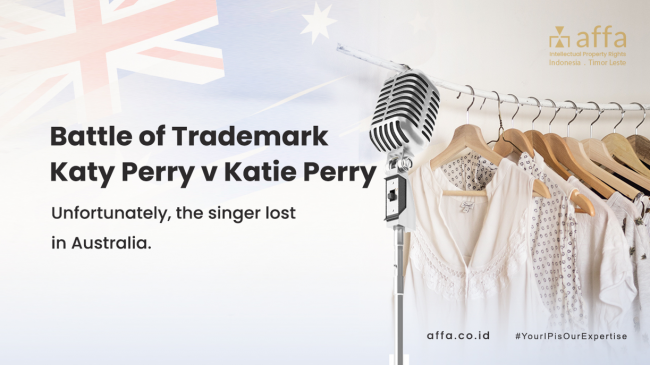
Battle of Trademark: Katy Perry v Katie Perry Unfortunately, the singer lost in Australia.

In a trademark dispute, having a big name sometimes guarantees a win, but only sometimes. When Katy Perry, the owner of five Billboard Music Awards and a judge on American Idol with 108 million followers on Twitter, held concerts in Australia in 2014 and 2018, she sold a lot of fashion products through retail and social media using the trademark “Katy Perry,” which is owned by her company, Killer Queen, LLC. However, it turned out that there was already a similar trademark in Australia with a similar pronunciation, namely “Katie Perry” (with ie), which had been registered by a designer named Katie Taylor in the fashion category (Nice Class 25) since 2008. In 2009, Katy Perry’s lawyers actually tried to cancel Katie’s trademark and sent a “Cease and Desist Order” letter so she wouldn’t use the trademark again, but this effort was not pursued. After Katy Perry’s 2018 concert, which once again sold fashion products, Katie decided to strike back by reporting “Katy Perry” for ignoring the existence of “Katie Perry,” which has homophonous and had already been officially registered in IP Australia Finally, on Thursday, April 27, 2023, Australian Federal Court Judge Brigitte Markovic ruled that Killer Queen, LLC. had been proven to have infringed on some of Katie Taylor’s trademarks and ordered them to compensate for the damages with a certain amount that will be decided later. In response to this victory, Katie Taylor made a statement on her website, “Not only have I fought [for] myself, but I fought for small businesses in this country, many of them started by women, who can find themselves up against overseas entities who have much more financial power than we do. This victory could not have been achieved if Katie had not registered her trademark first. By registering a trademark, the owner obtains their rights, and the state provides legal protection so that the trademark’s economic rights are not violated. In Indonesia, a trademark can only be protected if an application for registration is filed first, and prior use of the trademark cannot be used as a basis for protection. This is because the ‘First to File’ approach is adopted by Law No. 20 of 2016 concerning Trademarks and Geographical Indications.   If you need further information about trademark registration in Indonesia and other countries, please do not hesitate to contact us at [email protected]. Sources: Reuters.com Nine.com.au WIPO Global Brand Database

affa-ipr-website-artikel-USTR

Indonesia Remains on the USTR 301 Priority Watch List in 2023

As of 2023, Indonesia is still on the Priority Watch List due to the difficulties faced by U.S. right holders in obtaining adequate protection and enforcement of intellectual property (IP), as well as fair market access. According to the report, there is still rampant piracy and counterfeiting, with concerns persisting regarding the enforcement of IP rights. This includes insufficient penalties for infringement and ineffective border enforcement. Stakeholders have raised concerns about Indonesia’s Copyright Law and are pushing for revisions, while online piracy and unlicensed software usage remain problematic. The Directorate General for Customs and Excise, according to the report, has limited effectiveness due to a recordation system with only a few trademarks and copyrights, and foreign right holders face barriers in benefiting from the system. Additionally, there are concerns about Indonesia’s law on geographical indications and patent law, which raise questions about pre-existing trademark rights and patentability criteria, respectively. There is no effective system to protect against the unfair commercial use of undisclosed test or other data for marketing approval for pharmaceutical and agricultural chemical products. Market access barriers in Indonesia are also a concern, including regulations that limit foreign participation in the film sector. Although there has been some progress in addressing these issues, significant challenges remain. In 2022, Indonesia expanded its IP Enforcement Task Force to improve coordination on enforcement, but the United States encourages Indonesia to use the task force to enhance cooperation among relevant agencies and to pursue larger cases against criminal organizations involved in counterfeiting and piracy. Recently, Indonesia revoked the Omnibus Law on Job Creation, which had removed requirements for patents to be worked in Indonesia, and replaced it with new regulation. However, the United States, through the report, encourages Indonesia to undertake a more comprehensive amendment to the 2016 Patent Law and other legislation, and to provide affected stakeholders with meaningful input opportunities. Nevertheless, from the Indonesian perspective, we ought to see more changes and improvements, albeit at times they are incremental. Strong and robust laws and regulations will reassure the right holders, regardless of their nationalities, to invest more (as well as protecting their IP) in Indonesia. Source: https://ustr.gov/sites/default/files/2023-04/2023%20Special%20301%20Report.pdf