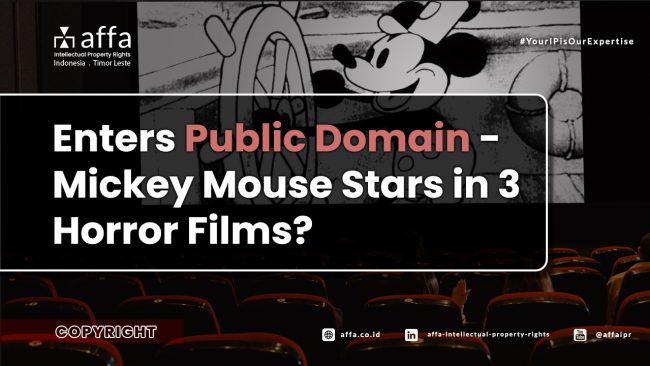
Enters Public Domain – Mickey Mouse Stars in 3 Horror Films?
Enters Public Domain – Mickey Mouse Stars in 3 Horror Films? Mainstream news channels are busy reporting that Mickey Mouse, The Walt Disney Company’s mascot, has entered the Public Domain as of January 1, 2024. As a result, many parties are immediately looking for their fortune by presenting this black mouse in various media. Uniquely, they all have a horror theme! 1. The Vanishing of S.S. Willie Straight released on January 2, 2024, on the Night Signal Entertainment YouTube channel, this is a short film less than 10 minutes long, which assumes that the film “Steamboat Willie” published in 1928, the first film to feature the character Mickey Mouse, is an actual event. Mickey, Minnie, and other animal characters are displayed in realistic form, covered in retro visuals, but with different names. The horror side is that their story ends tragically at the bottom of the river, contrasting with the cheerful original animated version. 2. Mickey’s Mouse Trap Also released on the same day is a 2-minute trailer for the film, which will be released in March 2024. This time, the story is about a serial killer who wears a Mickey Mouse-like mask and operates in an amusement park. 3. Steamboat Willie The third horror film to utilize Public Domain Mickey is the work of Director Steven LaMorte, who previously directed “The Mean One” (2022), a horror-comedy film inspired by “The Grinch” (2018). Steven admitted that filming of Steamboat Willie will take place this spring, and the concept remains a horror-comedy in the style of The Mean One. Steve confirmed to the media that his work would not violate the law because it would not use the name Mickey Mouse but Steamboat Willie. 4. Infestation: Origins Lastly, Mickey is in a PC game that up to four people can play. Here, you can play as a rat exterminator set in the 80s. But then, you are chased by a monster resembling Mickey Mouse! This game produced by Nightmare Forges can now be ordered on the Steam website, but the official release date has yet to be announced. What is Public Domain? A work or Creation, including animated films, can be protected by Copyright. Then there is the Copyright Law, which regulates the validity period of Economic Rights, which is a reference for whether we still have to obtain permission from the Creator or Copyright Holder for a Work. If the validity period has passed, the work has entered the Public Domain, and the public can use it freely without asking permission from the Creator. Why 95 Years Later? The Copyright Law in the United States stipulates that a work’s validity period is during the Creator’s life plus seventy years after the Creator dies. However, this regulation was only applied to all works published starting January 1, 1978. Meanwhile, Steamboat Willie was already present 50 years earlier. That’s why the film still has 95 years of Economic Rights and ends on December 31, 2023. Finally, Steamboat Willie only entered the Public Domain as of January 1, 2024. Now Everyone is Free to Use Mickey Mouse? Certainly not! Because the only thing in the Public Domain is Mickey Mouse in Steamboat Willie: the Black and White Mickey without gloves. What also needs to be remembered is that as a character, two types of Intellectual Property (KI) are attached to Mickey Mouse: Copyright and Trademark. If a copyright has an expiration validity period, then a trademark can be renewed every ten years. Mickey Mouse is a registered Trademark still owned by The Walt Disney Company. That’s why none of the works above that use Public Domain Mickey use the name “Mickey Mouse.” They consciously did not use this name to avoid legal disputes. They only dare to use “Mickey” or “Steamboat Willie,” common names not registered by anyone. So, even though Steamboat Willie has entered the Public Domain, that doesn’t mean you are free to produce and/or sell products that contain colored versions of images or words of Mickey Mouse. The point is that Public Domain doesn’t necessarily make your own Mickey Mouse. Mickey Mouse Still Owned by The Walt Disney Company Amid widespread news related to the Public Domain, the role of the media is needed to educate people so as not to create new problems. Because incomplete reporting can make many parties who are less aware of IP, including SMEs, subject to warning letters from Disney’s lawyers. They join in on the hype by producing products depicting colored versions of Mickey Mouse and containing the word without realizing the potential for Copyright and Trademark violations. Remember that Walt Disney is a big company in the IP business. They understand the ins and outs of Intellectual Property law. Apart from that, they also continue to update their IP-based characters and their source of income. That is the only way the validity period of Economic Rights in Copyright can continue to be extended. Steamboat Willy is only one of tens of thousands of works featuring IP-based characters, a source of income for the Walt Disney Company. Missing one will not affect its revenue, which since 2022 will be above USD 80 billion per year. From Walt Disney, we learn that creating original characters, if managed well, will be more profitable and provide long-term benefits. Instead of making imitation works that take advantage of the momentary hype. The public will also see it as a cheap work or a parody of no quality. Should you need further information about Public Domain, Copyright, or other Intellectual Property management, please do not hesitate to contact us via [email protected]. Sources: Coming Soon Variety