

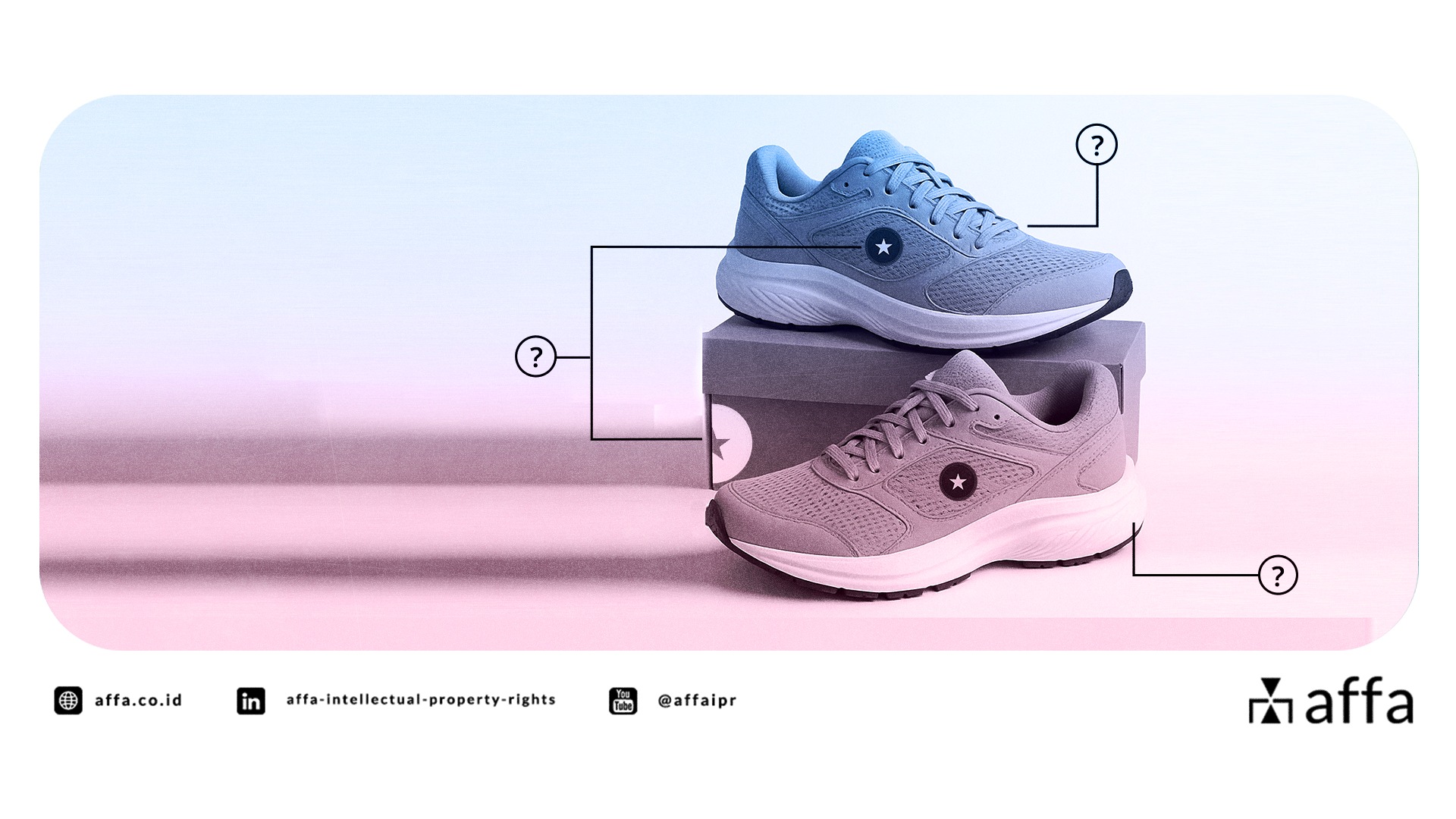
When we hear the term Intellectual Property (IP), the first things that usually come to mind are music, movies, or books. However, IP actually encompasses much broader categories—including Trademarks, Patents, Industrial Designs, and Copyrights. Interestingly, all these types of IP can be found in just one simple object: a pair of shoes. Yes, the shoes you buy and wear can hold much more value than comfort and style. Behind their cool and functional designs lie various high-value intellectual property elements. Let’s explore each of them! Trademark: More than Just a Name A Trademark is not merely the brand name displayed on a shoe’s tongue or packaging. In the world of Intellectual Property, a Trademark can also cover distinctive visual elements such as logos, unique lines, shapes, or even colors strongly associated with the product identity. Examples: The iconic stripes on Onitsuka Tiger (ASICS) shoes are recognizable even from their silhouettes alone. The distinctive yellow stitching on Dr. Martens shoes reinforces functionality and highlights the product’s identity. All these elements can be registered as Trademarks, providing legal protection against imitation or misuse by third parties. Patent: Protecting Technological Innovations In the modern footwear industry, technological innovation is crucial for staying competitive. Innovations such as air-cushioned soles for maximum comfort (like Nike Air), energy-absorbing and returning materials, and stain-resistant yet comfortable synthetic fabrics can all be protected by Patents—provided they meet certain criteria: novelty, inventiveness, and industrial applicability. Patent protection allows shoe manufacturers to safeguard their technological edge and opens lucrative licensing opportunities. Industrial Designs: Protected Aesthetics The visual appearance of a shoe, including overall shape, curves, unique silhouettes, and distinctive ornaments, can be protected as an Industrial Design. This is particularly important for iconic-looking products, even if their function remains unchanged. Industrial Design protection provides exclusive rights for 10 years. Unlike Trademark protection, this period cannot be extended, making it crucial to maximize commercialization within those initial 10 years. Moreover, even aesthetically appealing and unique shoe boxes can be registered as Industrial Designs. If you notice shoe packaging that feels premium or “Instagrammable,” it’s likely the result of a clever design strategy aimed at legally maximizing profit. Copyright: Artistic Works on Shoes Shoes are not only functional items but also canvases for artistic expression. Images, illustrations, or artistic motifs featured on shoe surfaces—whether on the upper part, tongue, or inner sole—are protected by Copyright. Graphic designs on shoe packaging, labels, and booklets inside the boxes are similarly protected. Copyright protection arises automatically upon creation of the work and does not require registration, although it is recommended to officially record it as stronger legal proof. Complex Yet Profitable Considering that a single pair of shoes can encompass: Trademark (names, logos, unique shapes); Patent (technological innovations and materials); Industrial Design (visual appearance and packaging); and Copyright (artistic elements), it becomes clear that shoes are more than mere products; they are bundles of highly valuable Intellectual Property. Mastering and managing Intellectual Property is not only about legal protection but also a strategic business move. Many large companies succeed not by selling products alone, but by monetizing their IP. Hence, understanding Intellectual Property can be your first step towards achieving genuine “wealth.” If you have an idea for shoe designs or new material innovations, don’t underestimate it. You might be uncovering a goldmine of Intellectual Property, and we’re here to help ensure this wealth is properly registered and maximally protected, safeguarding it from misuse by irresponsible parties. Should you need more information regarding Intellectual Property registration and protection in Indonesia or internationally, please do not hesitate to contact us at [email protected].

Mandatory Patent Implementation Annual Reporting in Indonesia Is in Force
In accordance to Article 20A of Law No. 65 Year 2024, a Patent Holder is obliged to file an annual Patent implementation report to the Directorate General of Intellectual Property (DGIP) under the Ministry of Law before the annuity payment deadline. Be mindful that failure to implement a registered Patent in Indonesia may lead to the Patent Registration being subject to compulsory licensing and/or potential Patent Invalidation, which can be filed before the Court of Commerce. Under the Indonesian practice, what constitutes as a Patent implementation/use are as follows: Product is manufactured/process is used and commercialized; Product is manufactured/process is used but not yet commercialized; Importation of patented product/process; or Licensing of patented product/process. While the implementing regulation for this specific matter has yet to be issued, the DGIP officers have urged the Patent holders to file the annual implementation report no later than the end of each year. Should you need more information about the annual Patent implementation report in Indonesia, feel free to contact us at [email protected].

From Fake to Facts: Taking Action Against Trademark Infringement in Indonesia
Have you ever found products imitating your Trademark being sold on the market without your permission? Or even worse—your Trademark suddenly being registered by someone else? Unfortunately, such incidents still frequently occur in Indonesia. Our country has once again been placed on the “Watch List” in the 2025 Special 301 Report released by the United States Trade Representative (USTR)—indicating that Intellectual Property (IP) enforcement, including Trademarks, remains a concern for the international community. However, that doesn’t mean there’s nothing you can do. Here are concrete solutions you can take if your Trademark is being misused in Indonesia: Ensure Your Trademark Is RegisteredThe first and most crucial step is to ensure your Trademark is officially registered with the Directorate General of Intellectual Property (DGIP). Without registration, legal protection for your Trademark is extremely limited. If it hasn’t been registered yet, immediately file a Trademark application. If it has, ensure you have the registration documents and certificate(s) in hand. Gather Evidence of Infringement If you discover your Trademark is being used without authorization, collect as much evidence as possible: Photos of counterfeit or fake products; Links to online shops or marketplaces selling illegal products; Proof of purchase (if available); Screenshots of ads or promotions using your Trademark. The more comprehensive your evidence, the stronger your legal position will be. Use Reporting Mechanisms on Marketplaces and Social Media Many e-commerce platforms and social media in Indonesia now provide dedicated channels to report IP violations. If you find counterfeit products or infringing content, you can take the following actions: Fill out the IP infringement report form (Trademark); Attach your Trademark certificate and evidence of infringement; Request removal of the content or account. These steps usually can be processed more quickly and do not require going to court. Contact a Registered IP Consultant for Taking Further Legal Action(s) Dealing with Trademark infringement can be a complex and time-consuming process. That’s why working with a licensed IP Consultant is highly recommended. They can assist you with: Developing the right legal protection strategy; Supporting the filing of damages claims, infringement lawsuits, or negotiations; Coordinating with relevant authorities, such as the DGIP or the Police, when necessary. Should you need more information about Trademark protection in Indonesia, feel free to contact us at [email protected].
Discover 6 Intellectual Property Potentials in Padel
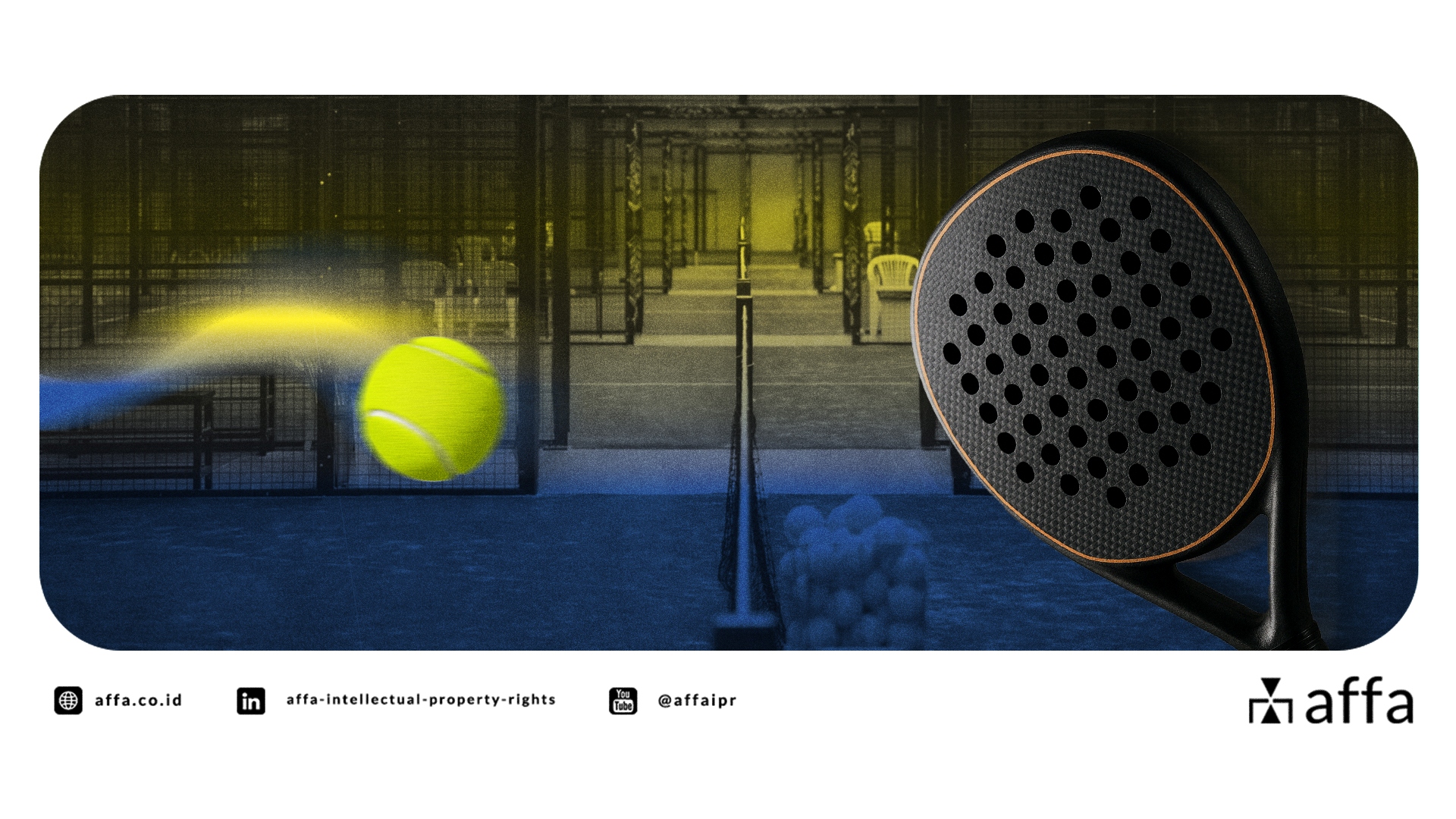
Padel is experiencing rapid growth in Indonesia. Over the past few years, it has captured the attention of various groups — from sports communities and entrepreneurs to celebrities. Its popularity is reflected in its inclusion in PON XXI 2024 (National Sports Week) held in Aceh – North Sumatra, as well as in several tournaments held in Indonesia, including the Asia Pacific Padel Cup 2024 and Padel Pro Open 2025. Padel was first created in 1969 in Acapulco, Mexico, by Enrique Corcuera. He modified a squash court at his home by adding walls and elements from tennis, creating a new game called “Paddle Corcuera.” This new game quickly attracted the attention of his friends, including Alfonso de Hohenlohe, who later introduced padel to Marbella, Spain in 1974 and built two courts there. From Spain, padel spread to Argentina (1975) and continued to grow in popularity across Europe and Latin America. In 1991, the Federation International de Padel (FIP) was established in Madrid, Spain, to regulate and promote the sport globally. As the padel ecosystem continues to grow in Indonesia, various elements — such as tournament names, logos, racket designs, court technology, training strategies, and merchandise — are becoming strong identity markers with commercial value. All of these should and can be protected through various forms of Intellectual Property (IP) rights, so that all parties involved can benefit while supporting a more sustainable padel ecosystem. Here are several relevant and potential IP categories in the world of padel: Trademark Names of padel clubs, logos, slogans, tournaments, courts, training academies, apparel, padel balls, rackets, or other equipment should be protected to avoid the use of identical or confusingly similar names. These should be registered as Trademarks, which offer protection for 10 years and can be renewed indefinitely. Industrial Design The visual designs of rackets, special padel shoes, and uniquely styled tournament uniforms can be protected as Industrial Designs, with a protection period of up to 10 years. Patent This category includes technological innovations in racket materials or structure, automated digital scoring systems, training sensors, and unique portable padel court construction features. Such innovations can evolve continuously and offer local manufacturers or innovators a competitive edge. Copyright Promotional content such as tournament highlight videos, music, event posters, digital graphics, and training modules or documented game strategies is automatically protected under Copyright. However, formal recordation is recommended to strengthen legal proof of ownership. Trade Secret This category includes exclusive training techniques used by padel coaches, business strategies or community management models, and even recipes or formulas for sports nutrition products used by a club. Trade Secrets do not require registration but must be kept confidential to remain protected. Licensing & Franchising Business models such as court rentals, expansion of padel club branches, licensing tournament names for use in other cities, or even launching padel-themed café franchises can be governed through licensing or franchise agreements, and can be officially recorded to secure legal protection and expand commercial benefits. Ultimately, padel is a fun sport and a gateway to economic opportunities through Intellectual Property assets. Business actors and padel communities must understand that the innovation, creativity, and identity they build today can become sustainable business value — if properly managed and protected. Should you need further information about registering and protecting Intellectual Property in the padel sport, feel free to contact us at [email protected].

Trademark Registration Procedure in Indonesia
Registering a Trademark in Indonesia is a critical step for any foreign business aiming to enter or expand in the Indonesian market. As Southeast Asia’s largest economy with over 270 million people, Indonesia offers significant commercial opportunities, but also presents challenges in brand protection due to its growing yet competitive market landscape. Trademark protection in Indonesia is primarily regulated under Law No. 20 of 2016 on Marks and Geographical Indications, which has been amended by Law No. 11 of 2020 on Job Creation and Law No. 6 of 2023. With some supporting regulations include Government Regulation No. 28 of 2019 (official fees), Government Regulation No. 22 of 2018 (Madrid Protocol implementation), Government Regulation No. 90 of 2019 (Trademark Appeal Commission), and Ministry Regulation No. 67 of 2016 (as amended by Regulation No. 12 of 2021) on Trademark Registration Procedures. Types of Marks That Can Be Registered in Indonesia You can register: Word mark Figurative mark Combination mark Three-dimensional mark Sound mark Hologram Indonesia adheres to the first-to-file principle, so early registration is strongly encouraged. Prior use is not considered a strong, bona fide basis of protection in Indonesia. Types of Marks That Cannot Be Registered The following cannot be registered: If the Mark is contrary to public order or morality If the Mark misleads consumers about the nature, quality, or origin of goods/services Generic or descriptive terms without distinctiveness Identical or similar marks already registered for similar goods/services National flags, emblems, or state symbols For 3D Mark, it cannot be a functional feature. Requirements to Register a Trademark Foreign businesses must appoint a local registered IP/Trademark Consultant to file on their behalf. Documents needed: Power of attorney – simply signed Statement of Mark Ownership – simply signed Specimen of Mark to be filed Details of goods/services and relevant class(es) Applicant’s data (name and address) If claiming priority from a foreign application, the priority document must also be submitted. Trademark Registration Procedure in Indonesia Please note that it may take approximately 10-14 months from filing to the issuance of Trademark certificate. The stages are as follows: Filing Formality Examination (15 days) Publication (2 months) Examination Issuance of registration number Issuance of TM Certificate (Digital Certificate only) Post-Registration: What to Do and Remember Once your Trademark is registered: Use your mark within 5 years to avoid any non-use cancellation action filed by any 3rd party. Monitor and enforce your rights through warning letters or legal action. Renewal is due every 10 years and can be filed within 6 months before the expiration date (or during a 6-month grace period with a penalty). Record any change of ownership or license agreements with the DGIP. Should you need further information regarding Trademark registration and protection strategies in Indonesia, feel free to contact us at [email protected].