Toei-Strategy-Using-IP-to-Increase-Global-Sales-affa-global

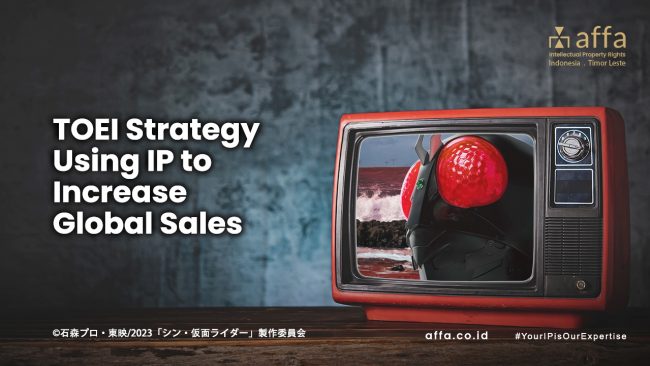
TOEI Strategy: Using IP to Increase Global Sales

The IP (Intellectual Property) business in the entertainment industry is up-and-coming. We can see how the Walt Disney Company became a giant by producing its own animated series and feature films and continuing to buy well-known IPs such as Marvel Heroes, Star Wars, and many more. The valuation of the company founded by Walter Elias Disney 100 years ago has reached USD 171.49 billion and is ranked 63rd company with the largest market capitalization in the world.   Meanwhile, from Japan, Toei Company, Co. Ltd., or simply Toei, is known as a producer of popular films and animations such as Dragon Ball, Saint Seiya, One Piece, Digimon, Sailor Moon, Super Sentai, and Kamen Rider. Classic series such as Gaban (Uchu Keiji Gavan), Voltus (Chodenji Machine Voltes V), and Goggle Five, which were popular in the 80s, were also produced by Toei.   However, unlike Disney, like most other Japanese companies, especially in the entertainment industry, they prioritize the local market and only make the global market a secondary target. According to Nora Mediana, Managing Director of Moxienotion, who has several times been entrusted with distributing Japanese-produced films to Indonesia, this policy applies the principle of embracing enthusiasts and succeeding in the local market before advancing in the global market.   “You have to speak to your local audience, and be relevant to them first before reaching out to a wider audience,” she explained.   This strategy of strengthening IP foundations in the country has to deal with a population growth crisis that is difficult to overcome. The continued reduction in the number of children and adolescents, the main target of this IP business, has reduced the income in the local market.   Even though Toei has produced more than 4,400 feature films and 38,000 TV series, income from licenses for using trademarks and copyrights of their works will decrease unless they make the global market their primary target. Efforts to get out of this crisis were marked by the launch of a long-term vision called “Toei New Wave 2033”, which targets to increase global sales by 170%, or from the composition of the local to the global market, which was 70:30 to 50:50 in 2033.   So what strategy is done by Toei? The first, as has been and is commonly done by IP practitioners in the entertainment industry, is to extend the life of the IP itself, namely by recycling an IP so that it can continue to be known and loved from generation to generation.   One of the IPs that Toei relies on to carry out this mission is Kamen Rider, known in Indonesia as Ksatria Baja Hitam. In Japan, Kamen Rider, which first aired in 1971, has become a popular series that continues to be updated yearly. There are always new Kamen Riders with new transformation tools (called Henshin Belt), new bikes, new enemies, and other new uniqueness that are sold. Not only in the form of a TV series that airs in many countries but also in the form of a wide-screen film adaptation, besides the various toys and merchandise that fans are always hunting for.   The growing development of digital platforms also opens vast opportunities for this series to have more touch points to a broader market. If previously it was only available on TV screens, now it can be watched on cross-country streaming channels. Whether it was published via Toei’s official YouTube channel or the license was taken by a paid streaming platform that can be accessed worldwide. Of course, guarding the legality of granting cross-country licenses is a challenge. Because the protection of Intellectual Property is territorial, a limited license agreement must be paid close attention to so that it does not leak or fall into the hands of pirates.   Two Kamen Rider movies have screening dates in Indonesian cinemas in the last two months. The first is “Kamen Rider Geats × Revice: Movie Battle Royale”, screened on 31 May 2023, then “Shin Kamen Rider”, which will be screened in the last week of June 2023. These two films have regional licenses held by Neofilms Southeast Asia, and Moxienotion, aka PT Mitra Media Layar Lebar, hold the right in Indonesia.   IP Kamen Rider fans also enthusiastically welcomed the screening of these two films, especially since the screening of Shin Kamen Rider in Indonesia will be one of the earlier than neighboring countries. Shin Kamen Rider itself is a 121-minute remake of the first Kamen Rider series (1971) and was directed by Hideaki Anno, the director, and animator who gave birth to the IP Neon Genesis Evangelion, which became a phenomenon in the mid-90s.   Hopefully, this fan support will be converted into satisfactory ticket sales so that a mutually beneficial relationship between producers, distributors and fans can be maintained for other films in the future. Distributors are happy, fans are satisfied, and producers can meet their global sales targets.   In addition to intensifying the sale of its works globally, Toei is also opening itself up to foreign production houses to adapt its IP to suit the tastes of its audience. The latest project currently airing is “Voltes V: Legacy”, an entirely CGI robot series produced by GMA Entertainment for audiences in the Philippines. Voltes V was originally a robot animation series produced by Toei in 1977-1978, which was very popular in the Philippines because the story inspired the people to overthrow the Marcos regime in 1986. Because the popularity of this series is still immense, the fans who used to be children are now established, and current skills are also trying to bring back the Voltes robot with more sophisticated visual technology.   Toei’s support for the production house from the Philippines is a strategy to increase the value of IP through a cycle: “Creation – Export – Reboot – Reimportation.” From the same IP, the value can continue to grow because the license is purchased by outsiders, becoming new works that can be resold to the…
Patented-Trademark-Registering-Copyright-What-are-the-correct-terms

Patented Trademark? Registering Copyright? What are the correct terms?

Patents are only one of the Intellectual Property objects recognized by the state as stated in Law Number 13 of 2016 concerning Patents. However, according to the Indonesian Dictionary, Patent has a general definition as “a right granted by the government to someone for an invention for their own use and to protect it from imitation (piracy),” then misperception has spread widely, including to the media and some officials.   So that the terms “patented a trademark” or “patented [fill in the name of any food here]” are what we usually hear in Indonesia.   In fact, according to Patent Law, a Patent is an inventor’s exclusive right to an invention in the field of technology for a certain period of time to implement it himself or to give approval to another party to carry out his invention. So the emphasis should be on innovation in the field of technology. An invention itself is an inventor’s idea that is translated into a specific problem-solving activity in the field of technology, which can be in the form of a product or process or improvement and development of a product or process.   Furthermore, Patents are granted for inventions that are new, contain an inventive step, and are industrially applicable. While Simple Patents are granted for any new invention, development of an existing product or process, and can be applied in industry. Simple Patents are granted for inventions in the form of products that not only differ in technical characteristics, but must have functions/uses that are more practical than previous inventions due to their shape, configuration, construction, or components which include tools, goods, machines, compositions, formulas, compounds or system. Simple Patents are also granted for inventions in the form of new processes or methods.   Therefore, a Trademark which is a sign that distinguishes one good or service from another, as well as food, is not appropriate to be “patented,” because it does not meet the criteria of the Patent itself.   Trademark is an object in itself in Intellectual Property which is regulated in Law Number 20 of 2016 concerning Trademarks and Geographical Indications. While food does not contain technological inventions in it. It is almost certain that in the process of making food, nothing will intersect with technological inventions that contain elements of novelty, are unpredictable, and can be applied in industry.   Another reason food is not right to be patented is the element of secrecy in the manufacturing process, which is of course the uniqueness of the food we make. Because if registered as a Patent, the recipe must be published. This means everyone can use the recipe after the expiration of the Patent protection, 10-20 years later. In other words, we have limitations in obtaining exclusivity for innovation from the food we have.   However, that does not mean that food cannot be protected by Intellectual Property. Food can still be protected by Trademarks and or Trade Secrets. The way to protect it is by registering the food Trademark to the DGIP (Directorate General of Intellectual Property), as stipulated in Article 1 of the Trademark Law, using pictures, names, words, letters, numbers, color arrangements, or a combination of these elements. elements that have discriminatory power.   If we already have a registered Trademark, then we have a strong basis to prevent other people from using the same or substantially the same Trademark in circulation for similar goods/services.   Then there are Trade Secrets which are also the right solution for protecting the food recipes that we have. As defined in Article 1 paragraph (1) of the Trade Secret Law, Trade Secrets are information that is not known by the public in the field of technology and/or business, has economic value because it is useful in business activities, and is kept confidential by the owner of the Trade Secret. The scope of protection for Trade Secrets includes production methods, processing methods, sales methods, or other information in the field of technology and/or business that has economic value and is not known by the general public, including food/beverage recipes, formulas, production processes, client lists or marketing plans.   The unique thing is, to get protection for Trade Secrets, we don’t need to register them to DGIP, but by doing a number of activities must be done and must also be avoided in order to avoid losing this protection. You can read more about Trade Secret protection in our previous article: “Protecting Your Food Recipes: A Step-by-Step Guide.“   Meanwhile, Copyright is an Intellectual Property object that has the broadest scope of protection, because it includes science, art and literature, which also includes computer programs. What’s unique is that the exclusive right to a creation arises automatically based on the declarative principle after a creation is declared or manifested in a tangible form. Therefore, Copyright does not need to be registered to get its protection. However, in order for our creation to have stronger legal protection, where we have legal proof of ownership when a dispute occurs, we need to record them in the DGIP database. The recordation process, which is much simpler than the patent and trademark registration process, can provide copyright owners with a sense of security.   By understanding the different types of Intellectual Property objects, we can differentiate their treatment, as a first step towards obtaining proper protection. So that we no longer use the terms “patented trademark”, “patent of a copyright,” or “registering copyright”. If you need further information regarding Patent registration, Trademark registration, Copyright recordation, or further consultation regarding the drafting of Trade Secret agreements in Indonesia and abroad, please do not hesitate to contact us via [email protected].

TETRIS-The-License-Dispute-That-Rocked-the-Soviet-Union-affa-global

TETRIS: The License Dispute That Rocked the Soviet Union

The Tetris movie hits Apple TV Plus on March 31st and since then has given a fascinating look at the legal battle over the rights to one of the most popular video games of all time. The film follows the story of Henk Rogers, a Dutch-Indonesian video game designer who helped to bring Tetris to the West. Rogers faced many challenges in securing the rights to the game, including a complex web of Intellectual Property ownership in the Soviet Union. The film provides a valuable glimpse into the challenges of protecting intellectual property rights in a globalized marketplace. For Intellectual Property practitioners, the Tetris movie offers some insights. First, the film shows the importance of securing all necessary rights to a product or service before bringing it to market. Rogers was able to secure the rights to Tetris in Japan, but he faced challenges in securing the rights in other countries. This is a common problem for businesses that operate in multiple jurisdictions. Second, the film shows the importance of understanding the different types of Intellectual Property protection available. Rogers had to navigate a complex web of Copyright, Trademark, and Patent law to secure the rights to Tetris. Intellectual Property practitioners must be familiar with all the different types of Intellectual Property protection to advise their clients effectively. Third, the film shows the importance of enforcing Intellectual Property rights. Rogers was able to secure the rights to Tetris, but he faced challenges in enforcing those rights against infringers. Intellectual Property practitioners need to be prepared to take legal action to protect their client’s rights. In addition to the insights mentioned above, the Tetris movie also shows the importance of working with local lawyers in foreign jurisdictions, the importance of being aware of the different cultural norms that may affect intellectual property protection, and the importance of being prepared to compromise to resolve. Overall, the Tetris movie is a valuable resource for Intellectual Property practitioners. The film provides several insights that can help practitioners to protect their clients’ Intellectual Property rights better.   If you need more information about how to protect your IP(s) in Indonesia and other countries, please do not hesitate to contact us at [email protected].

Super-Mario-Bros-Huge-Success-affa-global

Super Mario Bros, Huge Success of a Video Game IP on the Big Screen

The Super Mario Bros. Movie is a 2023 American computer-animated comedy film produced by Illumination Entertainment and distributed by Universal Pictures. Based on a video game franchise of the same name that was first released in 1985. The film was directed by Aaron Horvath and Michael Jelenic, and stars Chris Pratt as Mario, Charlie Day as Luigi, Anya Taylor-Joy as Princess Peach, and Jack Black as Bowser. In the film, Mario and his brother Luigi team up to rescue Princess Peach from Bowser. The film was released in the United States on April 7, 2023. It received mixed reviews from critics, but was a true box office success, grossing over $1.21 billion worldwide while the budget was only $100 million. The film became the highest-grossing film of 2023, the highest-grossing film based on a video game, and the highest-grossing animated film of 2023. With those records, this movie has beaten ‘John Wick: Chapter 4,’ ‘Ant-Man and the Wasp: Quantumania,’ ‘Guardians of the Galaxy Vol. 3,’ and all ‘Toy Story’ movies that are owned by Disney-Pixar. Since its first release, the Super Mario Bros franchise designed by Shigeru Miyamoto and Takashi Tezuka has become a cultural icon and a household name around the world. The Italian plumber Mario and Luigi have entertained gamers for over three decades, appearing in more than 200 games and generating billions of dollars in revenue, with more than 58 million copies sold worldwide. The decision to bring Super Mario Bros to the big screen once again is a smart move for Nintendo, the company behind the franchise. In recent years, the company has made a concerted effort to expand the reach of its IP beyond video games, with successful ventures into mobile games, merchandise, and theme parks. The upcoming park would be in Singapore and it is scheduled to open in 2025. With the popularity of the franchise showing no signs of waning, it seems that Mario and his friends will continue to be a beloved part of popular culture for years to come. In conclusion, having an established IP can provide a promising future for any individual or company in the entertainment industry. It offers a recognized brand and loyal fanbase that can increase revenue through various streams of merchandise, licensing, and media adaptations. With the rise of new technologies and platforms, the potential for growth and success is only expanding. However, do not forget to protect and manage the IP to maintain its value and integrity. With proper management and strategic planning, an established IP can continue to thrive and bring joy to audiences for years to come.   If you need more information about how to protect your IP(s) in Indonesia and other countries, please do not hesitate to contact us at [email protected]. Source: Boxofficemojo.com    

Protecting-Your-Food-Recipes-affa-global

Protecting Your Food Recipes: A Step-by-Step Guide

Your food recipes are a valuable asset. They represent your creativity, hard work, and passion. That’s why it’s important to protect them as a trade secret from being stolen or plagiarized. Here are some tips on how to protect your food recipes: Document Your Recipe. This means writing down the ingredients, measurements, and steps involved in making the recipe. Be as specific and detailed as possible. Keep Your Recipe Secret. Don’t share it with anyone, not even friends, family, or colleagues. If you do share it with someone, make sure they sign a non-disclosure agreement (NDA). Also, consider the following steps: a) Use a password-protected computer or file-sharing service to store your recipes. b) Don’t post your recipes on social media or other public forums. c) If you are considering selling your recipes, be sure to consult with an attorney to discuss your options. d) If the recipe is not documented in a digital document, please ensure to keep it in a restricted place (i.e. safe deposit box). Keep Your Recipe Documentation Updated As you continue to refine and improve your recipe, be sure to keep your documentation up to date. This will ensure that you always have an accurate and complete record of your recipe, which can be useful in the event of a legal dispute. By following these tips, you can help protect your food recipes and trade secret from being stolen or plagiarized. So, go ahead and share your culinary creations with the world, knowing that you have taken steps to protect your trade secret.   If you need more advice for protecting your trade secret in Indonesia and other countries, please do not hesitate to contact us at [email protected]. Sources: Nolo.com LegalVision.com

Katy-Perry-v-Katie-Perry-affa

Battle of Trademark: Katy Perry v Katie Perry Unfortunately, the singer lost in Australia.

In a trademark dispute, having a big name sometimes guarantees a win, but only sometimes. When Katy Perry, the owner of five Billboard Music Awards and a judge on American Idol with 108 million followers on Twitter, held concerts in Australia in 2014 and 2018, she sold a lot of fashion products through retail and social media using the trademark “Katy Perry,” which is owned by her company, Killer Queen, LLC. However, it turned out that there was already a similar trademark in Australia with a similar pronunciation, namely “Katie Perry” (with ie), which had been registered by a designer named Katie Taylor in the fashion category (Nice Class 25) since 2008. In 2009, Katy Perry’s lawyers actually tried to cancel Katie’s trademark and sent a “Cease and Desist Order” letter so she wouldn’t use the trademark again, but this effort was not pursued. After Katy Perry’s 2018 concert, which once again sold fashion products, Katie decided to strike back by reporting “Katy Perry” for ignoring the existence of “Katie Perry,” which has homophonous and had already been officially registered in IP Australia Finally, on Thursday, April 27, 2023, Australian Federal Court Judge Brigitte Markovic ruled that Killer Queen, LLC. had been proven to have infringed on some of Katie Taylor’s trademarks and ordered them to compensate for the damages with a certain amount that will be decided later. In response to this victory, Katie Taylor made a statement on her website, “Not only have I fought [for] myself, but I fought for small businesses in this country, many of them started by women, who can find themselves up against overseas entities who have much more financial power than we do. This victory could not have been achieved if Katie had not registered her trademark first. By registering a trademark, the owner obtains their rights, and the state provides legal protection so that the trademark’s economic rights are not violated. In Indonesia, a trademark can only be protected if an application for registration is filed first, and prior use of the trademark cannot be used as a basis for protection. This is because the ‘First to File’ approach is adopted by Law No. 20 of 2016 concerning Trademarks and Geographical Indications.   If you need further information about trademark registration in Indonesia and other countries, please do not hesitate to contact us at [email protected]. Sources: Reuters.com Nine.com.au WIPO Global Brand Database