
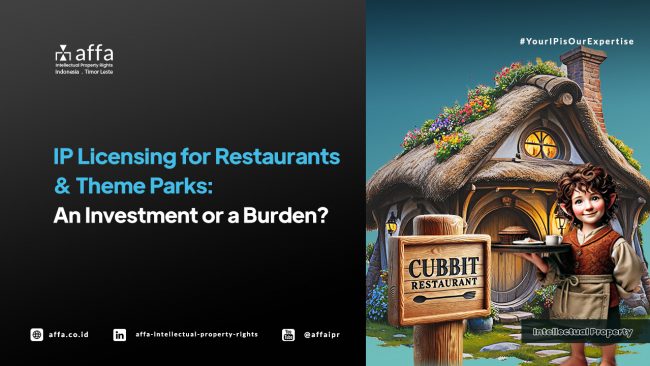
IP Licensing for Restaurants & Theme Parks: An Investment or a Burden?
Indonesian laws regulate the granting of Exclusive Rights over Trademarks, Industrial Designs, or Copyrights, where only the owner and/or creator have the right to derive economic benefits from the Intellectual Property (IP). Therefore, it can be concluded that any restaurant, venue, or theme park wishing to utilize such IP must obtain permission. But how does it work in practice? However, it is still common to find restaurants and venues utilizing well-known IP elements such as characters from popular animations, superheroes, or movie themes without official permission from the owner. For example, themed restaurants inspired by popular movies or series that use their names and menu concepts, or amusement parks displaying statues of characters without a license. While these may appear attractive and draw visitors, such actions violate the Exclusive Rights of IP owners and may lead to legal lawsuits. The Importance of Licensing IP Usage Such violations harm IP owners and create an unhealthy business environment. Entrepreneurs who disregard Intellectual Property Rights neglect the significant investments made by IP owners in creating their works, from the creative process to marketing efforts. So, what’s the solution? It’s as simple as contacting the IP owner and obtaining usage rights formalized in a Licensing Agreement. This ensures legal usage of the IP and helps determine if another party in Indonesia has already been granted a license, potentially allowing further collaboration for authorization. You might also want to read: Indonesia’s IP Odyssey: Unraveling the Ins and Outs of IP License Agreement Recordal By obtaining a license, you can get the following three key benefits: Avoiding Legal Risks Licensing protects businesses from lawsuits that may result in hefty fines or even closure. Enhancing Credibility Official licensing demonstrates a commitment to ethical business practices and respect for others’ rights. Building Long-Term Partnerships IP owners often support the marketing of licensed businesses, providing strategic advantages for expanding into international markets. You could even become the trusted partner for operating this business in Indonesia. The Public’s Role in Respecting IP Besides business operators, the public also plays a crucial role in safeguarding Intellectual Property Rights. As consumers, we should be more critical when choosing places to visit. If you encounter a restaurant, venue, or theme park using a well-known IP without authorization, consider the following: Avoid Visiting Supporting businesses that violate IP rights only worsens the problem. Report Violations You can report violations to the relevant authorities or directly to the IP owner to initiate legal action. The easiest way to verify whether a venue has a formal collaboration with the IP owner is by checking for the © “IP Owner’s Name” label on its publication. Because obtaining such authorization often involves significant effort and cost, businesses are likely to display this label. Not only does it reflect official usage, but it also serves as a badge of pride that their business has earned the trust of a major IP name. Licensed businesses also freely promote such partnerships without fear of secrecy. Criminal Sanctions for Unauthorized IP Usage Running a business that uses IP without permission in Indonesia may result in criminal penalties, depending on the type of violation: Trademark Infringement Anyone who unlawfully uses a trademark identical to a registered one belonging to another party for similar goods and/or services may be subject to: Imprisonment: Up to 5 years. Fine: Up to IDR 2 billion. Copyright Infringement Anyone who unlawfully and/or without permission from the creator or copyright holder distributes a work or its copies for commercial purposes may be subject to: Imprisonment: Up to 4 years. Fine: Up to IDR 1 billion. For more severe violations, such as piracy, penalties may include imprisonment of up to 10 years and/or fines of up to IDR 4 billion. Furthermore, should you need help obtaining a license for well-known IPs, including drafting proper licensing agreements, feel free to contact us via email at [email protected].